6 minutes ago
Vienna Economic Forum Proposes Fast Train Construction, Including Kosovo
Periskopi(6 years ago)
(6 years ago)Europe must further improve its logistics, especially through the construction of high-speed modern railway networks, which will achieve rapid and less cost-bound communication in the environment. Vienna's Economic Forum recommended to the European Commission to finance the construction of vast railway lines, one of [...]
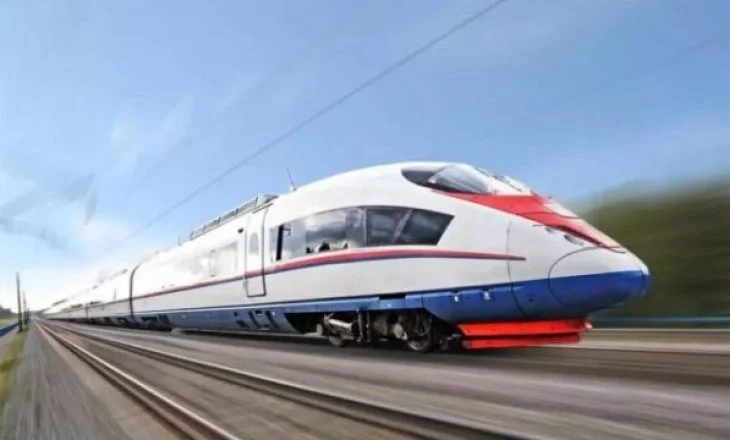
Europe must further improve its logistics, especially through the construction of high-speed modern railway networks, which will achieve rapid and less cost-bound communication in the environment.
Vienna's Economic Forum recommended that the European Commission finance the construction of flat railway lines, one of which is proposed to cross into Albania as well.
The line proposed to affect Albania will be launched in Berlin, Czechia, Austria, Croatia, Bosnia, Montenegro, Albania, Kosovo, Bulgaria, Serbia, Romania, Hungary. A tree of this line is proposed to extend from Sofia, Macedonia, then from Greece to Cyprus.
The adultery should connect Europe's most developed cities with the continent's underdeveloped countries, such as Albania and other countries of the region. While other proposed lines will connect the Baltic countries with Spain. From this line, there will be another that will be extended to Italy and one to Great Britain.
The proposal is aimed at building a 250-300km-h high-speed railway network with four main lines linking all EU capitals and Western Balkan (potential) EU candidate countries. In the Albanian section (see map), the fast railway will be introduced to Albania in Montenegro's Shkodra district and will then proceed to Lezha and via the nation's route to cross Kosovo and further extend to Bulgaria.
The railway's superlocation is proposed to follow the existing Trans-European Transport Network (TEN-T), but due to major technical differences in national railway systems (e.g. Various measures, railway electrification, security systems, should be stressed that the new network should be an additional infrastructure, with its technical standards.
The new high-speed railway network is projected to be 18,249km long. The extent of this line in the Western Balkans is expected to be 1564km long at a cost of 49 billion euros. In Albania the network is proposed to have a length of 304km at a cost of 7 billion euros. While Kosovo 166 km, at about 5 billion euros in costs.