 8 hours ago
Serological tests, population immunity defining to COVID-19
Periskopi(6 years ago)
(6 years ago)As of Monday, Pristina citizens will be able to run Serological tests for COVID-19. These tests are done through blood, and they show whether the person is and has been infected with coronary. These tests also reflect the population's immunity and, therefore, would also affect easing a country's restrictive measures. Brad [...]
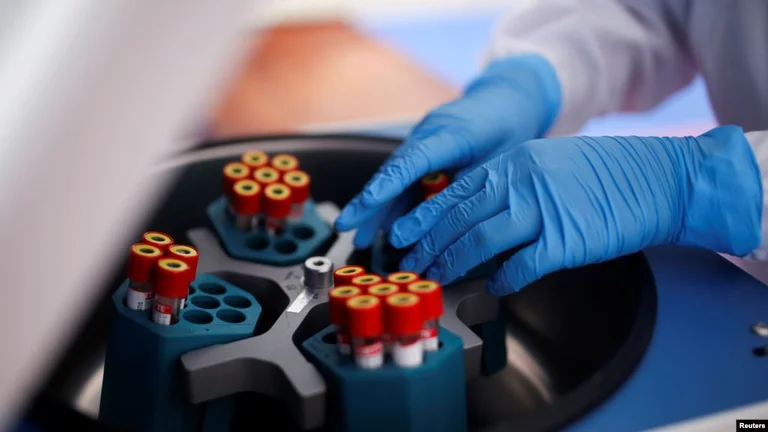
As of Monday, Pristina citizens will be able to run Serological tests for COVID-19. These tests are done through blood, and they show whether the person is and has been infected with coronary.
These tests also reflect the population's immunity and, therefore, would also affect easing a country's restrictive measures.
Bujar Gashi, director of health in the Pristina municipality, told Radio Free Europe that citizens will start testing since Monday, as long as health personnel and Pristina municipality officials have been tested.
These tests are being conducted through the primary health sector, the Family Medicine Centres, which are the competence of the Pristina municipality.
Initially, from Monday, there will be 100 tests a day to continue with 500 sosh on a daily basis. According to him, testing priorities will have citizens with symptoms of illness and persons over 60 years of age. The price of the serological test is not yet known, since it has not yet been set.
Pristina Mayor Shpend Ahmeti, through a Facebook post, has announced that within two weeks, the number of tests will increase to 400 per day.
Gashi says there will be three types of serial tests, immuglobina A, M and G.
A is responsible for the initial period of disease indicating that antibodies were created in the initial phase, and the patient is in the first five days of infection. Imonuglobulin M, tells of the active situation, if antibodies have been formed from day 6 to day 14, meanwhile, immunoglobulin G, tells of the creation of antibodies that the body shows has created immunity to the virus Gashi said.
Serological Tests, but so did he PCRs, they can be done in private clinics.
Test PCR determines whether the virus is active by analyzing the strands from the nose and throat.
On July 14th, Minister of Health in Kosovo Armend Zemaj has signed administrative guidelines, through which private health institutions are allowed to conduct tests for SARS-Cov-2.
Health Ministry spokesman Faik Hoti told Radio Free Europe that private institutions applying for a license to conduct tests must meet a series of conditions that have been defined on the basis of administrative guidelines.
Previously it was reported that private institutions would not be allowed to submit the PCR test, which correctly determines whether the virus exists in the body and is based on the analysis of srishos samples in the nose.
However, spokesman Hoti said that if private labs possess the necessary equipment and meet the conditions for such tests, then they will be allowed to perform them.
There's been interest from private labs for application. But they have at first come to care if they have necessary equipment to conduct these tests, depending on the conditions the Ministry of Health has imposed on them. If any laboratory has technical conditions, personnel, biosecurity and field experts, PCR tests can also be conducted, so through strands, but also serial tests”.
“In administrative guidelines are not forbidden to run such private labs, but that reporting at the National Institute of Public Health should be on daily basis, Hoti said.
From private labs, they say they've already applied to the Ministry of Health to obtain permission to test citizens.
Valon Sopa from the private laboratory éanazaly told Free Europe Radio that there are conditions to run PCR tests, but only serological tests.
The technical side of our lab is only possible to run serological tests. We as a lab yesterday have submitted the application documentation to the Ministry of Health and have no information on when it is considered. Currently, no lab has permission to run tests for COVID-19л Sopa said.
By means of the Serological testing, the number of people identified as infected may increase, but they are asimtomatic, which is a large percentage.
According to health professionals, this with automatism would affect preventing infection, as cases would be isolated and the spread in the community hindered. So that's why many states have applied since the beginning of the pandemic.











