 8 hours ago
Krasniqi: We've only been prepared for three months, the spread of the coronary is out of control.
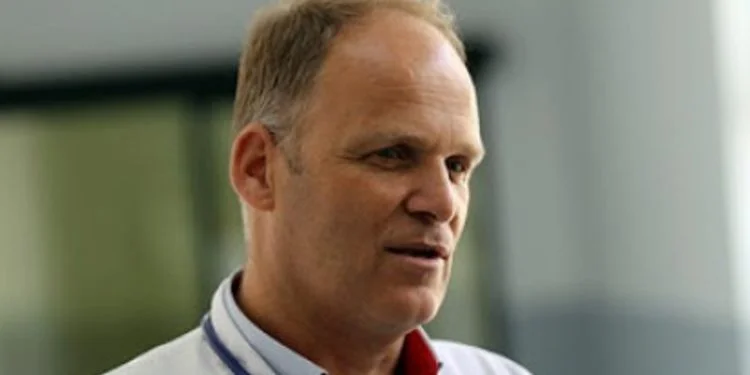
Periskopi(6 years ago)
(6 years ago)Kosovo Hospital Service Director and University Clinic Director Valbon Krasniqi's duty to Kosovo, says the corruption situation in Kosovo is extremely heavy. In an interview for Radio Free Europe, Krasniqi shows how the staff has been re-organised during this period and what are the hospital capitals to deal with the pandemic. How [...]
In an interview for Radio Free Europe, Krasniqi shows how the staff has been re-organised during this period and what are the hospital capitals to deal with the pandemic.
As for reports of lack of protective equipment in hospitals, Krasniqi says authorities have been prepared for only a quarterly period and not for such spreading of the virus.
Radio Free Europe: What is the current situation with COVID-19 in Kosovo?
Valbon Krasniqi: The current situation is extremely heavy. We've had a month to increase the number of cases of people infected at the country level, and this is being followed even by increasing the number of patients who require spiritualization.
We have almost 600 patients lying at our clinics at the University Clinical Centre in Pristina and regional hospitals. This number is huge when our health system's capacities are known.
Based on the government's decisions, on July 5th, on reorganising health personnel, increasing new capacities, and increasing the number of beds dedicated to patients, we have done all actions in this direction, and we have 750 beds available for affected by COVID-19.
Hospitals with limited capacity and infected health staff
We've been forced to re-organize a large portion of the health staff, which is dealing with the treatment of these cases. We already have four clinics within QKU, the Infectious Clinic, Pulmology, Neurology and Intensive Central Medicine, while we are planning to open up another department or clinic because of the significant increase in the number of cases coming to QKUU, and we are in re-organizing the accession ambulances.
Recently it has become the regionalization of patients, meaning that patients from the region will be treated in those regional hospitals. This has slightly facilitated the influx of patients to the QKUK.
Nevertheless, the number [of patients] is extremely large, both in regional hospitals and CKUK clinics, and this pressure on increasing the number of cases is continuing.
Radio Free Europe: Are there sufficient medical staff to treat patients if this increase in the number of affected continues?
Valbon Krasniqi: You know that Kosovo started pandemic with the number of health personnel available and that staff was up until ten days ago, when the Ministry of Health employed about 100 doctors and 100 nurses and technicians who were engaged in health institutions.
Except for some volunteers who were in the first phase, during March and April.
This is making the work of health staff extremely difficult, and at the same time, we also have a significant number of staff members who are infected, since now exposure to patients with COVID-19 is much higher. Given all these clinics and all these regional hospitals, where these patients are being treated, and a great number of health staff that has been infected... all of this is proving to be difficult.
We have very serious difficulties with reorganizing health personnel and are being forced to take health personnel from those services that have been reduced, as a result of the epidemiological situation with COVID-19.
However, if this large number of infected people continue in this way, we will face very, very serious challenges as far as beds and medical personnel will be available to treat these patients.
Radio Free Europe: There are complaints about the lack of protective equipment, especially in the Pulmology Clinic. What's the real situation?
Valbon Krasniqi: We make the maximum effort, not to the Pulmology Clinic, but to no health institutions, especially these clinics called COVID, regional hospital departments that treat patients directly with COVID-19, never be without medical protection equipment.
I know we have difficulties in this direction, but, along with the personal resources of the Kosovo Hospital Service and University Clinic, we've had donations from different partners. Likewise, the Ministry of Health has sometimes intervened with its options and supplied us.
However, there may be times when there is not enough at present. That means an entire chain from time to time. However, we need to understand one more thing. Plans that were in the beginning of the pandemic have been in three months, and now the pandemic is taking much longer.
Despite those planning, the number of cases has increased dramatically and it has been impossible for all the time, in turn, to pass this number with all the needs needed for these patients, including other things.
Radio Free Europe: You've claimed we'll be closed again if the infected people's curve grows. How did you think of that?
Valbon Krasniqi: In fact, I didn't declare tax that we'd shut down as a whole. I've said that the large number of cases in the increase and the large number of hospitalised cases are not allowing us and are not trying to move forward in the positive sense. So they're not letting us out and make plans to be released.
And this is taking a huge toll on the health system, and it's putting too much risk on the health system that's treating these cases. And, first of all, it is seriously endangering the public health of the citizens of the country.
Radio Free Europe: The Government of Kosovo's recent measures are more or less repeat old measures, with some young ones dealing with reliefs. How much help do they have to deal with the pandemic?
Valbon Krasniqi: I'm hoping on these new measures and especially the emphasis on the need for control and monitoring for better implementation of the measures. Actually, we have relatively good measures for prevention. However, I know that emphasis has been placed especially on the controlling mechanisms of mass implementation.
In addition, I personally think that an awareness of citizens, an awareness of the serious situation in which we are going as a state, would be the best measures to prevent the spread of infection even further.
Only citizens' awareness, high awareness to implement measures already known, such as wearing a mask, keeping a distance, personal hygiene, and preventing mass collection, could reduce the number of cases.
Radio Free Europe: What is the average age of people affected by COVID-19?
Valbon Krasniqi: Look, we take cases every day with COVID-19, so we don't have a detailed analysis. As a phenomenon, however, it is not being excluded from contact with COVID-19. We have different ages, ranging from young people to the very ones that are being treated in our clinics.
Radio Free Europe: Are all the dead chronically ill, as health professionals are saying, and with what accompanying diseases are patients dying?
Valbon Krasniqi: For these, it takes a thorough analysis to tell you the truth, to see all the cases that have ended with fatality. We accept reports on a daily basis for the number of dead cases, but that's why they have to sit down and run tests; first of all, the National Institute of Public Health, but our health institutions have also been treated for cases that they've handled in their clinics. Such tests will likely take place in the meantime.











