18 minutes ago
Kosovo's” Liberation war was fair”
Periskopi(6 years ago)
(6 years ago)“History Institute A LI HADRI” in Pristina, the Institute of Cultural Heritage of Albanians in Skopje and the Institute of Military History Studies in Tirana have responded to the publication of proposals by the Specialised Prosecutor's Office of Kosovo, supported by the Specialised Chambers, in which they figure out the names of two of the former founders and leaders [...]
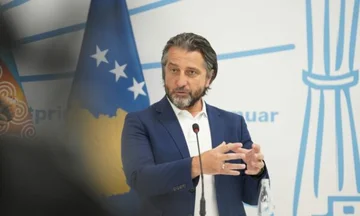
“History Institute A LI HADRI” in Pristina, the Institute of Cultural Heritage of Albanians in Skopje, and the Institute of Military History Studies in Tirana have reacted to the publication of proposals by the Kosovo Specialised Prosecutor's Office, supported by the Specialised Chambers, in which they figure out the names of two of the former founders and leaders of the Kosovo Liberation Army, Hashim Thaci, president of the Republic of Kosovo and Kadri Veselin, chairman of the Democratic Party of Kosovo.
Full response:
The commitments of the recent international factors for the resumption of talks between Kosovo and Serbia, for reaching a peace agreement, have represented a dissonance of the Euro-Atlantic factor, as well as associated with a situation of international pressure on the parties, but surprisingly the pressure is becoming very selective. On one side, Serbia's preferential treatment, which follows the battle against Kosovo's independence, although on the other hand, the Government of the Republic of Kosovo, under strong international pressure, gave up both 100% tax in its report with Serbia, as well as the implementation of the reciprocity move. The most powerful international table is publishing proposals from the Kosovo Specialised Prosecutor's Office, supported by the Specialised Chambers, in which they figure out the names of two of the former founders and leaders of the Kosovo Liberation Army: Mr. Hashim Thaci, president of the Republic of Kosovo and Mr. Kadri Veselin, chairman of the Democratic Party of Kosovo.
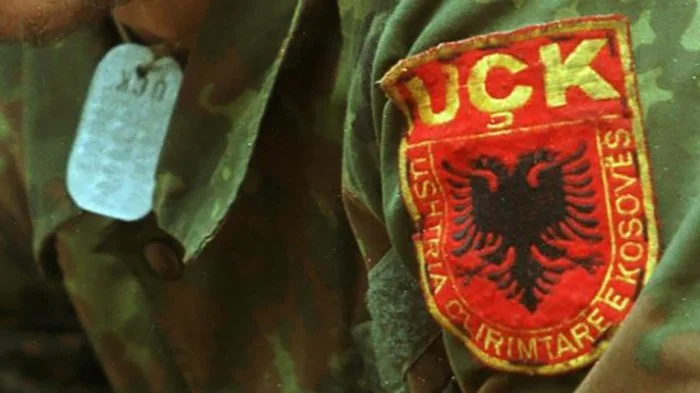
Serbia and many members of its police and military forces, who have committed monstrous crimes publicly proven against thousands of Albanians in Kosovo, have never been put before international responsibility, but they were rewarded and privileged by the latter for the genocide he committed in Kosovo. Kosovo's long-suffered people feel that they are limiting their freedom and rights, achieved through a century-long resistance against Serbian occupation, are violating the greatest justice of the KLA war and its victories in co-operation with the triumphant North Atlantic Alliance. The liberation war in Kosovo was fair. It was directed against a power and conqueror, who around a century struggled with fire and iron for Kosovo's bloody ethnic cleansing.
The KLA war was in line with the fundamental values of Albanian people's freedom and with all the fundamental principles of freedom and human existence of each people. Despite legal statements, for Albanians but also for anyone with fair judgment in the world, it is clear who the deliverers were and who were the conquerors and aggressors, who, to maintain their rule by violence, committed numerous crimes against the Albanian civilian population, which committed the world's <x0-cyphers. No institution or judicial clause has the power to overturn historical truth, which is one and far beyond other clauses. Time passes, but it cannot cloud the historical truth that is clear as sunlight. We as scientific institutions that deal specifically with historical truth, appeal that the proposals are controversial and based on facts in relation to the truth testified and not on disproportion with it. Serb crimes, which were of so great magnitude, must be judged that they took the form of an ethnic, physical, political, cultural and religious genocide, conceived and planned by Serbia, respectively, by its political, scientific, cultural and military circles. All of these have their own cost, not forgetting for a moment the killings of thousands of vulnerable Albanian citizens whose lives are not compensated for anything.
Without entering into the competence of Kosovo's Special Chambers and Special Prosecutor's Office, for us as anyone who values and respects the truth, it is absurd to leave completely in silence the Serb crimes that resulted in the killing of some 12,000 Albanian civilians of different ages and proposals to begin with the leaders of the liberation movement of this oppressed people being subjected to a vicious ethnic, total ethnic cleansing campaign, which has been filed and confirmed by the International War Crimes Tribunal in the former Yugoslavia. In Kosovo, army, police and all Serbian state institutions fought against the Albanian people. According to official Yugoslav Government data, 1,008 police and soldiers lost their lives in Kosovo's war. Out of that figure, 819 members of the Serbian forces (soldiers, reserve soldiers, volunteers, police and reserve officers) had fallen into line with the Kosovo Liberation Army, and as a result of NATO attacks.
They were part of the active achievements of the Ministry of Internal Affairs (MPB), of MPB reserve, of the Yugoslav Army's active efficiency (UJ), of the UJ reserve and its volunteers. During the past century, the Serbian state has grossly abused Serbian citizens, engaging them in police and military units, in war against Albanians, whether they were armed or civilians. Kosovo's Liberation Army has fought the Serbian government forces involved in the 1998-1999 war, which presented a complex combination of the Ministry of Internal Affairs (MPB) and its special units, of Yugoslavia's (UJ) Army and its special units, its paramilitary forces, local militia and an association of fighters brought from abroad, all under the Government's orders in Belgrade. In April 1999, there were 15,779 members of the MPB.
On March 31, 1999, Pristina's Corps had 17,971 soldiers. On April 13, 1999, a total of 61,892 members of the UJ were under the command of this Corps, including other conscripts and volunteers. Against these numerous, well armed forces, with the most modern technique of the time, has fought the Kosovo Liberation Army.
Referring to the historical memory, which we described in this response, we appeal to the international state-level factor, decision-makers and academics, creative opinion, journalists, humanists and prominent personalities so that the responsibility for war crimes can be sought by the aggressor, not by KLA leaders. With that, they will restore hope and trust in the people of Kosovo and separately to the families of massacred civilians and the missing, which the democratic world judges fairly and in line with justice.
We carry out this response with full trust in God, in the impartiality of international justice, and in the right of Kosovo's liberation war and its military.