7 minutes ago
Dialogue: The Killed, the Undiscovered, and the Displaced
Periskopi(6 years ago)
(6 years ago)Pristina authorities, as well as non-governmental local and international organisations, claim that more than 13,500 people have been killed and eliminated during the Kosovo War (1998-1999). These figures, published by the Fund for Humanitarian Law in Kosovo and Belgrade, have also been used by Kosovo institutions. According to these sources, about 76% of these people [...]
Pristina authorities, as well as non-governmental local and international organisations, claim that more than 13,500 people have been killed and eliminated during the Kosovo War (1998-1999). These figures, published by the Fund for Humanitarian Law in Kosovo and Belgrade, have also been used by Kosovo institutions.
According to these sources, about 76% of these persons have been civilians killed. Evidence is said to have killed 10,794 Albanians, 2,197 Serbs, while the rest belong to other ethnic groups living in Kosovo. But even today, more than 21 years from the end of Kosovo's war, 1,647 people are considered found and nothing is known to them yet. Of them some 420 Serbs, others Albanians.
Undiscovered
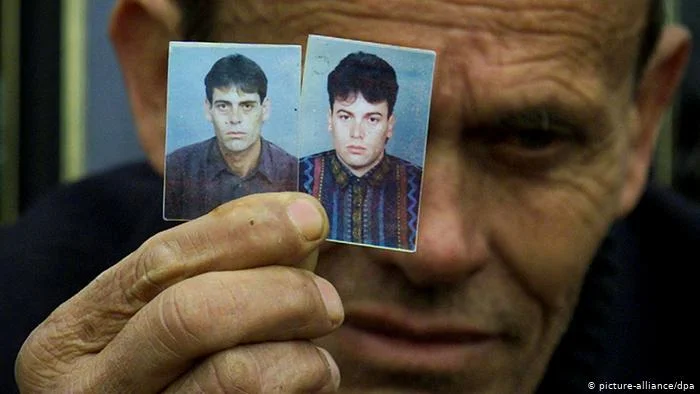
From the end of the war until now, 6,057 cases of missing persons as a result of the Kosovo war have been recorded in the International Committee of the Red Cross and the Government Commission for Missing Persons. Most people's fate is white, but 1,647 people are still unknown.
Kosovo authorities and international nongovernmental organisations say around 80% of persons missing during the war have been males aged 18 to 40. The rest are between 41 and 60, but there have been several cases of kidnappings and disappearances of people over the age of 60.
Mass graveyards
In Kosovo and in Serbia a large number of mass cemetery and Albanian troops killed have been discovered after the war. During research under war crimes charges committed to the needs of The Hague Tribunal since March 2000, 529 mass graves have been identified, mostly devastating in Kosovo. In these cemeteries were found the lifeless bodies of 4,300 people killed.
Kosovo Humanitarian Law Fund Director Bekim Blakaj states that not to be fully identified with crimes and shortcomings in collecting evidence even today, 21 years after the end of the war, create great difficulties in completing this very serious and sensitive process. After so many years it is very difficult to find primary resources, due to the death of many witnesses and lack of documentation. But in this process it may help co-operation of Kosovo and Serbia institutions, as well as sources of The Hague Tribunal, which have recorded and created an archive for many crimes.
Mass graveyards in Serbia
After the Kosovo war in Serbia, several mass graveyards have been discovered where Albanian troops killed during the war have been introduced. The largest mass cemetery has been discovered in Belgrade's Batajnica. According to data thus far, the bodies of about 930 persons have been discovered in this range of Serbia's special units. Serbian sources say there are a total of seven mass cemeteries in Serbia, while Albanian troops killed in Kosovo have been found in Perucac, Petrovo Selo and Rudnici.
Serbian sources also speak of burning the bodies of Albanians killed in Trepca, but also at the smelter in the Serbian town of Bor. On April 6th 1999, a Prizren-registered truck has been discovered on the Danube River in Kladovo, with about 80 Albanians killed. Police initially claimed that the dead are Kurds who wanted to cross the river and go to Romania. The truth about the bodies of murdered Albanians has been discovered by a resident of Kladovs, who was later found dead.
FDH data
The Fund for Humanitarian Law in Belgrade and Kosovo's FHD have also published a book titled: “The Book of Remembering of Kosovo”, where all names of those killed and found were published, between January 1st 1998 and December 31st 2000. This Fund has counted 13,518 people killed during the Kosovo war. Of them 10,794 Albanians, 2,197 Serbs, while 527 belong to other ethnic groups. Most people were killed during 1999 (11,199).
Of them 11,661 were male and 1,857 female. The amount of age, during the war in Kosovo, young children have been killed, but also persons over 100 years of age. FDH claims that 239 children between the ages of zero and five have been killed in 1998-2000. Four people killed have been over 100 years old. These sources say the largest number of those killed were civilians, villagers, who had no connection with the armed uprising.
FDH director in Belgrade Natasa Ka persecuted that, as a result of NATO bombings in Kosovo, 488 persons (249 Albanians, 202 Serbs, 37 Roma and others have been killed. While 260 people have been killed during the bombings in Serbia, in Montenegro 10.
Murders following withdrawal of Serbian forces
FDH director in Belgrade Ka persecuted that following the withdrawal of Serb forces from Kosovo, in the period of June 15th 1999, by the end of December 2000, 1,257 people have been killed, kidnapped or disappeared -- 717 Serbs, 307 Albanians and 233 Roma. These evidence has been made in order to whiteen the truth to the end and to create a database that documents what happened during the war and after the war, the prosecution states.
Serbian Sources
Serbian authorities and nongovernmental organisations in Serbia have different data concerning the number of those killed, kidnapped and expelled from Kosovo. Serbian government data includes all persons, thought to have been killed by the “Albanian terrorists”, as it calls them. These include soldiers, policemen, civil Serbs, Montenegrins, Roma and Albanians who have recorded Serbian autoifacts.
The Serbian government claims that between January 1998 and November 2001, the <x0 ... Albanian terrorists” have killed 1,835 people while kidnapping 1.441 people.
This source states that 1,953 Serbs and Montenegrins, another 266 -- 381 Yugoslav Army soldiers, 243 police officers and 72 unidentified victims -- have been killed in Kosovo. The Serbian government report speaks of only 361 murdered Albanian civilians, providing a total of 3,276 people killed, kidnapped and missing. In the Serbian government's report, however, these data cannot be considered complete and final.
The victims of NATO bombings are not included in these figures. The Serbian government claims that 462 soldiers and 114 members of special police units were killed during these attacks.
The Association of Families of Missing and Kidnapped Persons in Serbia claims that “during the Kosovo and Metohija conflicts has disappeared around 1,300 Serbs.” In the study of the Fund for Humanitarian Law in Belgrade, considered even the most detailed study, it is said that in January 1998, December 1999, 1,123 Serb civilians have been killed in Kosovo, 786 of them have been killed after the introduction of NATO forces in Kosovo (12 June 1999) December 1999.
Schoolbooks in Serbia
As the final data of the Serbian side can also be considered what we find in the textbooks, which have been published with the permission of the Ministry of Education. Schoolbooks in Serbia mention a letter the Federal Republic of Yugoslavia (created after the release of Slovenia, Croatia, Bosnia and Herzegovina, and North Macedonia from the former - The SFRJ has sent the UN Security Council in February 2000. This letter says that from the introduction of NATO forces in Kosovo “have killed 899 people and had been kidnapped 834”, but this letter does not speak of national belonging to persons killed or kidnapped.
Displaced/displaced
One of the themes expected to open in the Brussels dialogue will also be the issue of Serb displaced/deportation from Kosovo. Serbia's government speaks of more than 280,000 internally displaced and expelled from “Kosovo and Metohia”. There are also resources for some 20,000 displaced Serbs within Kosovo, from multiethnic areas to one-ethnic elites.
While the United Nations High Commissioner for Refugees records, 210,000 Serbs and non-Albanians expelled from Kosovo speak. So far there is no precise record of how many of them have been expelled, how many have fled along with Serbian forces, how many of them have legally sold their homes and properties and moved away from Kosovo.
(Pa) The width of the data
Serbian sources say the data of the authorities of Serbia and various associations cannot be considered complete and final, because the Serb side has not been able to identify all developments after the introduction of NATO forces in Kosovo. Serbian authorities have also published a book entitled “The Book of Memos of Kosovo”. The names of war crimes victims (civils, wounded and captured), names of persons killed during the war, and violent displaced persons between January 1st 1998 and December 31, 2000.