an hour ago
Christian Lequesne: Kosovo, Serbia forget EU membership if they do not recognise each other's sovereignty
Periskopi(6 years ago)
(6 years ago)One of the most popular experts for European Union enlargement policies Professor from Paris Christian Lequesne says enlargement is not the priority of European Union leadership at this time of crisis caused by the pandemic. In an exclusive interview for KosovoPress, Professor Lequesne, the sheet on opening the negotiations for membership [...]
One of the most popular experts for European Union enlargement policies Professor from Paris Christian Lequesne says enlargement is not the priority of European Union leadership at this time of crisis caused by the pandemic.
In an exclusive interview for KosovoPress, Professor Lequesne, the letter of the opening of negotiations for membership of Western Balkan countries, the inability to membership of Serbia without normalising the reports with Kosovo, the impact that negotiations between Kosovo and Serbia have on integration processes, the need to strengthen rule of law in Western Balkan states, the wrong perception in some Balkan states that the EU will not accept those states with Muslim populations, etc.
Kosovaress: Professor Lequesne, you are one of the best experts in Europe in terms of Union concept or, rather, its policies about enlargement. I wanted to ask you about the long and still elusive road to the EU integration process of six Western Balkan countries. Please tell us what's going on in this regard?
Christian Lequesne: The situation has improved with the decision to start negotiations with Albania and Northern Macedonia. Now we have four countries with which negotiations can be held according to the 2003 Thessaloniki Declaration, even if these negotiations have not yet begun with northern Macedonia and Albania. The situation of Bosnia and Herzegovina and Kosovo is, of course, harder. Being a member of the European Union requires, first of all, a full sovereign state and a stable state. Bosnia and Herzegovina still suffers from difficulties being a weak state due to difficult compromise between communities. Kosovo is still considered part of its territory by Serbia and is not even recognised by 5 EU member states. These problems must be solved before any enlargement process. A big mistake will be to think that enlargement is the miracle that solves everything (the establishment, the issue of sovereignty). That's not true. There are preconditions for membership in an EU that remains a Union of sovereign states.
Kosovaress: There seems to be a lack of transparency on the part of the European Union and the leadership of Western Balkan countries in relation to citizens, as both sides blame each other for blocking this process. From your point of view, where are the real obstacles to this process?
Christian Lequesne: There's hypocrisy on both sides, I agree. For the EU as a whole, enlargement is not a priority at the moment. There are other issues (economic recovery, budget, Brex) to be resolved. The EU negotiates future enlargement without concrete plans to complete it. For Balkan states, hypocrisy is to act as if democratic rules and the end of nationalism function well. It's not the case. Democracy and tolerance in front of the other “” have not yet reached EU standards in most Western Balkan candidate countries.
Kosovaress: Last year, France blocked the two Balkan countries -- Albania and Northern Macedonia -- from opening the EU membership negotiations process. President Macron said he took the step because the two countries had not made enough of the reforms required by the European Union. Given the dynamics the EU has followed in the past in relation to other countries, will this negotiation process have to start soon, or is it possible that enlargement policies do not occur in the near future?
Christian Lequesne: Remember we're talking diplomatic processes. In such processes, you always have shape and substance. My assumption is that we could start negotiations with both countries, as is already the case with Serbia and Montenegro, but that will take a long time to finalise. Again, enlargement is currently not the number one priority of EU member states.
Kosovaress: There was criticism from the European Union in the Balkans that it is not ready to expand its circle. Do you think that's it?
Christian Lequesne: I can understand it very well. The EU has proposed enlargement in the Balkans to limit nationalism, and now its reluctance to move forward is boosting nationalism. The EU should think about that in more geopolitical terms. Another variable for the EU is the benefit it is granting to other “large” in the region, such as China and Russia. During the period 19 crisis, some leaders of Balkan states, whose countries have engaged in negotiations for enlargement, voiced open support for the Chinese model of governance. Why not? But if the Balkans are seduced by the Chinese model, they must know they will not provide them with exactly a democratic future!
Kosovaress: Since I represent a Kosovo medium, however, I will ask you inevitable on visa liberalisation: Is it unfair for Kosovo citizens who are the only ones in the Western Balkans who cannot travel freely to the Schengen area?
Christian Lequesne: I understand that feeling of injustice. The free movement of people is viewed today as civic rights. Even though many Kosovars work in the EU and also in Switzerland, they need Schengen visas. This is something that can be negotiated with the EU independently from enlargement. My advice is to give the EU credentials to improve rule of law. Image also plays a role in diplomacy. Recently, a Slovak friend told me that in his country Kosovo has the image of “organised crime”. Of course, we're talking here about perceptions and not necessarily the truth. But clear measures to control corruption and crime is the best way to get visa liberalisation.
Kosovaress: Has the political problems existing between Kosovo and Serbia impact this visa liberalisation process?
Christian Lequesne: Of course you play a role. The five EU member states still do not recognise Kosovo as a sovereign state.
Kosovaress: From an expert's point of view, what should Kosovo do more to ensure visa liberalisation, because the opening of membership negotiations is certainly far away?
Christian Lequesne: I've already answered that question. Again, the best option Kosovo can adopt is to elect politicians who are prepared to step up the democratic regulation of the state on society, especially in economic activities. I also know it's easy to say from Paris. Difficult state / society relations are structural problems in the Balkans, including in EU member states like Romania, Bulgaria, but Greece.
Kosovaress: As the European leadership is known, President Macron and Chancellor Merkel are also directly involved in Western efforts to reach an agreement between Kosovo and Serbia. Are political issues unresolved between Kosovo and Serbia a problem for the accession process of all Western Balkan countries into the European Union?
Christian Lequesne: Yeah, yeah. I don't see any real possibility that Kosovo and Serbia join the EU unless they recognise each other's sovereignty. The normalisation of relations under EU mediation has been a very positive step, but that is not enough. The next step should be knowledge. If Belgrade and Pristina do not accept this new step, there will be no membership. The EU may help both countries move in that direction, but the ultimate responsibility lies in both capitals.
Kosovaress: In some countries here in the Balkans there is a theory, which certainly is not clear that public opinion in the European Union is not available for countries that have a predominantly Muslim population. Can such a perception really be such?
Christian Lequesne: I'm not sure it's such a big issue in the Balkan case. It has definitely been an issue about Turkey's EU application. But the Muslim population in the Western Balkans, also as a result of Yugoslav experience, is generally very secular and consider to belong primarily to Europe. It does not mean that some of them are not seduced by the general phenomenon of resurface their religious identity and turn it into a political commitment. Countries like Qatar, Saudi Arabia and even Turkey sometimes promote this with some social activism. But it would be a mistake to overexemplize Muslim religion as a political factor in the Balkans. Now, if I consider extremist right-wing movements in the EU, they often use the Western Balkans' case in their anti-Muslim rhetoric; they prefer to focus on the Middle East and Turkey.
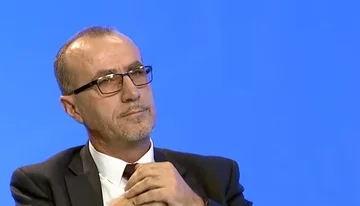
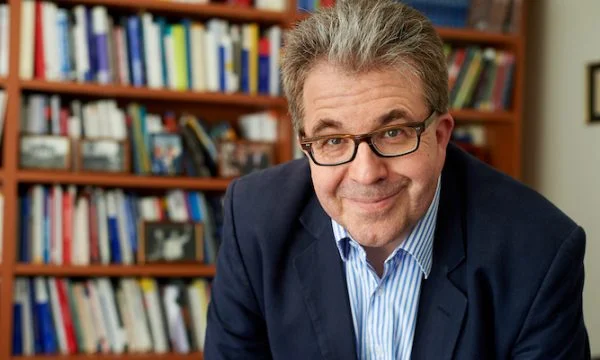
/ Christian Lequesne is a French academic, European Policy Professor in Science Yes, Director of Center d'études et de recherches internationals (CERI), and Professor at the College of Europe. Professor Lequesne is also a visual teacher in some prestigious European colleges and is praised as the best European expert on the European Union's concept with a special emphasis on the policy of awakening. He is also a member of the editorial boards and scientific advice of Critique Internationale, Polytique Europeéne and European Integrations, as well as the European Summit of Prague.