20 minutes ago
Pandemia impoverishs citizens, but not Kosovo Assembly MPs
Periskopi(6 years ago)
(6 years ago)Why institutions in Kosovo were challenged by the crisis resulting from the spread of Covid-19, the people's elected did not face income problems. MPs from the institution, which was moved in these months due to the pandemic and the political crisis, received full salaries. Election work monitors, [...]
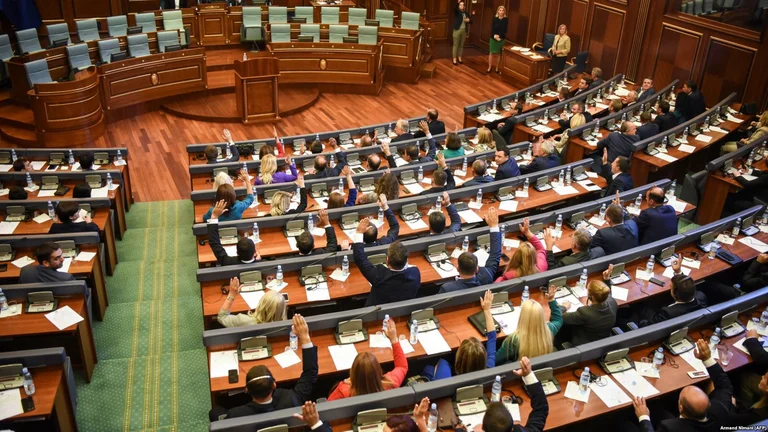
Why institutions in Kosovo were challenged by the crisis resulting from the spread of Covid-19, the people's elected did not face income problems. MPs from the institution, which was moved in these months due to the pandemic and the political crisis, received full salaries. And they're monitoring the work of the Parliament, considering that this institution had to be more active during this period.
The Middle of March found Kosovo with positive cases of coronaryism and began to take steps to limit movement, school learning suspension, nesting closures and disruptions of many other activities, which mainly affected businesses.
Shortly after that, on March 25th, with a no-confidence motion initiated by the Democratic League of Kosovo, the government led by Albin Kurti was toppled to deepen a political crisis, besides what already existed in the health sector.
Agnes Haxhiu of the Kosovo Democratic Institute says the pandemic and the political crisis are two factors that have influenced the Kosovo Assembly's performance in recent months.
She says the no-confidence motion on the government and the political crisis have contributed to the failure of the Parliament's work since parliamentary practice in Kosovo in such cases, there is no regular interaction between the Parliament and the Government.
“against the political crisis, the Assembly would have to have a much more active role to help other relevant institutions manage the situation created with the pandemic. But in the absence of the political will of parliamentary groups against some initiatives, this has not happened so far. There are also 7 international financial agreements awaiting approval from the Assembly, which require the votes of 2/3 of all MPs, where part of these agreements are loans negotiated by the Government to manage the situation with the pandemic and regarding economic recovery from the consequences of the pandemic. These funds are at risk of losing if the Assembly does not approve by the deadline provided with these agreements, and it requires the will and consensus of all parliamentary groups”, Haxhiu says.
According to her, although the Assembly was established at the end of last year, what has been achieved has been largely the functionality of the commissions, the announcement of jobs that MPs expect, and the adoption of the budget law, which according to it has been the urgent issue for the new institutions.
Even according to Albert Krasniqi from Democracy Plus, the Assembly has had to be more active, in particular in monitoring the government and implementing measures undertaken to prevent spread of pandemic.
“The Assembly has had to be more active, especially in monitoring the government, in implementing measures it has taken to prevent and curb the spread of pandemic, and also to focus on respecting human rights and freedoms, so that they will not be arbitraryly limited by the government or other institutions, as well as to oversee the work of institutions and health institutions, and other institutions which the Parliament would be able to help through the adoption of different packages, whether those economics or other facilities do their best, and in full service to the citizens, says Krasni.
After declaring the pandemic, the Assembly held hearings to approve the budget, then vote for the no-confidence motion, and once gathered for economic and financial measures for economic recovery.
“Over this period there has been more effort to appear to be working than there has actually been effective work that could result in concrete activities, there have been more of a series of improvisements that have been done”, he says.
During that time, there was initiative by the head of the Assembly for the Law on Pandem but that did not materialise.
Other initiatives, such as the amnesty law, where the Commission for Legislation did not give the green light to adopt these changes.
During this period a series of measures that have been trying to take over from the Parliament but that eventually did not result in something concrete.
In a response to the editorialisation, Kosovo's Assembly has confirmed that during March, April and May parliamentary commissions have held 50 meetings.
The “Parliamentary Commissions during March, April and May 2020 have conducted activities as follows: they have reviewed and amended Bill No. 07/ L-001 on budgetary divisions for the budget of the Republic of Kosovo for 2020; have held 50 meetings, reviewed 32 amendments; reported to ministers or heads of agencies, different institutions 14 times; have reviewed 12 financial reports and other reports, as well as the results of the chairmanship and other paperwork to the commissions; five visits to the ground have been carried out; and a decision has been made about monitoring a” law, said in the Parliament's response.
The Kosovo Assembly MP's basic salary is 1,000 and 547 euros, without counting the amount they receive for participation in parliamentary sessions and commissions.
The Assembly has confirmed that during the pandemic, MPs have received full wages and no one has given up on them.