 8 hours ago
Six months since the coronary showed up. Are we ready to overcome the disease?
Periskopi(6 years ago)
(6 years ago)COVID-19 ' disease has already affected people since six months ago China and later other countries until they began to conquer the globe. Experience has been grim to our species. To date, more than six million people have been infected and some 400,000 have been reported dead, one [...]
COVID-19 ' disease has already affected people since six months ago China and later other countries until they began to conquer the globe. Experience has been grim to our species. To date, more than six million people have been infected and some 400,000 have been reported dead, a number that will inevitably continue to rise for the years to come.
Our world has been transformed in the process. Blocks have been imposed, borders have been closed, nursing homes have been destroyed by disease, and national economies are located towards a damaging scale.
However, we have achieved only half the way to the progress of the disease, towards its first anniversary, the period that raised a host of concerns and questions about our ability to “challenge” during this pandemic. But what exactly have we learned about COVID-19 in the last six months? How many have we responded to the challenges of this disease?
More important, what are questions to answer over the next six months? Answers from researchers and doctors show us how we can survive one of the worst crises that plagued mankind in modern times.
Were we ready?
An answer highlighted by scientists clearly indicates that we were not prepared for the arrival of COVID-19, writes The Guardian.
This disease has resulted much worse than the pandemics we've prepared to fight a day of”, said Martin Hibberd, professor of infectious diseases at London's Hygiene School and Tropical Medicine.
The disease has a death rate of 1 percent and is far more transmitted. It presents incredible traits about a new disease that appears with the idea that we can cope with it.
Such characteristics present the worst possible scenario we could ever have expected. It was a very unclear prospect for us.
This point was also highlighted by David Nabarro, a professor of global health at <x0).
When we first faced this disease, we thought it was just a respiratory disease that affects the upper breast. Now it is clear that it can cause sinus ' disease; it can affect blood vessels and lead to the development of blood clots. The disease has also been linked to extreme fatigue, kidney failure and heart attacks and quite often affecting relatively young people. This is not a disease to underestimate”, he said.
Nor is it likely to disappear in the near future, added Mark Woolhouse, professor of infectious disease epidemiology at the University of Edinburg, records Telegrafi.
The most important thing we've learned is that we should learn to live with it longer. Basically, six months can lead to an eternal relationship.
Under such circumstances as the impasse that we face over the next few months is finding ways to address the disease in the breast <x2) by”, without referring to the setting limits of the impasse and their social economic and emotional damage. And it won't be easy as it has been made clear by other teachings learned over the past six months, Woolhouse added.
Old Age Disease
“A key feature that we have come to appreciate in connection with COVID-19 is that it's a disease of age”, Woolhouse said.
“Shance for a person over 75 to die of him is actually 10,000 times larger than for a 15-year-old being infected. It's really surprising”, Woolhouse added.
Problems about the impact of disease on adults begin when a person turns 50 and turns out more dangerous over the years they over 75 need protection from this virus because its consequences are extremely serious, says Woolhouse.
But is it right to shut down your grandchildren to save your grandparents? In a sense that's what we've done so far”, he said.
One idea would be to establish extreme security systems around nursing homes to ensure that the coronavirus never enters it. The staff from cleaners to stewards would have to be tested.
But as Woolhouse admitted, most of those over 75 do not live in nursing homes. They live in their own homes.
This means that we will have to invent the concept of domestic biosecurity for these people. This is one of the most urgent tasks we now face”, he said.
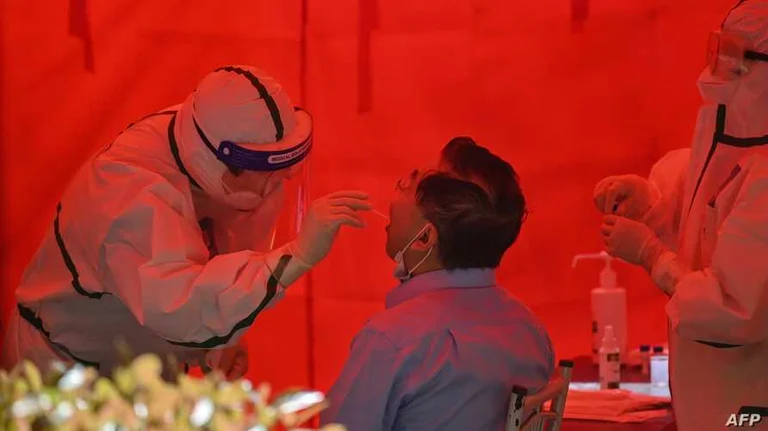
Test, test, test
The implementation of such ideas has only been possible because the virus testing technology has improved for its accuracy over the past two months. And this offers advantages and opportunities to understand other questions about COVID-19, says Anne Johnson, professor of epidemiology at “University College London”.
So far we're based on mathematical patterns to try to figure out how the virus's going and how it spreads into the community. However, mathematical models are as good as the data that supports them”, Johnson said.
With the development of new tests of the virus and antibodies, they will certainly present a mirror of COVID-19 data spread and influence in Britain.
We have to refer to information in order to really understand this epidemic. We must be doctors in our efforts to identify the transmission chains”, she confesss.
A major problem in trying to track COVID-19 has emerged as infections are often spread by people without symptoms, Johnson added.
We didn't realize at first that people could broadcast it without their knowledge. This has been a key lesson in the last several months”, she says.
Collecting detailed epidemiological data now should be a priority for the coming months, the expert said.
What is age, gender, ethnicity of people who result in positive? And if that person is infected with a health care worker, or they're relatives of a person, once you create these facts quickly, then you'll make a big difference in the defeat of the”, Johnson says.
Immunity
There is also the issue of immunity that is said to have been won by those who are already infected by the virus.
“Studies suggest that antibodies that developed in the blood of patients after being infected can provide protection against future infections from COVID-19”, Hibberd said.
Reasonable assessments suggest defence can last for periods of between six months and two years. However, we need to find out exactly how long such protection will last because it will have an important impact on how the disease progresses through a populist”, the expert said.
The longer antibodies provide protection, the slower the disease will spread. As a result, scientists claim that the blood of infected individuals has been tested for the level of antibodies.
Is the levels of antibodies in their blood stable, or is it beginning to drop after several months? This is key research, and it has to be proven now”, he says, conveys Telegrafi.
For those on the front line and dealing with cases of COVID-19, a considerable number of patients flooded hospitals in April, while the struggle to rescue patients resulted in difficulty.
“We are much better now, to track people who will need intensive care and those who can be treated at home”, said Tom Wingfield an expert at the Liverpool Tropical Medicine School.
And some promising techniques have appeared in the meantime, like respiratory pressure machines, respiratory respiratory respiratories that consist of your face, to help breathing patients. These are showing encouraging results”, he said.
However, Wingfield points out that there are still unknown things about the impact of COVID-19 on patients.
For example, it has become clear that many patients suffer blood clots, and if you suffer from an existing disease, you are far more likely to get infected.
The essential point is that we're collecting data all the time from blood tests, oxygen levels, respiratory rates, and we hope that this will help us predict who is likely to have the most severe blow on the virus and who should be given intensive treatment. In another six months, we should be much more informed”, it says, among other things.
Is there room for optimism?
In the long run, a vaccine will be a salvation for mankind. However, most scientists believe that it is unlikely to be discovered for a year or two at the best.
As Woolhouse says: “A vaccine is a hope, not a” strategy.
That point was also highlighted by Nabarro, who says we should not keep all hope in a vaccine.
This won't happen. But even when we have a reliable vaccine, there is still a question of how to provide for the 7.8 billion people who live on our planet”, he says.
The global collapse of a disease is a very, very difficult business”, the expert said.
However, there is still room for optimism, scientists say.
“Yes, a vaccine is far away, but antiviral therapies seem most hopeful”, Hibberd said.
Tests are now under way for a number of antiviral drugs that were created to deal with other diseases, but are now being used in hopes that they can treat COVID-19. Results are expected in several months”, he adds.
If successful, some of these may help reduce death levels. We can change the score from 1 percent to 0.1 percent. By applying our tests, identifying people's immune system and responding to the level of antibodies to COVID-19, then I think we would be in a different position, and much better in the next six months. I have high expectations of”, Hibberd stated. /Telegraphy/











