11 minutes ago
EU's biface strategy for Balkans
Periskopi(6 years ago)
(6 years ago)Here's a strong idea: What if EU politicians stop beating the Ottomans' shoulders every time they win an election and issue a series of new empty promises? After the Serbian government's ruling Progressive Party won an extraordinary victory in parliamentary elections Sunday, some European leaders were imposed [...]
Here's a strong idea: What if EU politicians stop beating the Ottomans' shoulders every time they win an election and issue a series of new empty promises?
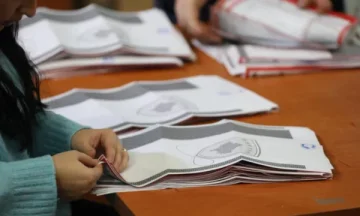
After the Serbian government's ruling Progressive Party won an extraordinary victory in parliamentary elections Sunday, several European leaders took the line to make their congratulations. Although no other party had a chance. Or that Serbian President Aleksandar Vuciq, the leader of the ruling party, controls the country's institutions and media organisations, as well as exploited the coronary crisis to further suppress citizens' rights and freedoms.
What is unacceptable and punishable in a regime like Russia or Turkey is somehow considered acceptable when it happens in the Western Balkans. Former European Council President Donald Tusk has done his own congratulations on Twitter, saying the result “is evidence of your citizens' trust and effectiveness”, as well as by asking the “Vuchiqi to use this success for Serbia's European path and for the benefit of the people, both the defeated. The more power, the more responsibility”. Austrian Chancellor Sebastian Kurz was also among those who made congratulations.
For more than a decade, EU representatives have followed the same pattern. They preach the importance of EU values, democracy, rule of law and human rights in the Western Balkans, even though they support politicians like Vuciqi, who handle these values with obvious contempt.
The tightening of Vuciqi's control over Serbia did not happen overnight. It was built in most of a decade during which it was embraced, as the EU's hope, for a European Serbia.
Understandably, these mixed messages have contributed to the impasse of reforms and a erosion of citizens' trust in Serbia and elsewhere in the region towards the EU, where Western governments have also turned a blind eye to undemocratic behaviour in the name of political stability.
And yet, European leaders see surprised when states make little or no progress with democratic reforms, and label the region a “mian clock”, which is not ready to enter the EU soon.
The reason behind this mindless cycle is not so mysterious. It's European hypocrisy.
“If the EU continues to offer a decorated view of the situation in Serbia and use a vague language, it will only contribute to further decline of pro- feeling. The EU and will further discourage the truly democratic and reformist forces --” -- declared Serbia's opposition civic platform, which boycotted Sunday's elections, in its report on the future of the enlargement process.
Their words should be a warning to European leaders. The risk of the EU undermining its credibility in the Western Balkans is very real.
Our two-faced Balkan policies will come back to bite us. Every time we choose stability instead of systemic transformation in the Western Balkans, we damage investments in the region and our security to not mention the future of millions of Europeans in the Western Balkans.
What we call <x0 states failed” are actually the states that we've left in the mud. Instead of complaining about lack of progress, or recycling old approaches to a “strategy for the Balkans”, or making new criteria for EU membership, the European Union needs to review its entire approach.
Our leaders should move on and make the insistence on implementing EU standards and values, a key component of bilateral relations and EU-Western Balkans relations, at each meeting with their counterparts in the region.
Of course, it requires that they put into practice what they preach and become agents of change in the Balkans, rather than strongly supporting a party or a leader. Support must be reserved for pro-democratic forces, fighting for individual rights and freedom, and transforming their country's trajectory.
The EU should not support leaders like Vucinciqi to stone the status quo. The change will require persistence, integrity and, above all, courage. /Buriment: politico.eu /In Albanian by: world.al/