6 minutes ago
Private labs in Kosovo do not have permission to run coronary tests
Periskopi(6 years ago)
(6 years ago)The public health sector in Kosovo has not yet begun to run serological tests, in which it can be proven if a person had the coronary. Such tests are important to determine the degree of immunity to COVID-19, which is caused by the new choreography, especially in those who [...]
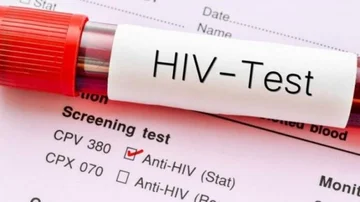
The public health sector in Kosovo has not yet begun to run serological tests, in which it can be proven if a person had the coronary.
Such tests are important in determining the degree of immunity to COVID-19, which is caused by the new coronary, especially people who have not shown symptoms.
But, Besim Nuhiu, a citizen from Pristina, says this test, he has managed to do in a private laboratory.
I've done my blood test before, to know if I had the coronary. I have proved negative. But when I tried to test my family too, I couldn't, as this procedure was cut off”, said Mr. Nuhiu.
The private Avicena laboratory in Pristina, through a web site report, reports that it is supplied with tests for the detection of COVID-19 and that “testing capacity is 50 per day at a price of 20 euros”.
The test used, according to this announcement, is “s fast and precise chromatographics for detecting antibodies created by Coronavirus”.
Free Europe Radio has contacted this laboratory, but one of the contact numbers, which is said that you can set the term for the test, while in the next, they said they don't run such tests.
Kosovo's Avicena laboratory owner Driton Schuki, in a response sent to Radio Free Europe, has announced that on the date 03.04.2020, he has accepted the license to import medical equipment from the Kosovo Agency for Products and Medicines.
He said the lab hasn't started yet with testing these tests, it just published this test release on how this test is done and its accuracy.
“Avicen in Kosovo is pending from the Ministry of Health that will withdraw the temporary suspension of the use of rappid tests (v.j. Quick tests) for COVID-19”, said in response.
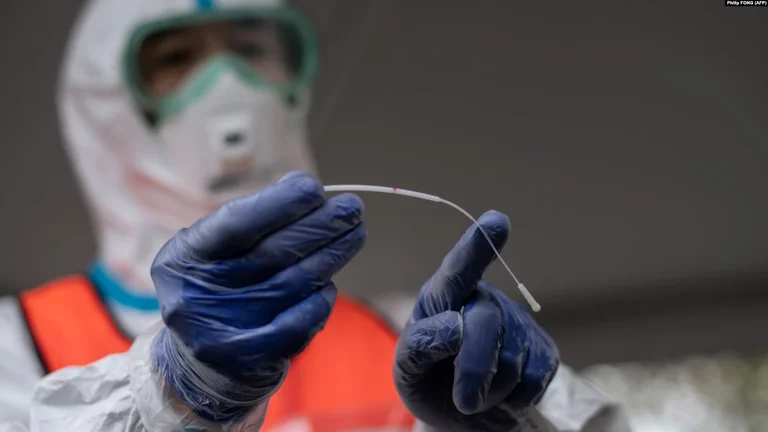
The serological test differs from the test known as the shortcut P CR [Polymerse Chain Reaction], which determines whether the virus is active.
This first one is used to detect the presence of the virus in the past and antibodies that may have been created by a patient. The serological test is accomplished through blood samples analysis.
Test The PCR, meanwhile, is one which is monitored by the National Public Health Institute. By means of it, it proves that a person has an active infection, analyzing his nose and throat.
In the Ministry of Health in Kosovo they tell Radio Free Europe, that no lab has been given permission from this institution to conduct any test in interconnection with COVID-19, since “is not known where they receive tests and how accurate they are”.
The Health Ministry has not approved the use of any other test for SARS-COV-2 detection, except for RT- The PCR, which is carried out at the Moldovan microbiology laboratory at the Kosovo National Public Health Institute (IKSHPK)”.
In view of the need and importance of testing to have the greatest accuracy possible, they were made only at the IKSHPK, the public sector, with equipment to testify to the accuracy of the results, said Faik Hoti, director of the Health Ministry information department.
The serological test, which determines antibodies in one person, does not currently do the National Public Health Institute either.
PCR tests only take place in Kosovo
Only tests are conducted in Kosovo, which show whether a person has an active infection of the new choreography and this kind of test is conducted only at the Mastic Microbiology laboratory at the National Institute of Public Health in Kosovo.
Even for this test, there is no permission for any private laboratory in Kosovo.
Microbiologist from the National Institute of Public Health, Lul Raka, says all tests should have the stamp of the European Barnat Agency.
My <x0Ide has been that tests take place at the Kosovo National Public Health Institute, at regional institutes, in the cities of Kosovo, as well as at the main centers of family medicine”, says Raka, adding that it is of crucial importance that the accuracy of tests be over 90 percent.
Private labs, meanwhile, say, are unknown where they receive the test and can offer false results and therefore spread the infection.
Serological Tests Required
Patients cured by COVID-19 are supposed to be immune to coronarys. More and more countries in the world are attaching importance to serological tests, which reflect the population's immunity and therefore would also influence the ease of a country's restrictive measures.
Valbon Krasniqi, infected at the Infectious Clinic at the University Clinical Centre in Kosovo, tells Radio Free Europe that serial tests are necessary.
“should be looked at the way these are done, because there are several ways to assess immunity. The best and safest one, it's serology, so it should be seriously thought about it”, Krasniqi says.
Coronavirus, Krasniqi adds, is in over 80 percent of the cases passed in mild shape to moderate ones. He says the likelihood is that a large number of citizens in Kosovo have passed this virus, without symptoms at all”.
If we had a more accurate information, on eventual immunity at the country level, it would help us get a more real mirror, it would guide us regarding measures to be made in relation to management of pandemic”, Krasniqi says.
He also warns that doing these tests is not simple if intended to create a real mirror and immunity within a society.
Such an assessment in the first place costs, and should be based scientifically on the selection of people who would offer the country-level immunity mirror.
From February 8th to May 12, 2020, at the Medieval Microbiology Laboratory in IKSHPK with RT- A total of 10,387 suspicious samples in the SARS-CoV-2 virus have been tested and a total of 919 cases, with a total of 29 cases of death and 671 patients cured.