8 hours ago
A lesson from “Do not return freedom of movement too soon
Periskopi(6 years ago)
(6 years ago)Social design did not significantly reduce the number of deaths from the Spanish flu a century ago because it did not last long enough, says a new research study that has implications for responding to COVID-19, Bloomberg writes. According to Bloomberg, a Harvard University economist, Robert Barrot, writes that “possible reason for” closing schools, [...]
By Bloomberg, explains Telegrafi, Harvard University economist Robert Barro, writes that the possible “reason for closing schools, bans at public gatherings and quarantines and isolation in various US cities did not save many lives is that they had an average duration of only one month”.
The learning of coronavirus pandemic in 2020 is that, to reduce general deaths, The NPI [non-farmacetic interventions] should be maintained for more than weeks. Likely, 12 weeks work much better than 4-6 weeks”, the National Economic Research Bureau's work document was quoted as writing Barro as writing.
However, according to the American media, Barron's estimate does not take into account economic losses from a prolonged closure.
But in an email, he says that any decline in gross domestic production should be weighed on the economic value of saving life.
Otherwise, the virus, which first appeared in the city of Wuhan, China, spread throughout the world into pandemic.
Worldwide, 284,033 people have lost their lives by COVID-19, while the rate of cases has reached 4,196,193.
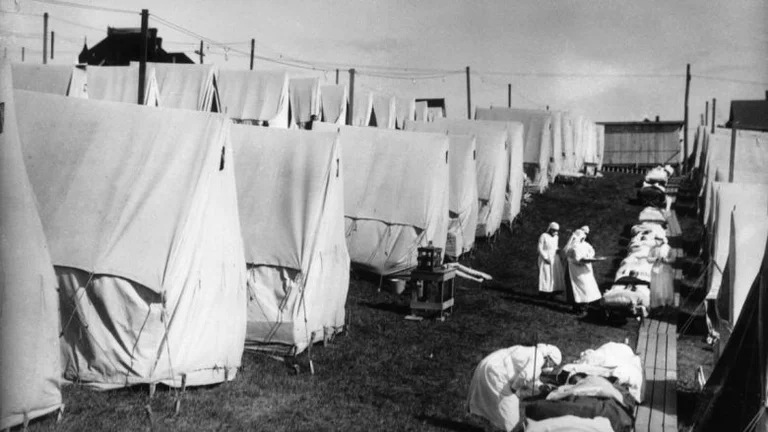
While “Spanish flu”, also known as the 1918 flu pandemic, was a pandemic of the extremely deadly flu caused by the A1N1 virus.
Lasting more than 12 months from the spring of 1918 (northern Hemisphere) to early summer 1919, it infected 500 million people a third of the world's population at the time.
The death toll is estimated to have been some 17 million to 50 million, and perhaps as many as 100 million, making it one of the deadliest pandemics in human history.