9 minutes ago
New Israeli government must recognise Kosovo
Periskopi(6 years ago)
(6 years ago)For some time, Israel has been increasing its commitment and cultivating new relations on the Balkan Peninsula. However, its Balkan map continues to have a black hole, Zeri broadcasts.info. Despite Kosovo's continued efforts and the sincere admiration of its people for the Jewish state, Israel until [...]
Despite Kosovo's continued efforts and its sincere admiration for the Jewish state, Israel has so far refused to establish relations with the newest state in Europe.
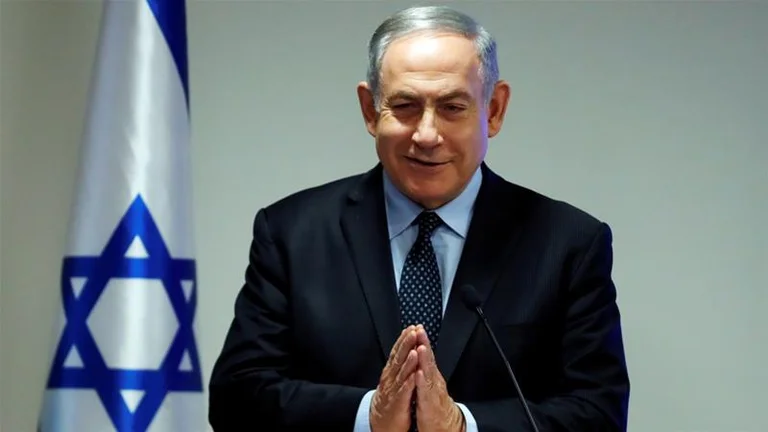
The new unity government led by Prime Minister Benjamin Netanyahu and Alternative Prime Minister Benjamin Gantz has the possibility of finally ending this status quo and moving towards the recognition of Kosovo.
It is clear that Israel's reluctance to join almost 100 countries in recognising Kosovo does not advance any of its interests.
In fact, there are significant opportunities for co-operation between the two countries that remain unexplained. With its large new population, Kosovo sees Israel as a model for becoming the nation “start up” of the Balkans”, Zeri.info broadcasts.
Kosovo's population is comprised of more than 90% ethnic Albanians, and its recognition by Israel would further improve the excellent general relations between Albanians and the Jewish people.
Israel enjoys strong ties and is boosting co-operation in trade, tourism and security with Albania. Kosovo would be a similar friendly environment for Israeli investors and tourists, and its recognition would pave the way for economic and security co-operation. Moreover, the two countries share the same values and principles. Like Israel, Kosovo was founded on the universal values of democracy and freedom. A multi-religious and multiethnic state, Kosovo adopted in its declaration of independence a commitment to guarantee and protect the rights and freedoms of all ethnic and religious minorities.
Today, the country serves as a model for many of its neighboring countries behind it. His Jewish community, although very small, is officially recognized by the Law on Freedom of Religion and enjoys all rights and protections like all other communities.
Twelve years after Kosovo's declaration of independence from Serbia, Israel's initial fears that it could be considered dangerous precedan in the international arena proved to have nothing to do with reality.
Kosovo's independence came as a result of a uniquely co-ordinated process led by the US and other Western governments. Although Serbia refuses to recognise it, Kosovo's independence has been legally confirmed by the International Court of Justice, as a sui genius case and in full compliance with international law. Even more importantly, it has served as a cornerstone of peace and stability in the Balkans.
By recognising Kosovo, Israel would join most Western countries that have already done so, including the US, Canada, Germany, the United Kingdom, as well as a majority of the United Nations member states.
At the same time, he would do justice to the principle of self - determination on which Israel itself was founded.
Kosovo is indeed the story of a oppressed population, just 20 years ago, undergone a vicious campaign of ethnic cleansing undertaken by Serbia.
Without the leadership of Western democratic states, such as the US and Great Britain, today we would not talk about a new liberal and democratic state. But we would also discuss another genocide that would have occurred in the heart of Europe less than six decades after the Holocaust.
In the 1990s, Albanians in Kosovo underwent the largest deportation of a European population since the end of World War II. Out of a population of less than 2 million, about 1 million Albanians were expelled from their homes, and more than 120,000 homes were destroyed. Serb crimes in Kosovo remain, to this day, still unpunished. Among the 13,000 -- 15,000 people, most of them ethnic Albanians -- were killed during the conflict. Thousands of women between 20,000 and most of the measurements were violated by Serbian soldiers and militia.
The US-led NATO campaign that ended Serb monsters in Kosovo and opened the way for independence was greatly supported by Jewish communities worldwide, especially the American Jewish community. Jewish leaders in the United States were among the most important and supportive voices that contributed to the intervention that prevented a genocide and brought peace and stability to the Balkans.
Taking into account the historical context, the unique nature of the Kosovo issue and the potential to create important relations, there is no reason for Israel to continue to reject clear offers of friendship with Kosovo.
One might say that by doing so, Israel risks breaking relations with Serbia. It is true that Israel and Serbia enjoy good relations, but this comes even despite Serbia's close relations with Palestinians, and the support it offers, including several cases in the UN.
Serbia's position on the issue was reiterated recently by Serbian Foreign Minister Ivica Dacic. While signing an agreement for increased security co-operation with Palestinians last January, the Serbian minister stated that their “views of Palestine are strong and irreplaceable”. The idea that Kosovo's recognition would jeopardise Israel's relations with Serbia is a myth instead, establishing relations with Kosovo would level them.
The expectations are high by the new government in Israel.
The complex local and international challenges are being collected and waiting for leadership and decisive solutions.
But while most of them require great attention and energy, the new government has an excellent opportunity to win, without much effort, a new friend in the international arena and prove itself in a delicate but important region like the Balkans. /Sound/
The author is a foreign policy expert, with the focus of the Balkans and the Middle East. He's a science magistrate in the conflict resolution of Columbia University. Twitter: @AcryriCipa