 8 hours ago
Hospitals are expected to return to work as before pandemic
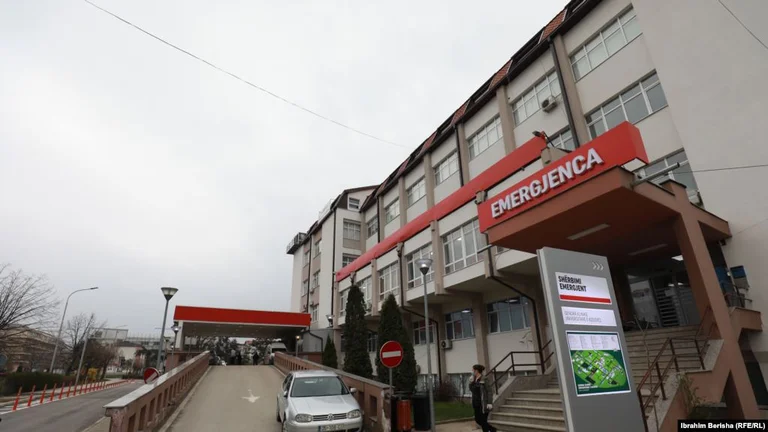
Periskopi(6 years ago)
(6 years ago)All health services that were performed before COVID-19's pandemic is declared will be returned to the University Clinical Centre in Kosovo, doctors at this centre and health ministry officials have said. These officials have said this is a matter of days now, but they have not indicated a precise date. Basri [...]
These officials have said this is a matter of days now, but they have not indicated a precise date.
Basri Sejdiu, director general of QKUK, told Radio Free Europe that this centre from the beginning of the pandemic is working with doctors' custody rather than full capacity.
He said that he is already considering the possibility of a full - time job resume.
The Kosovo University Clinical Centre commission, together with the Ministry of Health, is working to see when we will start working at full capacity. Otherwise, the service for patients from the waiting list has been interrupted, meanwhile, emergency cases have been constantly worked”, Sejdiu said.
Faik Hoti, spokesman at the Ministry of Health, said he has already begun drafting the plan to restore full health services. But he did not give any date when this will happen, though he said it is a matter of days.
The decision not to handle emergency cases came in March from the Health Ministry to preserve medical staff, but also patients from eventual infections with the new coronary.
“As soon as details of this plan have been carried out aimed at restoring services by providing personnel and patients, those that have been postponed for a while will also be launched as long as vital services have worked all the time. It is a matter of days to implement this plan”, Hoti said.
According to the head of the Association for Patients ' Rights, Besim Kodra, the situation of the past few months has created a lot of confusion because it is often not known whether the patient is an emergency or not.
The patients with brain attacks, for example, that are emergency cases, have been forced to stay up to 16 hours in the emergency clinic. That's because the corresponding clinic, in this case the neurology didn't admit without doing it to the test for Individual19. The results come in many hours, which for such a patient is very dangerous,” Kodra told Radio Free Europe.
Medical staff in the QKUK tent, checking a suspected Corleone person. Picture from the archive.
According to Kodra, the same situation has been in regional hospitals where there have been complaints from patients that they did not receive health services.
Valbon Krasniqi, infected at the University Clinical Centre, told Radio Free Europe that all patients with COVID-19 (the disease caused by the coronary) have been treated there, but for the safety of patients with other infectious diseases, they have been sent to other clinics.
And we're dealing with other clinics, and we've got patients in those clinics. For example, patients with meningitis or membrane inflammation that covers the brain and spinal cord, we have sent them to Neurological clinics, and we have forwarded them together with doctors there if there was a need for something patient”, Krasniqi said.
Doctors say the Emergency Clinic at QKUK has been the country that has accepted the largest flow of patients, since it has been the first door in which they are headed.











