8 hours ago
Education Minister Shows When Schools Will Be Opened
Periskopi(6 years ago)
(6 years ago)Some European countries have begun reopening schools after facilitating preventive measures against the pandemic of Coronobrius. But, Kosovo still does not have a date for the possible return of students to school banks. Since March 11th, all educational institutions continue to remain closed. Because institutions have not yet started relief measures in [...]
But, Kosovo still does not have a date for the possible return of students to school banks.
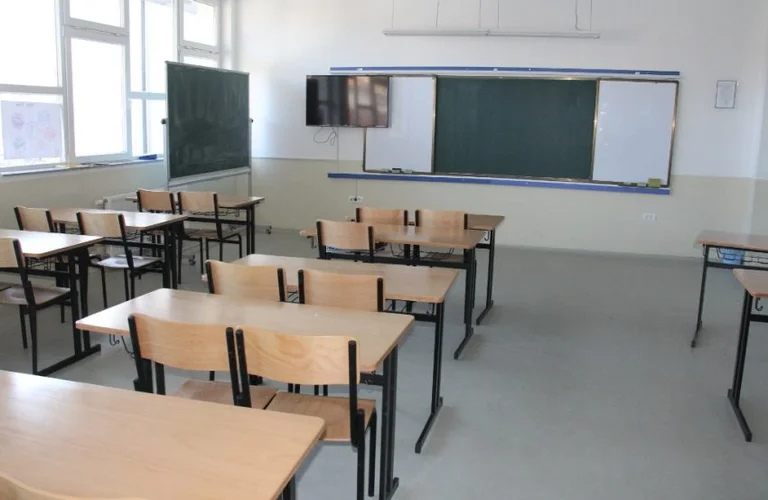
Since March 11th, all educational institutions continue to remain closed. Because institutions have not yet launched relief measures in education.
In the Kosovo Ministry of Education, they still have no decision whether students will return to school to continue the rest of this year.
Acting Education Minister Hykmete Bajrami says it is difficult to predict the return of students to schools.
Now we're at this time thinking about how to complete the year, how to organise the destination test and how to organize the senior test. We are making maximum efforts at how to prepare for the prom test, which seems to be challenging under the Kosovo National Public Health Institute (IKSHPK) and Health Ministry”, Minister Bajrami said in a conversation for Radio Free Europe.
Kosovo education recognisers stress that reopening schools should be done based on IKSHPK recommendations, as well as European countries' practices.
Youth Qehaja from Institute “Edgood”, says the Ministry of Education should think of a structured opening of schools.
The relaunching of learning would have to be subject to a scientific-based decision on transmission of disease by new age groups, which is presented as recommendation by the Institute of Public Health. If it is witnessed by scientific publications and practices of other countries, that broadcasting among children is small, then this should be the starting point of a structured opening of educational institutions”, says Qehaja.
The hours of the return of primary and high school students to continue the current school year are slim because on June 16th the year for the 9th and 11th grade ends, while the year for primarys and classrooms 1 to 8 ends on June 26th.
The new school year is expected to begin in September, but will depend greatly on the development of the situation with the new coronary pandemic.
One of the problems facing schools in Kosovo, especially those in urban areas, is the large number of students in class.
From 30 to 45 comes the number of students in a classroom in both elementary and high schools.
The Kosovo Parents' Council is concerned about the readiness of institutions to start a new normal teaching year in September.
The head of this council, Ymret Resiti, tells Radio Free Europe that the Ministry of Education should take on the practices of Western states by creating the physical distance between students in classrooms as well as the division of students into groups at different times.
The Ministry of Education must try all options that are more practical, enabling it to keep the learning process as effective as it can from September. If it is said that they have been unprepared for this phase that we have faced with pandemic, there is no reason for a system of ʹonline) cases like this. The Ministry of Education should take practices and models that practice European countries and apply from September if the pandemic” continues, says Resiti.
Or, Kosovo institutions currently do not have such a pattern of teaching reoraganism available.
Education Minister Hykmete Bajrami says the large number of students in classes remains a huge challenge for the education system in Kosovo.
According to her, the summer vacation period will serve to find a practical solution to normal education, even in the event of continued pandemic.
Let me tell you the truth, we're not done yet. We are very focused on the outcome of this year and on organising two tests, then intensively work to find a solution for the start of the new school year”, says Minister Bajrami.
Denmark became one of the first countries in Europe to decide for the closure of schools following the appearance of the first cases of coronary infected.
The decision to close schools, Danish institutions made on March 12th under the deployment of restrictive measures to prevent the spread of the new coronary.
Denmark also became the first country in Europe to resume easing restrictions on education, turning students into schools.
On April 15th, the return of students to school began in this country.
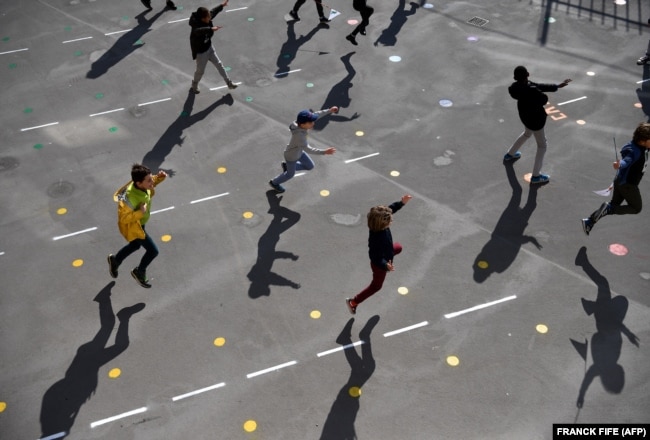
Denmark's opening of schools focused it on dividing classes into groups, creating separate times, creating a two-foot physical distance in the classroom, establishing a strict hand disinfectant regime by students and school staff, and keeping classes in the outside environment.
Denmark is considered to have one of the most advanced education systems in Europe.
Based on the records of Danish institutions, the average student in a classroom under normal circumstances is about 22.
Despite the opening of schools in this country, there was no apparent increase in coronary cases.
Students in Denmark holding open-air instruction.
Students in Denmark holding open-air instruction.
According to “ForldoMeters” thus far Denmark has a total of 11,387 cases of corruption, 563 people dead, and 9,946 persons healed.
Many other European countries have opened schools, including Germany and Austria. But even in these countries, preventive measures have been introduced to spread the virus, including physical distance, reducing the number of students in classrooms, as well as continued disinfectation.