a minute ago
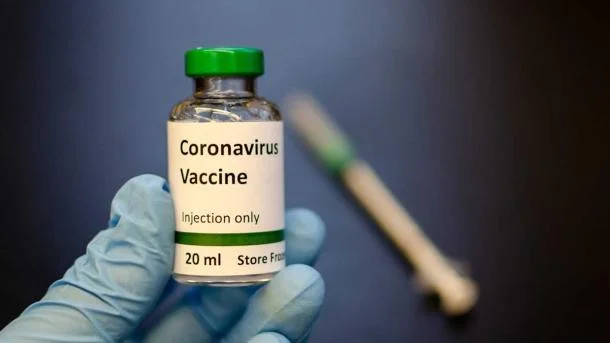
What if anti-Covid-19 vaccines are never produced? CNN predicts worst scenario
Periskopi(6 years ago)
(6 years ago)As the coronary pandemic situation moves toward normalization, the whole world hopes that the invention of the vaccine can finally calm us down. But there is another possibility, the worst - never to produce vaccines. In an imaginary scenario of the famous American media CNN, societies would learn to live with the virus, testing [...]
But there is another possibility, the worst - never to produce vaccines.
In an imaginary scenario of the famous U.S. media CNN, societies would be used to living with the virus, testing and tracking would follow day after day, but in the meantime the numbers of victims and infection would follow.
The countries that handled it well can only be based on these, but others would decide isolation and quarantine at any moment in life when they saw that they were being badly hit by COVID-19.
It's a challenge that politicians can rarely think of speaking out publicly, as they say with optimism that one day the vaccine will emerge.
But the worst possible option is taken very seriously by many experts because this happened before. Several times.
There are some viruses for which we still don't have vaccines against”, Dr. David Nabarro, a professor of global health at Imperial College London, who also serves as a special envoy of the World Health Organization in Individual-19, tells CNN.
We can't make an absolute assumption that a vaccine will show up or even if it shows up, if it's going to pass all the efficiency and security tests.
Most experts remain confident that a Cavius-19 vaccine will be developed eventually; in part because, unlike previous diseases such as HIV and malaria, the Coronavirus does not undergo rapid changes, CNN writes.
Many experts, including the director of the National Institute of Allergy and Infectious Diseases, Dr. Anthony Fauci, suggest that vaccines can be produced within a year to 18 months. Other voices, like senior British Medical officer Chris Whitty, say a year may be too soon.
But even if a vaccine is developed, its realisation in any of these deadlines would be an act never before achieved.
“We've never accelerated a vaccine in one year until 18 months,” tells CNN Dr. Peter Hotez, dean of the National School of Tropical Medicine at Baylor College of Medicine in Houston. “does not mean that it is impossible, but it will be a heroic achievement”, He ends up with Hotez.
When vaccines Do Not Work
In 1984, US Health and Human Services Secretary Margaret Heckler announced at a press conference in Washington, DC, that scientists had successfully identified the virus, which later became known as HIV ú and predicted a preventative vaccine would be ready for testing in two years.

Nearly four decades and 32 million deaths were later marked, the world is still awaiting an HIV vaccine.
Instead of a breakthrough, Heckler's claim was followed by the loss of a generation of gay men and the painful shock of their community in Western countries. For many years a positive diagnosis was not just a death penalty; it assured that a person would spend the last months abandoned by their communities.