14 minutes ago
Second U.S. vaccine against coronary, clinical trials begin
Periskopi(6 years ago)
(6 years ago)American researchers have launched yet another safety test of an experimental vaccine for COVIDD-19, using a light piercing on the skin rather than the usual muscle. Painting with syringes is like a simple taste for the skin, a researcher told a volunteer laying out to get an experimental vaccine in Kansas City, of [...]
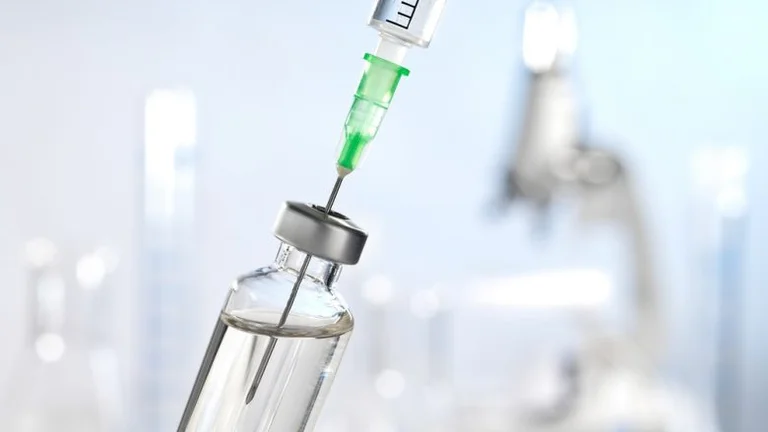
American researchers have launched yet another safety test of an experimental vaccine for COVIDD-19, using a light piercing on the skin rather than the usual muscle. Painting with syringes is like a simple skin test, a researcher told a volunteer laying out to get an experimental vaccine in Kansas City, Mizur, on Wednesday.
It's the most important evidence we've ever done,” Dr. John Ervin of the Center for Pharmaceutical Research for the Associated Press Agency. “People are taking turns in order to be part of this test.” The experiment, which uses a vaccine drawn up by Inovio Pharmacologicals, is part of a global effort to find much needed protection against a virus that has caused a break in economic activity and is forcing people to stay indoors while countries try to curb the spread.
Another vaccine began testing people's security last month in Seattle, created by the National Institute of Health. About two thirds of its participants have received the first of the two necessary doses. The Inovio company's study is designed to test two doses of its vaccine, called INO-4800, on 40 healthy volunteers at the research lab in Kansas City and Pennsylvania University. Inovio is working with Chinese researchers to start a similar study soon there.
These early stage studies are a first step to see if a vaccine appears quite certain for greater tests needed to prove the efficiency of the virus. Even if the research goes well, it is expected to take more than a year before any vaccine can be available. Dozens of possible vaccines are being created in labs worldwide, and are expected to begin this first trial process over the next few months.
The good thing is that we have a host of candidates,” said Dr. Anthony Fauci, chief of NIH infectious diseases, during a podcast for the Journal of the American Medical Association on Wednesday. Most of the developing vaccines have the same objective: A protein that protects the surface of the virus and helps it conquer human cells. However, many function in very different ways, making it important to test different possibilities.
Inovio researchers packaged a portion of the virus' genetic code within part of the synthetic AND. Injected in the vaccine, cells act as a mini-book to produce copies of harmless proteins. The immune system makes protective antibodies against them necessary if the actual virus ever comes to attack. DNA vaccines are a new technology. The candidate for vaccine of NIH, produced by Modern Inc., works in a similar way, except it uses a genetic code called RNA is injected deeper into muscle.
None of the two possible vaccines use the current virus, which means there is no chance that volunteers will be infected by vaccines. / VOA