8 minutes ago
How will pandemic affect global food supplies?
Periskopi(6 years ago)
(6 years ago)That strawberries you're eating while you're vetoed by the Coronavirus? The odds are it came from a farm. Or it may have come from a large agricultural operation many miles away from your home. It may have been handpicked, perhaps by immigrant workers, and brought from other cities, and [...]
That strawberries you're eating while you're vetoed by the Coronavirus?
The odds are it came from a farm. Or it may have come from a large agricultural operation many miles away from your home. It may have been handpicked, perhaps by immigrant workers, and brought from other cities, and perhaps even states.
But will your systems continue to bring forth strawberries until the global pandemic of coronary continues? Or the bread? Garments or cooking oil?
Coronavirus has already put the global economy out of control. Tens of millions of people have quit their jobs, as factories from Vuhan to Bahari have suspended operations.
What does this mean for the food we eat?
If you live in a rural environment, in a mild climate where the harvest season is developing, you can prepare for the eating of crops from your garden.
But if you live in the city like more than half the world's population, the chances are to rely on the global supply chain.
What happens when people who harvest fruit and vegetables should either enter quarantine? What happens when the packrs, who make sure the potatoes and onions are piled up and put in trucks to get to the cities, can't work? What happens when the wheat cannot be processed and sent to the oven?
Can we face global food shortages in the coming months?
Massive destruction of the global food supply system will come from the pandemic”, Chris Elliot, professor at Queen University in Belfast, wrote in a Twitter post.
In mid-March, the pandemic has taken off in many countries, even though some have started to show signs of the <x0maching of the Kurbe” ) a term used to indicate the slowdown of the pace of new infections.
But the shipment over the global food supply system was clear.
A prolonged pandemic crisis may quickly tighten the chains of food supply ʹ a network involving farmers, agricultural products, processing plants, transportation, retail and retail sales”, warned in a writing Maximo Cullen, chief economist at the United Nations Food and Agriculture Organisation.
Panic shopping in some countries has raised concerns that inventoryrs of vendors and merchants may be on the run.
In early April, the World Food Programme another United Nations agency attempted to provide security to nervous consumers.
The global trades for basic cereals are well supplied and prices are generally low”, the World Food Programme said in a report released on April 3rd.
“Cuts so far are minimal; food supply is sufficient and markets are relatively stable”, Elizabeth Byrs' spokeswoman was quoted.
However, soon we can see disruptions in food supply chains”, if large importers lose confidence in the reliable flow of basic food goods”, she said.
For industrialized countries, where the chains of food supply have already gone through a change because of changing habits and consumer tastes, this brings more uncertainty.
“We're talking about radical changes in a food chain that was already going through a radical 48x1>, retired professor of international food policy and business at Friedman School at Tufts University in the United States told Radio Free Europe.
Who is more at stake?
For major industrial countries whose population tends to focus especially on urban and periphery centres, food supply chains are longer, more complex and, perhaps, more endangered.
For example, if you do not obtain eggs and milk from your chickens and cows and goats, then you can take them from farmers in the nearby village.
Other goods, such as wheat, corn, or soybeans, are sold and sent in large numbers, often from longer distances. This means that there are more points where the supply chain can be broken.
Add to this the factor of fear - consumers who fear the possibility of lack rush to buy more than usual, thus causing lack.
This has led some countries to reduce food exports in an effort to ensure that their citizens have enough food.
Vietnam, a major rice exporter, has suspended exports of this product and other goods. India, the large rice producer, like Vietnam, has also suspended exports.
In Kazakhstan, one of the world's largest wheat exporters, the government has limited its exports. Earlier, the government has suspended exports of other goods, such as sewing, sugar, and sunflower oil.
Last month, Russia, the world's largest wheat producer, has suspended exports of rice and oatmeal.
Limited supplies have increased prices, not only at the local level, but also globally in some cases.
In the Boston area, for example, the price of eggs has tripled in recent weeks, Tilotson said.
Rising prices and restrictions on supply have created opportunities for the black market. Police in Kyrgyzstan this week have seized shipments of wheat flour, which would be smuggled abroad in sacks labeled as “cimento”.
In an unusual public call, activists, academics and a group of leaders of several major food processing companies in the world warned on April 9th that the number of people facing hunger could rise significantly in the coming months.
The “may not be more important time now for keeping the trade flows open”, says the letter sent to world leaders.
The letter also calls on food exporters to continue supplying international markets and supporting the most endangered populations, as well as investing in local production.
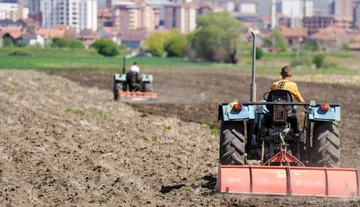
Who harvests?
The harvest process and their delivery package is also threatened, experts say, as workers struggle to provide protective equipment from the coronary, or some are not allowed to travel to farms because of isolation or travel restrictions.
“The issue of workers' health and their availability are one of the biggest challenges to production”, the risk analysis group Fitch Solutions warned in a report on March 25th.
In the United States, immigrant workers make up most of the labor force on farms and agriculture. And in California, one of the leading states of the United States for the production of food and agricultural goods, state officials have issued the command of staying at home, minimizing people's movements and transmission of coronary. This has affected farm work.
However, sooner or later, coronary infection will fall, governments will ease restrictions on travel and trade, and supply chains will be returned to normality, experts say.
And at that time, people can face another problem: what do they do with all the extra goods in their closets and refrigerators?
If people buy more goods now, they don't use more, they collect reserves. When things return to normality, consumers will have many canned soups and toilet paper in their homes and will not need to buy more”, said Goker Aydin, operations manager at Care Business School at Johns Hopkins University.