4 hours ago
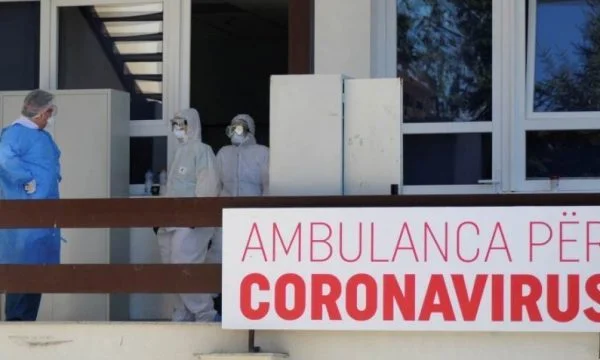
Infectian Ahmeti: If cases of COVID-19 increase, Kosovo medicine will have problems
Periskopi(6 years ago)
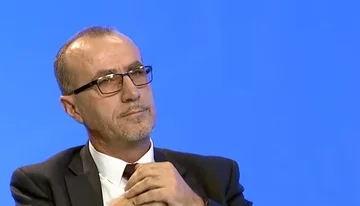
(6 years ago)Infectologist Sali Ahmeti, in an interview for Radio Free Europe, says that if the new coronary follows a normal development, it will begin to withdraw early May. He says that if a comparison is made with other viruses that have emerged in Kosovo as a crime-ongo fever, he has shown virulence more [...]
Radio Free Europe: Mr Ahmeti, what are the challenges you and your health staff are facing with people with COVID-19?
Sali Ahmeti: Access to these patients is a particular challenge for health staff, starting with doctors, nurses, and support staff, so they have close access to patients in so-called isolation departments. Since we try our best to respect personal protection measures, however, we can never eliminate the risk of carrying infection even to the staff.
Hence, the risk of carrying health staff infection is possible despite maximum respect for safeguard clauses, and if that happens, of course it will also follow the reduction of the number of health personnel.
This is a unique challenge, and we're all making it possible not to be touched with this virus in the middle of health and of course I say a particular challenge despite having some experiences in the management of epidemics even earlier.
But this choreography has created some type of phobi to the approach of these patients -- a panic, perhaps to some extent, maybe not to say too much, but we've already gone through that crisis, especially colleagues who, for the first time, face such illnesses.
About a few days or so, there's been an approach to these patients with some type of fear or phobie, but now we're settled and I think everything's going well. The staff is motivated and given everything possible to help those patients. We're still managing without any particular concern.
Radio Free Europe: What are the capacities of health institutions to fight this virus?
Sali AhmetiIf we, if we continue with the current trend of reporting cases, or with a flat curve of random presentations, whether among contact persons or those seeking hospital assistance, I think we have enough medical capacity and staff to manage these cases. If, eventually, any unexpected events or uncontrolled and unplanned growth of cases occur, then things will be difficult, depending on the incident of people affected. Even this epidemic has often caused problems for highly prepared and advanced medicine, whether European countries that have been well prepared or with medical staff and sound infrastructure.
Kosovo has always faced dangerous viruses
Radio Free Europe: A period of time passed since the first case was presented with COVID-19 in Kosovo. How do you view this situation and think there are few cases in Kosovo?
Sali Ahmeti: Compared to other countries, however, I think we're good with the number of confirmed cases on the ground, and those that get to the hospital. Not to be overlooked are time preparations and measures taken, even from all health and government institutions and on the other hand, it should be thanked that even our citizens who have observed é think any concessions will always be - but very well ignored recommendations given by health experts.
So the isolation measures, distance, personal hygiene, have played a role. On the other hand, health staff I believe has responded to all these challenges with a willingness.
I think that if the virus follows a normal or natural development of similar viruses from his family, I think that by the beginning of May this virus will begin to retreat, of course that during May we should have a much reduced number of cases. This is a natural logic of the epidemic development of viruses by the Corleone family and other respiratory viruses, even though the virus has many unknowns. [Virus] remains enigmatic and in such cases may even surprise us, but they would be special exceptions to this virus.
Radio Free Europe: Is this the worst virus you've fought since you've been a doctor of infectious diseases?
Sali Ahmeti: Compared to viruses, we've constantly faced epidemic outbreaks. For example, we had hepatitis A at the end of 99 with over 20,000 cases.
We've had an epidemic explosion of 2003 tolarification. We have it back in 2017-2018, the measles epidemic, ceroz-viral meningitis in 2016, but we're the evasive place for viral bleeding, especially those of crime-congos, which are high-congestive diseases that are carried between people and health staff and are caused by a virus that is pathogenic.
I think, judged on our own case, compared to a clinical experience, between those patients and now, I can say that the virus of crime-congo fever, has shown greater virulence, has been more pathogenic in relation to the coronary.
Most of the young age and the greatest touch and mortality have been affected at between 20 and 40 years of age.
And the OVIED-19 virus is a virus that is probably less aggressive. A significant number of cases go with asimtomatic and light forms.
Heavy forms, especially in our up to date pathology, are reserved mainly for middle age or extended age, which, along with coronary infection, have other associated diseases, which in our cases have resulted from 1 to 4, 5 contact with life - important systems that have been chronically problems, especially diabetes, and then in the brunt and more chronic lung disease.
And young people, we've also had here a child five months old and the other five years old, but they've been through the disease without any particular complications, and we've released them in their homes a few days ago.
Yes, what makes it more special is this virus's high pathogen, which means that interhuman transport capacity among people, a huge reason for lower antivirus in proportion to the virus of bleeding crime-congo fever.