a few seconds ago
These are the countries that have already taken the first steps to remove coronary restrictions
Periskopi(6 years ago)
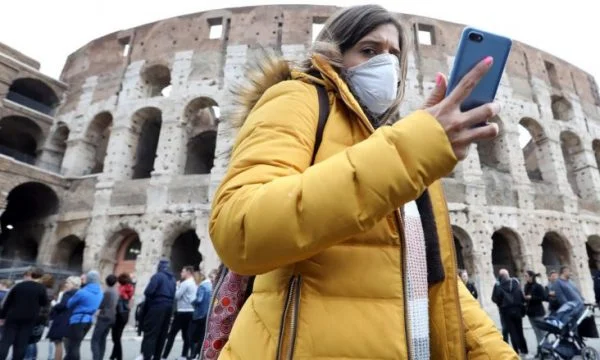
(6 years ago)Europe took its first professional steps towards a return to normal on Monday, while some countries are reopening businesses. In this regard, some nations have announced that they are preparing to ease their limitations as a result of coronavirus, the days ahead. According to the Daily Mail, it conveys Telegraph, Spain and Italy two [...]
Europe took its first professional steps towards a return to normal on Monday, while some countries are reopening businesses.
In this regard, some nations have announced that they are preparing to ease their limitations as a result of coronavirus, the days ahead.
According to the Daily Mail, there are some different industries that have resumed, while Spain and Italy have been thinking about opening schools on Monday.
Thus, millions of Spanish workers returned to their jobs Monday after Madrid lifted restrictions on the non-substantial industry.
Builders, cleaners, construction, factories, and shipyard workers were allowed to return to work after police distributed millions of masks on the country's subway, trains, and buses networks.
Non-toxic industries closed two weeks ago as the virus peaked and the deaths hit more than 900 people per day.
But the relaxation came as the country registered its lowest number of new infections -- 3,477 ʹ for more than three weeks, with its daily death toll in 517.
Spanish Prime Minister Pedro Sanchez said the social distance and the ban on non-escial travel will remain, but that there may be a progressive and very cautious relaxation in two weeks.
While deaths in Spain and Italy make up nearly a third of the global number, Italy is also beginning a return to a stage of normality, as its growth in new infections dropped to only 2 percent.
The death toll reached 20,000 after 566 died down Monday from a peak of 919, just over two weeks ago.
The country will take into consideration easing further measures, as non-elebrity stores, such as book stores and children's clothing stores, are expected to reopen.
Social distance measures, bans for non-aligned travel, and the closure of non-substantial industries will remain in force.
Despite that, on Monday evening, French President Emmanuel Macron announced that the country's impasse would last until at least 11 May.
In a speech to the nation from the Elysee Palace in Paris, he insisted that “hope is returning”, with the situation improving in some regions.
Acknowledging that the country had not been ready for pandemic, he said: Were we ready for this crisis? Obviously it wasn't enough, but we stood up.
He said the country had no gloves, hand-sancing gels and masks, but that the government has begun taking the virus under control.
He added: In the next four weeks, government-set rules must be respected. They are not being strengthened or relieved.
There are also signs of hope in Germany. There, German Chancellor Angela Merkel is under pressure to ease the deadlock measures, writes the Daily Mail, records Telegrafi.
Experts urged her to open schools as early as Monday and called for stores and restaurants to reopen if social distance measures are respected.
Germany has managed to maintain its mortality rate below slightly more than 2 percent because of its high test capacity. In contrast, Italy is about 13 percent.
Several other European countries, such as Austria, Denmark and the Czech Republic, are also ready to ease their obstacles.
However, the head of the World Health Organisation, Tedros Adhanom Ghebresesus, said restrictions should be lifted gradually after the virus “slows down”.
On the other hand, China blamed citizens who returned from abroad after seeing its highest number of virus cases in five weeks.
Beijing reported 108 new cases Monday, 98 of them imported, bringing the number to 82,160. Two deaths were recorded in Wuhan, reaching the death toll of China at 3,341.