12 minutes ago
The masterpieces of great writers written during quarantine
Periskopi(6 years ago)
(6 years ago)Coronavius has forced billions of people to isolate themselves in their homes. For many, this is a serious experience, especially psychologically. But from artists to the greatest inventors, they have managed to change the world for the better from their quarantine chambers. Here are some of them. Eugen Onygin [...]
Coronavius has forced billions of people to isolate themselves in their homes. For many, this is a serious experience, especially psychologically. But from artists to the greatest inventors, they have managed to change the world for the better from their quarantine chambers. Here are some of them.
Eugen Onygin
It is the masterpiece of Russian writer Alexander Pushkin, first published in 1832. History focuses on the life of Eugen Ongygin, a wealthy aristocrat who lives in St Petersburg. Exhausted by his worldly life, he was transferred to the large farm of his late uncle outside the capital. There, he is familiar with the beautiful Tatyana Larina, who will become the extinguisher of his life. The work was written in the fall of 1830, after a severe cholera epidemic in Moscow convinced Pushkin to leave for several months on his family's property outside the city.
Samuel Pepis' diary
Samuel Pepis (1633)1703) was a member of the English Parliament, as well as a civilian naval administrator. During his lifetime, he was best known for his efforts to modernise the British Navy. But today, Pepis, is praised for the diary he carried during 1660-1669, as it remains one of the best documents regarding the restoration of the English monarchy. London was hit by bubonic plague in 1665. Thanks to Pepi's chronics, historians and scientists better understand how bubonic plague spread so quickly and why it caused so many deaths in London.
Magic Mountain
Named one of the best works of German literature, Thomas Man's novel was first published in 1924. He has Hans Kastorp, a young businessman from Hamburg, who decides to visit his cousin Joachim at a Sanatorium for tuberculosis in the Swiss Alps.
His journey is complicated, as he becomes ill himself and thus begins to meet other patients. Nearly all of them represent the social degradation of post - World War I.
And Thomas Mann knew some things about sanatoriums. His wife, Katia, suffered from tuberculosis, and in 1912 she was placed in a sanatorium in Davos-Platz, Switzerland. The writer visited him often. In the years that followed, both were regular patients in thermal baths around the world. Man turned personal experience on the scene where the events of “Magic Montenegrin” take place.
Anton Chehov
Like Pushkin before him, Chehov took time to write because of frequent cholera epidemics in Russia. Between 1892-1899, Chehov wrote some of his best-known stories, including “Pavion No.6” and “Black Murg”. At the same time, Chekhov had a half-sided life in his villa in Melikovo.
There he helped alleviate the situation for local villagers. While writing, he continued his daily work as an intern doctor. He had to stop working in 1897 because of the deterioration of his health condition. Chekov suffered from tuberculosis, which took his life in 1904.
Paradise Lost
Englishman John Milton took on many things during his lifetime. He was a pentist, philosopher, and as a politician he served as secretary of Foreign Language at the Commonwealth Council. But Milton is better known today as a writer. He wrote the work “Lost Paradise”, which speaks of Satan's expulsion from Paradise and his war against God and mankind. He began his work in 1652. But in 1665 he moved with his family from London to Sharkon to avoid the Great Plague of London. That is where he finished the book.
Decamron
Most likely written between 1348-1353, the book speaks of 10 young aristocrats who fled to a village to avoid the Black Death that had then touched the city of Florence. There they tell every 10 stories, or total 100 over a few days.
Like the Divine Comedy of Dante, the Decameron was written in the Fireent dialect, which eventually became standard Italian. Author Giovanni Bocacio himself lived in the terrible years of the XIV century plague. Similar to characters in his most famous work, Bocacio successfully avoided the epidemic that occurred in Florence, going to Naples and other Italian cities.
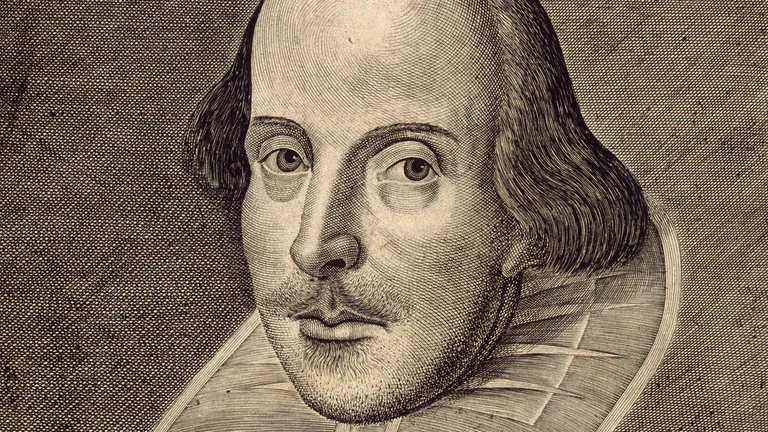
William Shakespeare
Shakespeare was one of the few children in Stratford-upon-Avon, who survived Murtaya in 1564. One of Shakespeare's most outstanding biographers, Jonathan Bay, writes that Shakespeare's experience with Murtaya was the single most determining aspect of his life and work.
The plague appears in some of Shakespeare's finest works, including “Jerome and Juliet”.
Even more surprising is the fact that Shakespeare was extremely productive in 1605-1606, when he wrote “King Ler”, “Makbeth and “Anton and Kleopatra”. Researchers now believe that Shakespeare was so productive during that time, precisely because of the plague of 1605-1606 that struck England.
Isaac Newton
English physicist and mathematician Isaac Newton is valued as the man who discovered gravity and who wrote the basic laws of physics. Without Newton's discoveries, the Age of Enlightenment, it could never have happened. Newton was a student at Cambridge University in 1665.
That year, the university was closed because of the Great Wally of London.
As the school was closed, Newton returned to his family home in Cambridge and began conducting a series of experiments. During his work in quarantine, he wrote down the laws of the movements of the tissues and those of gravity. When Newton returned to university in 1667, he quickly climbed the academic career rate, taking the title professor in 1669.