13 minutes ago
75 Years From the Tyvar massacre
Periskopi(6 years ago)
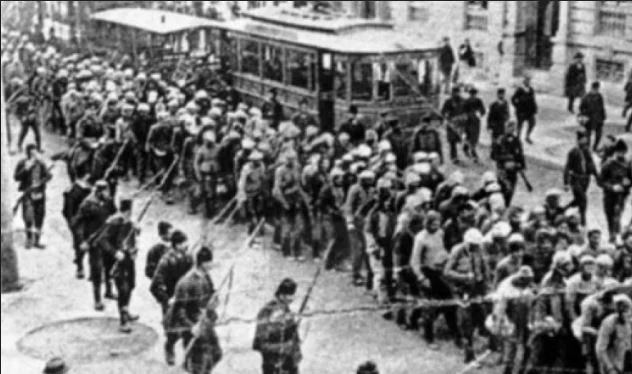
(6 years ago)Today, 75 years of the largest massacre committed against Albanians in Tivar, which took place on 30 March 1945. Nationalist war or World War II had just ended in Kosovo. The Albanian people, found and reinstated without their desire in Yugoslavia, however, hoped that his situation would [...]
Today, 75 years of the largest massacre committed against Albanians in Tivar, which took place on 30 March 1945.
Nationalist war or World War II had just ended in Kosovo. The Albanian people, found and reinstated without their desire in Yugoslavia, however, hoped that his situation would change radically compared to the pre-war. He hoped for union with his mother and hoped for freedom won in war with blood. But rather than enjoy the freedom won, the Serbian regime had planned and carried out mass massacres everywhere.
The spring of that year had come as dark as night, hell. The massacres, mass killings, imprisonment, and plunder of a war - weary people, poverty, and long captivity were numbered.
In the cold winter of 1945, the “rescuers of the Yugoslav” had rushed all over Kosovo and other Albanian parts to swallow them. To make it easier to devour, however, the partisan local entities, such as fields, kids, battalions and brigades, had been sent to war fronts abroad throughout Yugoslavia, allegedly to meet Yugoslavia's Nationalist Army partisan units.
Besides, the new Yugoslav regime had violently mobilised tens of thousands of Albanians to send them to the war fronts in Dalmatia, in Srem, and throughout Yugoslavia. But, instead of on war fronts, in March, April 1945, Serbian chauvinists, Macedonians and Montenegrins committed monstrous killings and massacres unprecedented on soldiers properly conscripted Albanians.
The Yugoslav Serb regime on February 8, 1945, had established military administration in Kosovo alone, which was fully guided by Serbian military ʹMontenegrins. On the specific order of the Yugoslav military station, the violent mobilization of Albanians had also begun. The mobilized were divided into two parts; one part was sent to the Srem Front, while the rest to the Adriatic Front (over 22 thousand soldiers). The second part of the mobilised or Albanian recruits initially gathered in Prizren, where they stayed several days, where they disarmed and split into the eshalo and other military units. Then they continued on their way to Tivar, through Kukes, Fushes-Arra, Puka and Shkodra, but on Serbian command of Serbia's 46th Division. On the way and through the cold, food-free and not allowing to quench the thirst, several hundred Albanian soldiers were killed. Upon arriving in Tivar, on April 1, 1945, a massive massacre of Albanian soldiers followed.
There they were killed without cause, according to some notes, over four thousand soldiers. On April 18th, another method of suppressing the measle gas plant in Raguza (Dubrovnik) has killed another 1300 Albanians. In the town of Market (Trogir) in Dalmaci, it drowned in the sea after sinking on a ship, at least 29 Albanians, conscript soldiers. The exact number of Albanian soldiers killed along the way across Albanian territory, in the cities of Tivar, Raguza and Market marketer, has never been learned.
The politics of the new Yugoslav Serb holders did not differ at all from the extermination of the pre-war Serbian regimes. Albanians were falsely accused. To them, the Serbian, Montenegrin and Macedonian political and military leadership had created a biased and deeply hostile attitude, reflecting later, during all political developments for Kosovo, with unjust actions, shovinist and fascist actions; deestimating “” The Bujan resolution, establishing the military administration, maniminating and violating the vote at the Prizren Conference, sending to Kosovo military units from Serbia and Macedonia to commit crimes, disarming the local population, making numerous arrests, opening files for each intellectual and patriotic Albanian, eliminating Albanians from power and administration, making the violent mobilization of Albanians only by massiting the soldiers mobilized but also the population, sending Albanian fronts to Kosovo outside of Kosovo's war for use of <x> to force them to move to Turkey.
The mobilization was reportedly being done for the fulfillment of Yugoslavia's People's Army military units for participation in liberation operations. But Albanian mobilised from Kosovo and the Albanian part of Macedonia were not sent to the fronts of war, nor to operations for the liberation of Yugoslavia.
Instead of being killed on war fronts, they were killed by their superiors, by their command, by experiencing the goals of endless suffering and unprecedented murder in history, both during the “journey to the fronts of the” war, and at (planned) sites for their mass murder; at Tivar, in Raguza, in Futur.
Albanian mobilized recruits had remained in the streets, remained under command and under the mercy of Serbian superiors and soldiers.
They were tired and tired, hungry and thirsty, without food, without care, and under very difficult conditions. Thus, the mass killings in Tivar, Raguza, and Teller were the proportions of unprecedented, monstrous crimes, the proportions of massacres and genocide. These killings cannot be named any other than as venturing the chauvinist and fascist passions of the Yugoslav military and political leader, of the Serb, Montenegrin and Macedonian leader, directly responsible for these tragic events.