39 minutes ago
Unlettered institutions
Periskopi(6 years ago)
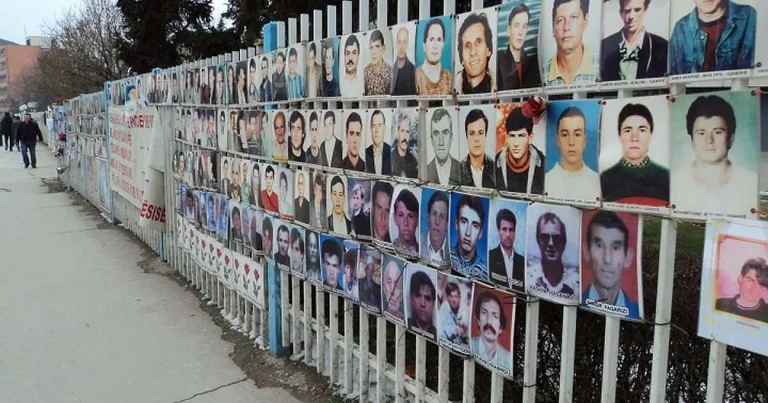
(6 years ago)For 29 years now, the Gashi family from the village of Studencan of the Suhareka municipality has received no news of the fate of their family member, Veselin, who in 1991, at the age of 20, had gone to Bjelovar in Croatia to military service in the former Yugoslav People's Army. Wessel Gashi is one of many citizens of [...]
For 29 years now, the Gashi family from the village of Studencan of the Suhareka municipality has received no news of the fate of their family member, Veselin, who in 1991, at the age of 20, had gone to Bjelovar in Croatia to military service in the former Yugoslav People's Army.
Wesel Gashi is one of many Kosovo citizens, although their exact number is still unknown, whose tracks have been lost during the wars in the former Yugoslavia's spaces during 1991 and 1995, in Croatia and Bosnia and Herzegovina.
Nurish Gashi, Veselin's brother, in a conversation with Radio Free Europe has recalled the time his brother had gone to military service, which was therefore mandatory and had never returned.
“has been in the last generation to have gone into military service, from here (Kosovo). It was in June 1991. His fate broke out there, and he's been in Bosnia for a month and a half, we've been communicating with him, through letters. Then it's off the hook, and we have no record of it. Baba was told that he must have passed the Yugoslav Army from Croatia to Bosnia, and thinking he is in the war zone, he has thought of going to find out something about him. During the time of the war in Bosnia, the father has been there two or three times, right in the war zone, but we no longer have any leads to him, Nurish Gashi said.
Victims Lost in Forget
Bekim Blakaj, executive director of the Fund for Humanitarian Law in Kosovo, tells Radio Free Europe that although the exact number of Kosovo citizens who have lost their lives or figure out how undiscovered they are during the wars on the territory of Croatia and Bosnia and Herzegovina, however, is allegedly a considerable number.
“I am afraid that these victims have remained in the shadow of numerous victims caused during the war in Kosovo and have not taken the rightful space in the public debate in Kosovo. So in a way, they're neglected and marginalized. On the other hand, the country's institutions have done little to dawn their fate, especially those from Kosovo, missing in Croatia and Bosnia and Herzegovina. A lot of families, they still don't even know where to look for information on the fate of their girlfriends”, Blakaj stressed.
However, authorities in Kosovo say there is an address where the families of citizens who figure it undiscovered since the war in Croatia and Bosnia and Herzegovina can be headed.
Gara, leader of the unit under the Government Commission for Ungenerated Persons, talking about Radio Free Europe, says recently at the address of this commission there have come some requests from the family members of Kosovo citizens whose fate is unknown since the war in Croatia and Bosnia and Herzegovina.
According to him, there is already a regional framework plan, signed in November 2018 by government commissions for the real estate of the countries of the region, under which regional co-operation has intensified for common challenges related to the unemployed. According to him, a series of meetings have been held since then, and recently, it has already launched co-operation with Bosnia and Herzegovina and Croatia.
So far, there are about 20 cases we have dealt with the state of Croatia. Finally, there are five cases we've handled with Bosnia. There are a number of cases, already registered in advance by Bosnian institutions, as missing persons, why they are citizens of Kosovo, but through families in direct communication with Bosnian institutions. There are cases (counted) that are highlighted in Croatia's war, thanks to the continued engagement and work of Albanian associations that are in Croatia. It means there are a number of cases that are registered. We, over the past ten years, at least the mortore remains of six people from Bosnia have been repatriated to the Republic of Kosovo”, Gara said.
However, he added, the repatriation of these persons, so far, has been a burden to families, due to the lack of direct co-operation between Kosovo and Bosnia and Herzegovina.
The Gashi family, immediately after the war in Kosovo, had failed to go to Bosnia anymore to seek information about the fate of their family, Wessel. Yet, as Veselin's brother, Nurrish, says, the family had turned to the International Red Cross and the International Commission on Missing Persons (ICMP), where they gave blood samples, for their family's eventual identification through DNA. However, he felt that they were not rarely disappointed even with international organizations.
“Call us words and we've been to Batajnica (Serbia) to identify the corpse because they had brought some corpses there. I was with an uncle of mine, together. We went, looked at them, and there was none of our family. In fact, they called us here to get the body because we found it. But it was not him (Vessel) and we could not decide to take a corpse from the stranger and take him to the village to bury”, Nurish Gashi said.
On the other hand, Gara says institutions are aware of the difficulties Kosovo citizens' families have gone through, without a trace in the wars in Croatia and Bosnia. The government's Commission on Un finders, according to him, is awaiting the legal mandate to deal with the issue of these people, but despite this, he extends an invitation to these family members to address this commission.
The race stresses that, in spite of political circumstances, the situation over co-operation about the found ones has already changed in positive terms, with all countries in the region.
And we're at a stage where we're increasing co-operation with these states, then surely the call is also for families, who continue to live with pain and lack of information about the fate and whereabouts of their most missing loved ones as a result of the wars in the former Yugoslavia, in this case in Croatia's war and the Bosnian war. The call is that the eventual data sharing with the institutions of the Republic of Kosovo or through its institutions to share in this case even with the competent institutions of the countries of the region, with Bosnia and Herzegovina, and with the Republic of Croatia” respectively, Gara said.
The Fund for Humanitarian Law in Kosovo has said it is necessary for Kosovo institutions to draft policies and take into account the interests of victims' families, citizens of Kosovo, who have suffered in the wars in Bosnia and Herzegovina and Croatia. According to them, 25 to 29 years have already passed since the war in these two countries, and it is the last time Kosovo institutions take care of the dawning of those victims' fate, as well as provide institutional assistance to their families.