11 minutes ago
“Secret” of Coronavirus quarantines, do they really work?
Periskopi(6 years ago)
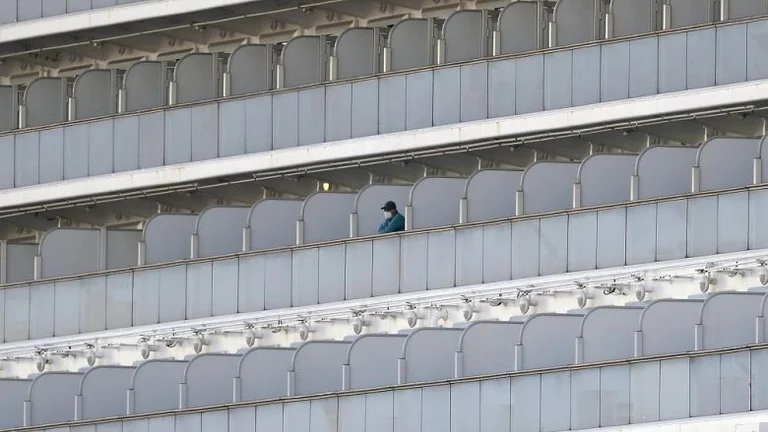
(6 years ago)On February 1, a man in Hong Kong was diagnosed with coronavirus, officially called COVID-19. A few days earlier, he had landed on a sailing ship called “Diamond Princess”, whose name would soon be known worldwide. A mandatory quarantine was imposed on ships by the ministry [...]
A few days earlier, he had landed on a sailing ship called “Diamond Princess”, whose name would soon be known worldwide.
A mandatory quarantine was imposed on ships by the Ministry of Health in Japan.
Although their isolation had ended, dozens of other coronavirus cases had been confirmed, bringing the total number of affected to 450.
And the question is: Are the quarantines being effective?
According to an NBCNews article, it reads, in 2013 and in 2016 Western Africa experienced the worst outbreak of Ebola disease, which continues even today, while numerous types of quarantine were created, both within countries affected by Sierra Leone, Liberia, and Guinea alike in other countries.
In this direction, Kelly Hills (bioethicologist) considers that quarantine in “Dymond Princesss” was not simply ineffective, but it was “obsolutely meaningless”.
“ “does not meet what we would consider the minimum standards necessary for violating someone's civil rights”.
Hills even estimates that the house self-control measures would be more human, and ultimately, perhaps more effective than the quarantine of healthy people without disease.
“People just don't like being forced to do things, especially if they don't feel like there's a good excuse”, she was quoted as saying.
And according to Kelly Hills' writing, published by NBCNews and sailing ships, it turns out they're not the best places for quarantine.
They're closed spaces, and we know from past explosions that viruses really like to spread in closed spaces.
But it also turns out that sailing ships are not good places for isolation which is “that has been destroyed” in the past as well.
For example, in Venice in the 20th century, health authorities at the time demanded that ships blocked by plague remain isolated for 40 days.
While saying that the disease spread through poisonous vapor, it took 40 days to isolate, disinfect and clean up “that was harmful” of the air.
The idea of isolating cities is also not new, and this is also historically recognized when city walls or soldiers were used long ago to keep the sick away.
Recently, during the 2003 SARS-CoV-1 epidemic, Hong Kong adopted quarantine protocols, designed for the first time to deal with the plague in the 1890s.
When police officers arrived at an apartment complex to order everyone to stay in quarantine for 10 days, they found nearly half of the 264 empty apartments, it said.
It is also estimated that in Toronto, which also experienced great isolation in an attempt to stop SARS, 43 percent of people abandoned quarantine.
In the meantime, according to the same scripture, with Ebola's explosion in 2014, doctors said it was their experience in Liberia and Sierra Leone that jams and quarantines do not help control it.