6 minutes ago
Negotiation for War Crimes
Periskopi(6 years ago)
(6 years ago)Kosovo Special Prosecutor's Department of War Crimes leader Drita Hajdari says the lack of judicial co-operation with Serbia is in the pursuit of war crimes. War crimes continue to weigh heavily in the arms of Kosovo and Serbia, which keep almost intact the widespread crime file [...]
Kosovo Special Prosecutor's Department of War Crimes leader Drita Hajdari says the lack of judicial co-operation with Serbia is in the pursuit of war crimes.
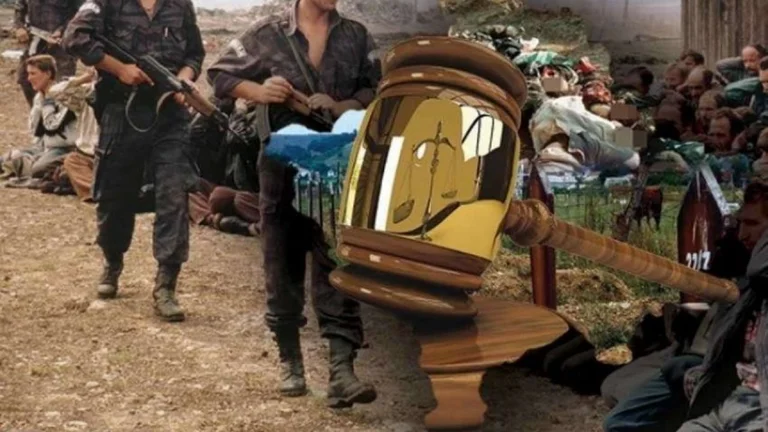
War crimes continue to weigh heavily in the arms of Kosovo and Serbia, which keep almost intact the wide record of war crimes, enabling perpetrators to evade justice.
In 2018 the Kosovo Prosecutor's Office inherited more than 900 war crimes cases from EULEX and about 2000 files on the missing, classified as war crimes that constitute a heavy burden for local prosecutors, not only on their volume, but also on the problem of time-finding evidence.
Kosovo Special Prosecutor's Department of War Crimes leader Drita Hajdari says the lack of judicial co-operation with Serbia is in the pursuit of war crimes.
Serbia is currently sheltering most war criminals. Another obstacle is to obtaining material evidence, not only from Serbia, but also from the Tribunal for the former Yugoslavia at The Hague”, Hajdari says.
“A particular feature of war crimes subjects in Kosovo is the instability of suspects, witnesses and provative material, of which most are found in Serbia”, Hajdari adds.
It suggests that judicial co-operation be part of the dialogue, which Kosovo and Serbia are expected to resume this year.
The war crimes issue and the manner of judicial co-operation with Serbia must be raised internationally. On the contrary, most criminals will be left unpunished”.
Hajdari says Serbia and Kosovo can use the example of Croatia and Bosnia and Herzegovina's agreement with Serbia in terms of co-operation and prosecution of war crimes. Until 2016, there was a co-operation between EULEX and Serbia, especially in the issue of missing persons.
The mission, which failed to establish charges of war crimes committed by Serbian forces in Kosovo, says it is now contributing to increased regional co-operation in war crime investigations.
Prescription must be placed and punished by war crimes perpetrators. E ULEX could not establish indictment for war crimes, since Kosovo's law did not allow default “Zerin” Ioanna Lachana, EULEX spokeswoman.
Family members of missing persons in Kosovo are also complaining that their search is hostage to lack of co-operation.
Bajram Qerinje, from the Bureau for Missing Persons Centre, says the non-co-operation has made Serbia and Kosovo a refuge for those who killed and disappeared many people.
“We demand that the issue of the missing be the first point in the talks”, says Qerkina.
In almost all cases Serbia requested that they be sent informally to the nearest border point. There were cases when they were left in the neutral border zone and then arrested by Serbia's police.
Vesna Rakic Vodinelic, a professor of the Jurydic Faculty at the University of Belgrade, says judicial co-operation between Kosovo and Serbia will be hostage to the lack of rule of law within these states themselves.
“in Kosovo and Serbia dominates the political influence on justice (especially on the prosecution). Lack of rule of law represents a critical point and the issue of deviation from justice is just one of the problems”, says Rakic Vodinelic for “Zerin”.
“Legal co-operation is a vital part of any level of dialogue. But the problem is that neither side seems to be so interested in rule of law”, she adds.
As co-operation seems impossible, another challenge for the Kosovo Prosecutor is becoming the death of survivors and their long wait for justice.
We have encountered witnesses who are disappointed with delayed justice and who have no interest in testifying to”, says Drita Hajdari.