5 minutes ago
Kosovo emptys
Periskopi(6 years ago)
(6 years ago)The high rate of migration of citizens abroad and the decline of nightiness are presented as factors affecting the population contraction in Kosovo. The official data of the Kosovo Statistics Agency over the years speaks of the significant decline in births and the increasing number of citizens that [...]
In 2012, the number of residents in Kosovo, according to data from the Statistics Agency of Kosovo published in reports entitled “Population assessment”, has been 1,820,631, while in 2018, the number of residents was 1,795,666.
Kosovo's resident population, for January 01st,31 December 2018, was reduced to 2,840 or -0.16 per cent.
Meanwhile, according to a report on the migration of the Ministry of Internal Affairs and Public Administration, Kosovo reportedly has lost about 2 percent of the country's population for 2016-2018.
Kosovo in the 2011 census had registered 1,739,825 people, but not residents of the Leposaviq municipalities -- Zubin Potok, Zvecan and North Mitrovica -- had since rejected the process.
And in the population rating reports, the number of residents is also included in these municipalities.
As for the number of living births occurring within Kosovo's territory in 2014 were 25,929, until the year 2018 was 22,761 birth. The death toll in 2018 in Kosovo, however, was about 10,000.
In 2019, health officials at the University Clinical Centre in Kosovo announce that the number of births has marked a decline.
There is a drop in birth rates in general in the Gynecological Clinic. In 2019 there were 9,622 babies, who compared with the preceding year (2018) have a drop in 600 babies less”, the KKU Centre director Gevdet Goynovci tells Radio Free Europe.
Emigration and the Fall of the Work Force
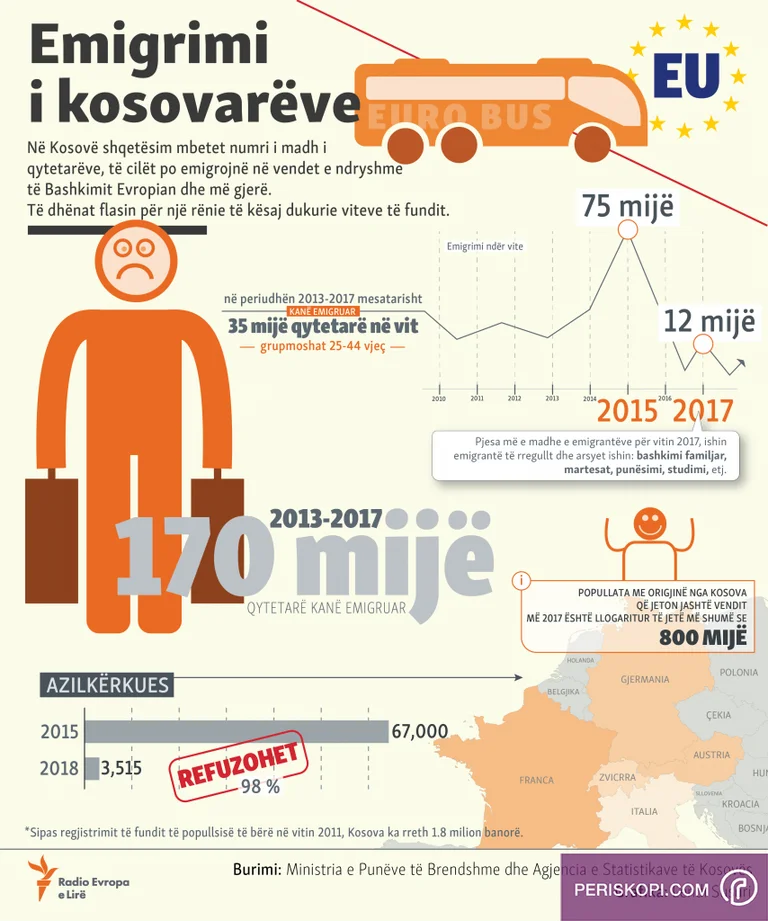
In the last decade, more than 220 thousand Kosovo citizens have issued the country, according to official data from the Kosovo Statistics Agency. The largest number of citizens who emigrated from Kosovo during the 2010-2018 period was marked in 2015, when over 75 thousand citizens left Kosovo. And in 2018, over 28,000 decided to leave the country.
The data for 2019 has not yet been published on migration, nor on births and deaths.
Visar Jamaica from the Democracy Institute for Development (D4D) tells Radio Free Europe that a larger trend of migration of Kosovo citizens will be behind new immigration policies in Germany.
This growing trend, according to him, will have great fortunes for Kosovo. In addition to reducing the population, Jamaica says it will reduce the workforce.
If the Government of Kosovo is not seriously able to reverse this negative trend of immigration, I think within 10 ʹ15 years we will have a serious demographic problem and we will have a very small number of labor forces”, he says.
Demaft Rifat Blaku, in a proposal for Radio Free Europe, says these figures show that Kosovo's population is shrinking over the years. In view of this situation, Blaku says, Kosovo must tackle the migration problem and the decline of nightiness.
“IK, abandoning along with the decline of nightiness, are two events, developments and the most severe experiences of Albanian society since it is about contracting the population, the most expensive national capital”, he says.
The GAP Institute, in a research titled “The Emigration of Kosovo's workforce in Germany”, sees an even greater potential of migration of Kosovo citizens following the introduction of the new immigration law in Germany in March 2020.
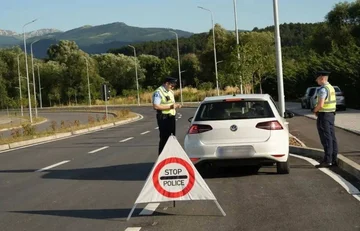
Official data shows that Kosovo citizens take the lead in the number of applications and equipment with working visas compared to other countries in the region. During 2016-2018, of the six countries in the Western Balkans, there have been a total of 204,638 job contracts, of which about 80 percent have been approved. But only 40 percent of them have been equipped with working visas, where 24 percent of them, or 15,824, have been to Kosovars”, says this report.
Sectors and professions in which Kosovo citizens have managed to secure working visas, construction, hotels and care services lead, while professions with the least successful applications are the finance, insurance and education sector.
Kosovo's youth's escape has also raised concerns by businesses. They have consistently claimed that they are unable to find workers despite the country's high unemployment rate, which accounts for about 30 percent.
Population census in 2021
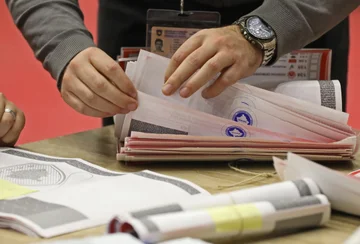
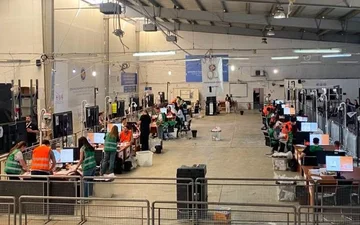
The upcoming census of Kosovo's population, housing and family economies is expected to take place in 2021.
Demography Blaku says the number of Kosovo residents will be smaller compared to the population census made in 2011.
“Based on demographic projections and on the basis of the current migration district that is in manifestion, we'll exit a smaller number again. However, it should be insisted that in the census forms, members of Albanian mining society, as well as the total number of”, be used respectively, says Blaku.
By contrast, high migration, according to a report by the Ministry of Internal Affairs, is said to affect the population structure in the following years, since it is estimated that the overwhelming proportion of migration in recent years had included young age groups mostly 25-44.