 5 hours ago
Why was Serbian sentence softened, relates Court of Appeals
Periskopi(6 years ago)
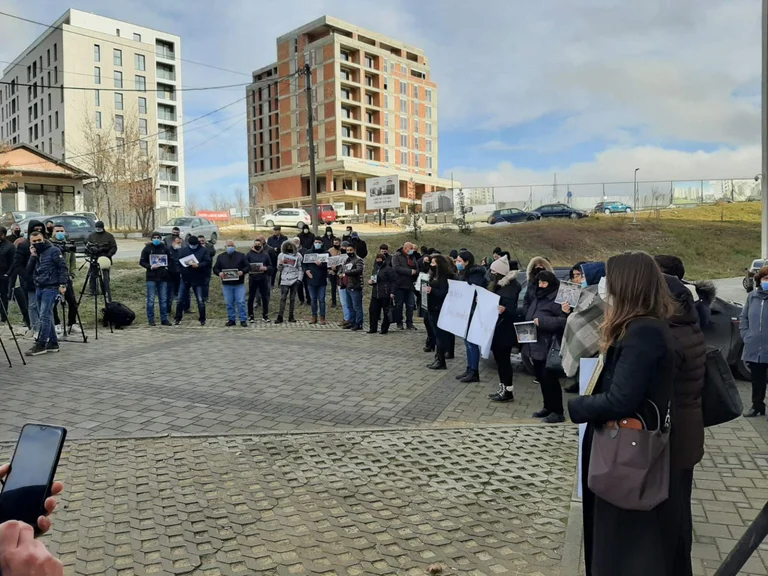
(6 years ago)The Court of Appeals has reacted after the protest was staged before the court's object, in connection with easing the conviction for war crimes indictee Darko Tasic. Pristina, 03.12.2020 ʹ The Court of Appeals has paid attention to the reactions and concerns that have come after publishing this court's decision regarding the [...] case.
Pristina, 03.12.2020 ) The Court of Appeals has paid attention to the reactions and concerns that have come after publishing this court's decision concerning the war crimes indictee D.T.
Seeing the numerous criticisms and vagueities created about this case, with the aim of correct information of public opinion, this court feels the need to give this clarification:
Charge D.T. He was charged by the Special Prosecutor for two counts of war crimes against the civilian population by Article 142 of Yugoslavia's Penal Law (LPJ) and the Criminal Code of the Republic of Kosovo (KPRK), Article 152.
His first work was to be charged with robbing game items. The second work charged him with desecration of corpses classified as action against human dignity, classified only as action in the Geneva Convention 2 protocol, but it is not envisioned as special work under LPJ Article 142, so it cannot stand as a special work.
It is more important to know that the maximum penalty envisioned by law is 20 years, under Yugoslavia's criminal law, because that law was in force at the time of the criminal act, and as such, according to the Kosovo Constitution, it must be implemented that law is more favourable for the accused.
In a concrete case, the first degree court had pronounced convictions beyond the maximum of the pre-lawed sentence, while on the other hand, the prosecution has no constitutional or legal right to charge anyone with charges under the most unfavourable law.
It is also a legal obligation that during measuring the sentence, the court should take into account the minimum and maximum penalty for that criminal act, then take into account the purpose of punishment, established principles in code, as well as extenuating and demanding circumstances in relation to criminal work and the accused. We emphasize that the defendant D.T. He was not charged with either murder, beating, or torture against the civilian population, just as it might be spoken of, but only with acts that were highlighted above.
The Court of Appeals understands the critical judgment of the damaged dick, but it remembers it is to do justice, in accordance with the Constitution and laws of the Republic of Kosovo, without national, racial, ethnic and religious differences and any prejudice.
For more details, we're conveying to you the complete judgment you find in the following link. While the parties will be prosecuted in accordance with the law.











