 6 hours ago
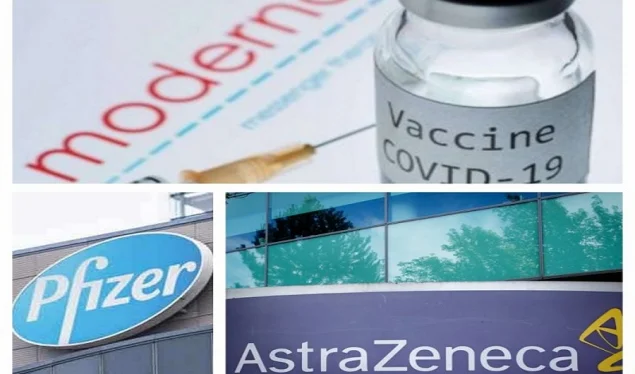
The Moderna vaccine helps antibodies last for three months. What happens to Pfizer and AstraZeneca?
Periskopi(6 years ago)
(6 years ago)After evidence results showed that the Moderna COVID-19 vaccine has an efficiency rate of 94.1 percent, developers demanded urgent authorization of the vaccine to US regulators, but one study showed that it can help antibodies last only three months. Researchers from the National Institute for Allergy and Infectious Disease (NIAID) who co-developed [...]
Researchers from the National Institute for Allergy and Infectious Disease (NIAID) who co-developed the vaccine studied the immune response of 34 adult participants in the first phase of a clinical test, including young and old individuals. They found that the Modern vaccine causes the immune system to produce powerful antibodies that remain for at least three months.
The vaccine will be revised by an advisory committee of the Food and Bars Administration (FDA) in the US on 17 December, after which an emergency approval may be received.
According to the World Health Organization, a minimum of six months would be acceptable. But NIAID researchers write in the New England Journal of Medicine that anti-coronvirus antibodies were reduced over time and that they remained participating three months after additional vaccines. The mRNA-1273 vaccine is administered 28 days away in two injections.
Doctor Anthony Faucie, NIAID and other experts said the immune system would most likely remember the virus in case of re-exposure and then produce new antibodies. The study also showed that the Modern vaccine activated a certain type of immune cells that should help in so-called memory response. But to confirm this, a long-term study is required.
In terms of Pfizer vaccine - B O NTech COVID-19, Great Britain became the first country to pass the vaccine for broad use. When it comes to immune memory, it is difficult to say at this point, since clinical trials were not designed to answer that particular question. It will become clear in the coming months as volunteers continue to be monitored.
But, Ugur Sahin, chief executive of the German company BioNTech who co-developed the vaccine with the American drug giant Pfizer, he expects defence to last <x0 months or even years”.
Oxford University's vaccine and the pharmaceutical company AstraZeneca is hoping to prevent COVID-19 infection for 12 months. Men Pangalos, deputy executive leader of the AstraZeneca R&D of biofarmacetics, said the vaccine was designed specifically to have “ates that we call half a long life, (so) we think they'll provide protection for (at least) six, but more likely up to 12 months”











