 3 hours ago
Maliqi: Limited Persons Continued to Be discriminated Against
Periskopi(6 years ago)
(6 years ago)In the case of the International Day of People with Limited Skills, HANDICOS has held the launching conference of the assessment report on access of disabled children to primary and lower-level school buildings in Kosovo. HANDICOS Director Africa Maliqi has said that disabled persons continue to [...]
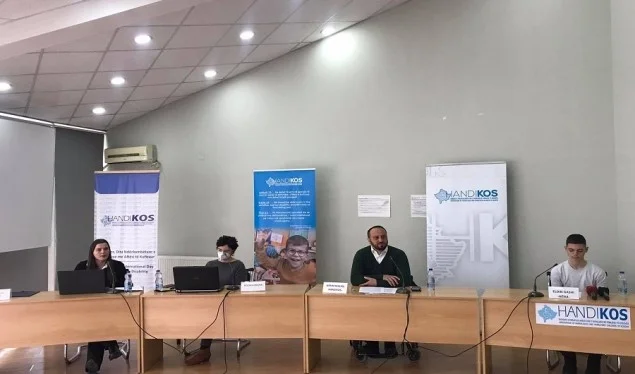
In the case of the International Day of People with Limited Skills, HANDICOS has held the launching conference of the assessment report on access of disabled children to primary and lower-level school buildings in Kosovo.
HANDICOS Director Africa Maliqi has said that those with limited abilities continue to be discriminated against in our society.
We're marking this year's day of persons with limited abilities different from those of the past years because of pandemic, so we're holding this conference in different shape. On the basis of our experiences, we have estimated that there are three kinds of discrimination against persons with limited abilities: the first discrimination is the prejudice that exists against those with limited abilities who cause fear and isolation of disabled persons and their families. The discrimination of the circle or environment. Buildings, roads, sidewalks, and transport are not designed according to the needs these people adapt to and institutional discrimination, where administrative laws or guidelines do not apply or take into account the rights of disabled persons”, Maliqi said.
Maliqi has said few are spoken of because our institutions since the Government and other local institutions have not included persons with limited skills in drafting plans and in response to persons with limited abilities in the pandemic situation.
He said a research conducted by Handikos shows that disabled people have a small percentage of their approach.
“We have done a research where Kosovo's legislation has been compared to European legislation, the United Nations Convention on Rights of Disabled Persons, Millennium Goals and given everything written in Kosovo regarding disabled persons, and as a result, it turns out that Kosovo has only 30 percent written in documents or other strategies concerning persons with limited capacity, while with access to only 6.7 percent for”, Maliqi said.
While Minister Rame Likaj has said the Ministry of Education and Science is lobbiing to ensure access and inclusion of children with special needs. He said 50 percent of schools based on data have access to disabled people.
“We are lobbiing, not only with UN funds, but also with the help of partners and donors to provide access and inclusion of this category of children and marginalised groups, but also children with special needs. According to data, 50 percent of school buildings have existing access to persons with limited skills through perinas or rads access to the facility, which is the elementary condition”, Likaj said.
Likaj has said that he has also raised the issue of the lack of elevator at the Faculty of Economics and Jurydic, thus making students have easier access to legal speaking.
We also have a group of students at the Faculty of Economics and Jurydide because of the design. As you enter the hallway, there's a problem with accessing the learning halls. Limited persons find it very difficult to move up to different halls because there are no elevators, which we have raised as a matter of the presidential taskman and Kosovo Assembly Speaker”, Likaj said.
Likaj said it's working to provide these people with more inclusion and easier access to schooling.











