3 hours ago
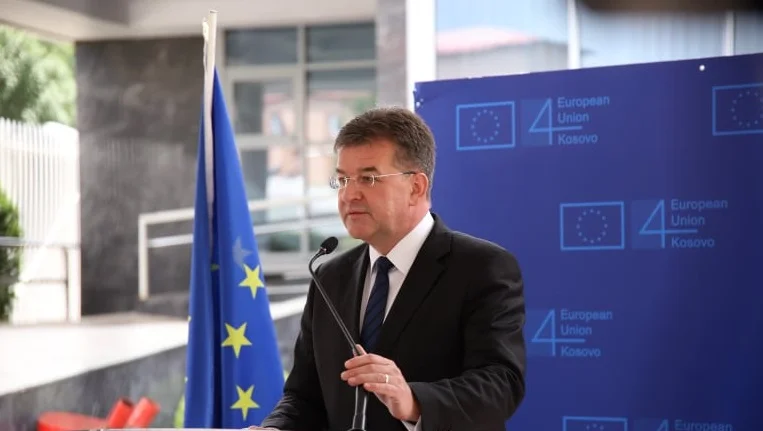
Lajcak: Dialogue's on the track, but it's not fast highway.
Periskopi(6 years ago)
(6 years ago)The European Union's special envoy for the Kosovo-Serbia dialogue, Miroslav Lajcak, says this process is “on the right track, but it is not a fast-track”. “It is more of a long road with”, Lajcak said, at an event organised by the European Parliament's Foreign Policy Commission for him [...]
The “is more a long road with” turns, Lajcak said, at an event organised by the European Parliament's Foreign Policy Commission to discuss the situation in the region, 25 years after the Dayton Agreement, which ended the war in Bosnia and Herzegovina.
Lajcak said he is willing to facilitate this process, towards reaching a comprehensive agreement.
<x)
He also said it was his duty to unblock the dialogue process, where from the end of 2018 to July of this year, the talks were halted due to a Kosovo-set tax on products of Serbia and Bosnia and Herzegovina, which followed reciprocity measures.
The EU envoy thanked Kosovo Prime Minister Avdullah Hotin and Serbia's president, Aleksandar Vuciq, for the indicated leadership, while stressing that at several meetings, the parties have agreed on several topics, which according to him will be part of the comprehensive agreement.
Asked by the head of the Serbian Parliament delegation whether it makes sense to dialogue because Kosovo is not fulfilling obligations from the previously reached agreement, including the one for establishing the Association of Serb-run municipalities, Lajcak said that “should not be afraid that agreements that will not be implemented” will be reached.
We are very clear that we are negotiating the agreement, which will resolve all open issues between the parties. But, at the same time, even those that have been reached as agreements before and not implemented, we want to make clear that everything about what reconciliation has been achieved before must be implemented. We're discussing this, including timelines, even monitoring mechanisms. There is no reason to fear that the agreements to be reached but will not be implemented”, he said.
In this debate organised by the EP's Commission for Foreign Policy, Commissioner for Enlargement Oliver Varhely reiterated the EU's position that regional co-operation is key to advancing on European roads and that in the case of Serbia and Kosovo it implies commitment in dialogue to reaching the comprehensive agreement.
Varhely warned that there is a huge social difference between the EU and the countries of the Western Balkan region. Therefore, he said the EU has the initiative for investment in the Balkans.
Commissioner Verhely also reiterated the EU's position that regional co-operation is key to advancing European roads, and that in the case of Serbia and Kosovo, this implies commitment in dialogue to reaching the comprehensive agreement.
Many speakers in this debate, including representatives of the national parliaments of the bloc's member states and Western Balkan countries, said Russia and Turkey should be reduced in this region. According to them, this is possible only through the approach of these countries to the EU and the advancement of the integration process. The start of negotiations with northern Macedonia and Albania was cited as a test for EU credibility in this direction. /Rel