5 hours ago
German doctor: The vaccine does not restore normal before summer
Periskopi(5 years ago)
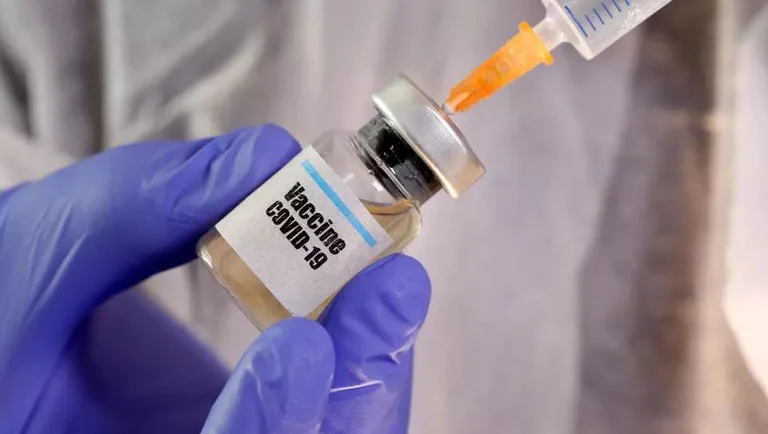
(5 years ago)As the immunization against the Coronavirus is expected to begin this Sunday in European Union countries, Dr. Tobias Welte, at the German Infectious Disease Center, is not optimistic that normality will be returned before summer. In an interview for Radio Free Europe, Welte says Pfizer vaccine/ B NTech is safe and prevents serious illness [...]
As the immunization against the Coronavirus is expected to begin this Sunday in European Union countries, Dr. Tobias Welte, at the German Infectious Disease Center, is not optimistic that normality will be returned before summer.
In an interview for Radio Free Europe, Welte says Pfizer vaccine/ B NTech is safe and prevents serious coronary disease, but he warns that not everything is “black and black” and that the long-term effects of the vaccine should be monitored.
Welte order those who object to the vaccine that preventing the spread of coronary “is social responsibility”.
He also shows what went wrong with Germany, which today breaks records of the infected. This place was once a model of coronary crisis treatment.
Radio Free Europe: Dr. Welte, European Union regulators have approved the Pfizer vaccine. B ONTech on December 21st, nearly three weeks after the British regulator gave it the green light. Are we late?
Tobias Welte: There should be a difference between what the United States and the United Kingdom have done and what the EU has done. The United States and the United Kingdom have made so-called emergency acceptance of the vaccine. In this case, if side effects are presented, you as patients who have been vaccinated are responsible.
The EU, on the other hand, has made professional acceptance of the vaccine. This means that for whatever side effect, pharmaceutical companies are responsible. From the epidemiological perspective, three weeks earlier or three weeks later they make no difference.
Radio Free Europe: But your country, Germany, and others have pressured to launch the vaccine. So you are convinced that all security checks have been conducted...
Tobias Welte: I think it's not black and white. We know that in the short term, vaccine is safe, effective. But we don't have medium- to long-term data. Each time, side effects can occur. During swine flu pandemics, Swedish vaccine Pandemrix has caused narcolepsy among young people and young people, and it has been shown 6 to 12 months after the vaccine.
These are things that we don't know right now, so we have to carefully monitor the anti-corperous vaccine program. What we can say is that with our present experience, the vaccine is safe. What comes next must be observed.
Radio Free Europe: The distribution of the vaccine in EU countries is expected to begin within days. In Germany, will you start the vaccine once you get your first doses, or will you wait for other locations to start at the same time?
Tobias Welte: The plan in Germany is to start Sunday or Monday. Germany has decided to launch the vaccine only at the home of the elders. Unfortunately, the number of doses expected in December is not so high. We won't have enough doses for all those who live in nursing homes.
The situation should be better in January, but I'm a little careful, wait and see. It should also be remembered that it takes two doses to be effective. And, unlike other countries, Germany has not given priority to health care workers, which has caused debate. I personally think it's a wrong decision, but okay.
Up to 60 million vaccinated in Germany until summer
Radio Free Europe: When do you think the general public will get the vaccine?
Tobias Welte: The programme takes place week after week, month after month. Here in Germany, it starts with older ones over 80 and 90 years of age. It has been recommended that he continue with oncological patients in February or March. It will be summer when the majority of the population will be vaccinated.
Radio Free Europe: How many people will be vaccinated in Germany, let's say, until summer?
Tobias Welte: It is a wide range, but between 30 and 60 million.
Radio Free Europe: Is it enough for the herd's immunity?
Tobias Welte: Yes, 60 million will be enough. But there's a problem here because Germany has many enemies of vaccination. We're going to need an advertising campaign to show what the side effects are, even if they're not too heavy.
Radio Free Europe: What do you say to people who don't want to get vaccinated?
Tobias Welte: I try to convince him that COVID-19 is serious, that the mortality rate is 1.5 percent in the general population, but it is over 20 percent among the elderly. It's a social responsibility to do anything to stop the transmission of the virus.
Radio Free Europe: When do you think the vaccine will allow the control of pandemic?
Tobias Welte: We know that vaccine is effective to prevent serious illness. But we don't know if it's effective to stop the transmission of the virus. You may not be sick, but you may be infected. This is something that needs to be revealed. So we have to go on with protective measures, like masks, distances. I'm sure we won't go back to normal until summer, but it might be later.
Germany is late with measures
Radio Free Europe: Germany has recorded record numbers of infected and victims. This place has been a kind of model for the rest of the world during the first wave of pandemic. What went wrong?
Tobias Welte: We're late in the second wave. I think we're three weeks late with the measures. The other problem is that in the second wave, we haven't been able to keep the virus out of the old house. Thus, mortality is powerfully linked to the elderly, and the homes of elders are critical places.
Radio Free Europe: How do you plan to bring the situation under control?
Tobias Welte: We officially have strong isolation. Schools are closed, nests are closed, you are not allowed to meet many people... But observing the measures has been much better in the spring. A lot of people do what they shouldn't. If the numbers don't fall, it could be that isolation is extended. In some cities in Germany, people are not already allowed to leave their homes for afternoon or evening hours.
Radio Free Europe: Are you concerned about Britain's new version of the coronary first detected in Britain?
Tobias Welte: To be honest, no. It's normal to have new mutations. It always happens in viral epidemics. And, normally, if mutations are more transmitted, more contagious, they are less virulent. To make it easier, if the mutation invests energy to become more infectious, it loses energy in killing people. Maybe new mutations in the virus are a good message, we don't know yet.