 7 hours ago
European Union still has no idea of remitting vaccines to the Balkans
Periskopi(6 years ago)
(6 years ago)European Commission President Ursula von der Leyeen and European Council President Charles Michel have pledged that the EU will have a priority to help Western Balkan countries with the vaccine against COVID-19. We also care about our neighbors. The European Union will coordinate vaccine donations from member states, specifically for protection [...]
We also care about our neighbors. The European Union will co-ordinate the donations of the vaccine from member states, especially for the protection of health workers in the Western Balkans and neighbourhood”, Von der Leenen said, speaking after the EU's recent summit, where preparations for the vaccine were among the main topics.
Sources from the meeting of heads of state or government of EU member states have said that at the meeting, Von der Leyen has announced that the European Commission has already ordered sufficient doses for the inoculation of more than 750 million citizens. Once the EU has about 450 million people, from this vaccine container, it will be shared by Western Balkan countries as priorities, but other countries in the world that have low or medium incomes.
In the EU, there are no firm answers as to whether there will be immediate donations of vaccines for the Western Balkan countries, at the same time that member states are delivered, or this will be done later.
Sources from the EU have clarified that vaccines for Balkan countries will be provided parallelly by two channels. The most important is the supply through the international coalition COVAX, where the EU also has its top role and has already provided 500m euros as a donation.
In this international coalition to provide the vaccine are 184 countries of the world. Vaccinators have vowed that by the end of the year they will provide 2 billion doses of vaccines through this initiative, of which 1 billion will go to poorer countries.
Vaccines via COVAX will be at a favourable price, while for some countries with smaller incomes will be provided for free as well. EU sources estimate that from Balkan countries, Kosovo will qualify to receive free vaccines through COVAX, because it is the region's poorest per capita income. The vaccines that will be provided through COVAX will be distributed via U NICEF.
But, the speed of distributive vaccines from this container does not seem to be the same as those already required to be distributed to member states. Therefore, the European Commission is considering that some of the doses for member states are sent to the countries of the Western Balkans as well.
“Nisma COVAX, where the EU is the main contributor, will be key to providing vaccines for the Western Balkans. In parallel, in order for the vaccine to start as quickly as possible, the EU is considering opportunities to provide vaccines for the Western Balkans, even through donations or a similar system. This will provide a support to ensure a relatively rapid inoculation for priority groups”, Ana Pisonero, spokeswoman for issues of expansion and neighbourhood at the European Commission, has said.
According to EU experts are already becoming co-ordination between the European Commission, EU member states and the countries of the Western Balkan region to secure the first doses of vaccines. The idea is that once they receive the first doses of vaccines, which will be a limited number, member states, some of them make it available to the countries of the Western Balkan region.
In order to prevent some EU states from giving them the same state in the region, and to ensure an equal distribution of vaccines, co-operation between the Commission, member states and countries of the region is continuing.
The European Commission's spokeswoman has also said that members of the Western Balkan region are required to develop their vaccine strategy in line with the European Commission's guidelines for member states. This would make it easier for EU assistance and co-ordination with member states.
Under the EU strategy, vaccines will be distributed at the same time for all member states, under the same conditions, while the number will be determined on the basis of the number of residents. The priority groups for the vaccine will be workers in the health system, endangered groups, the elderly and so on. The same strategy is expected to be respected by Western Balkan countries.
Vaccination in EU countries is expected to begin in early January. Belgium and the Netherlands have already set January 5th as the day when the first groups will be vaccinated.
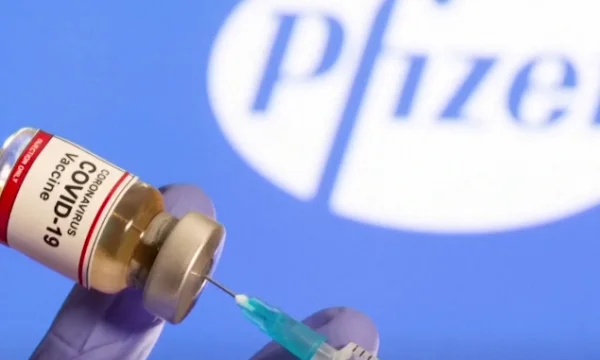
The first vaccine, which is expected to receive permission from the EU Regulatory Authority, and before the end of this year, will be the vaccine produced by BioNTech/Pfizer.
According to the European Commission in mid-January, permission is expected to be granted for the Moderna Company vaccine. Then, during spring, the permits for AstraZeneca and Johnson vaccines will follow, depending on how the process of analysis of their results and side effects goes.
We want to be sure that vaccines are effective and safe for citizens. That's our priority, so we don't rush”, the European Commission said.
But EU sources claim that Balkan region countries should also accelerate logistical preparation for vaccine. In this regard, they say there are obstacles as the first vaccines -- those of BioNTech/Pfiser -- should be transported and stored at temperatures below -70 degrees Celsius, which is a challenge not only for Balkan countries but also for the developed EU countries themselves. Again, the EU is said to be helping Western Balkan countries.
REL's co-ordinators in Brussels have said the EU has an interest in helping Balkan countries and health priorities, and does not want to make “diplomacy vaccine” to gain popularity.
Vaccination and immunization in the Balkans are important for EU states even because of the close ties they have with these states. And, they cannot be sure of EU citizens from more coronary infection if successful vaccines have not been done in the countries of the Western Balkans region.
Therefore, in the EU, they claim that even though dates and timetables cannot be guaranteed, as this depends on production capacities, all citizens of the Western Balkans will be provided with sufficient doses of vaccines.











