8 hours ago
Election Survey in Albania, Ilir Meta's LSI towards Extinction
Periskopi(6 years ago)
(6 years ago)A poll released two days ago by the renowned Italian institute Piepoli presented a photograph of political perception in Albania, four months after the 25 April elections. This institute, which has an experience in Albania since the 2015 local elections, has been generally close to reality in predictions it has published [...]
A poll released two days ago by the renowned Italian institute Piepoli presented a photograph of political perception in Albania, four months after the 25 April elections.
This institute, which has an experience in Albania since the 2015 local elections, has been generally close to reality in predictions it has published before the elections, but also on the day of the vote.
Known in Italy as Italian public television client Rai, Peepol also has an experience that has given him some kind of credibility in his polls. The survey of two days ago, which was divided into many in divisions, as a final element, had the photograph of popular perception regarding the 25 April election results.
Along with national photography Piepoli published a photograph for Tirana County. As in other cases, the national survey was almost the same as that of Tirana's district, which is in reality Albania in miniature, not only in the number of residents but also in the layers that reside in the city and urban and rural areas around it.
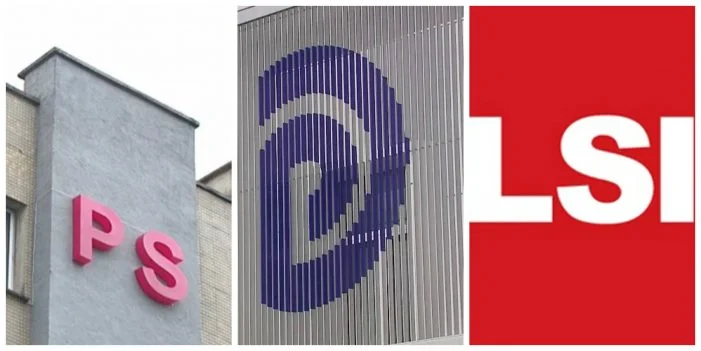
In the poll, the SP was presented from 48% in the 2017 elections to 53-59% national ranking and up to 60% in Tirana's district. The Democratic Party as a subject was presented as being increased from 29% to 2017 to 30-34%, a result that was the same as Tirana County.
But it was the LSI that was photographed as the subject that lost more consensus, from 14.28% in 2017 to 2-4%, which was also similar to the Tirana district.
In fact, this is also the most impressive outcome of this survey, which will naturally bring strong controversy in public opinion, and, according to the likelihood that the LSI itself is even more affected in this case.
But could there be a real basis for a <x0-crime <x1) mass party development since 2009 has been the third political pole in the country?

In fact, these elections are real evidence to prove this phenomenon, where over the years the LSI has also grown by the coalition that has created with the two major DP and SP parties.
The rise and decline of parties based on the ruling being in Albania is not a new phenomenon and has not happened with the SMI. Ahead of that, two other parties in the country -- the Social Democrat Party of Skender Djindush and the Republican Party of Fatmir Mediu -- have experienced a significant increase when they were in the coalition with one of the major parties and then melted like salt in the water.
In 1997 and 2001 for eight years, Djindush's party had the position of the LSI in 2009 and 2013, where it once held the post of head of parliament and later that of the deputy prime minister, which brought local positions that increased political stakes in the general and local elections.
The PSD in 1997 had 23 deputies. Meanwhile, in 2005 Fatmir Mediu's PR suffered a major increase thanks to pre-trial tactics with the DP, which it gave a large parliamentary group. But when the big party has fled power, only Fatmir Mediu is left.

Will such a precedent occur with the LSI on April 25th, as the Peepol poll says? Of course, the elections are the ones that will give the final seal, but the publication of another alternative poll can also give the debate even more argument.