7 hours ago
Australian scientists find a new way to identify people with coronarys
Periskopi(6 years ago)
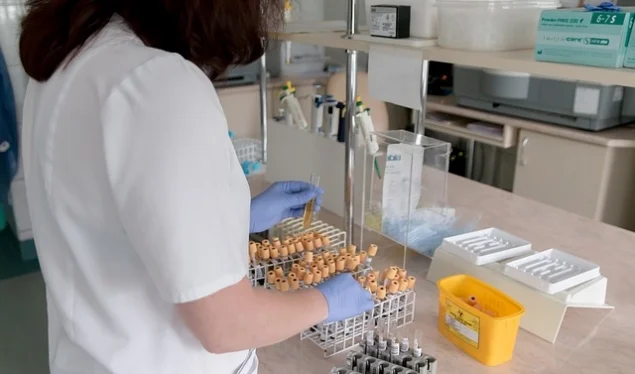
(6 years ago)A group of scientists in Australia has a blood prototype test that can reveal whether a patient's immune system has the ability to combat the new disease caused by the coronary virus. This test identifies high levels of two major chemical signals interferon-gama and interleukin-2 ] produced by T cells, [...]
This test identifies high levels of two major chemical signals interferon-gama and interleukin-2 ] produced by T cells, the type of leukemia they recognize and then destroy infected cells.
These two signals are both involved in the destruction of cells infected by the virus and can also encourage other T cells to target the infected area.
According to scientists, people infected with coronarys with low levels of these two chemical signals may be more prone to the serious effects of the SARS-CoV-2 disease, including death. The authors of the study believe that this blood test can be important at a time when millions expect to receive a safe and effective vaccine.
In the study, researchers used the blood of 44 donors recovered from COVID-19, men and women between 20 and 75 lbs and examined a number of peptides SARS-CoV-2 to find out which combination can be used to detect an immune response to T cells. After experts isolated T cells from donated blood, they exposed them to viral pedicades and measured the production of a number of different signal molecules.
They compared the levels produced by T cells from recovering patients to levels released by T cells from 20 healthy donors who were never infected with new coronarys. The team then found that T cells from recovering patients produced larger amounts of two signal molecules.
The team of researchers believes that this find can be used to understand at an early stage what the patient's immune system is responding appropriately and who may be at higher risk of becoming extremely ill because of the disease. Blood tests are believed to be useful in those countries that have faced second and third waves.