3 hours ago
Anosmia: How is David seriously damaging the smell, and is there hope that it will return?
Periskopi(6 years ago)
(6 years ago)Seven years ago, renology surgeon Peter Andrea performed an operation that would change the course of his career. André was operating a patient who had broken his nose many years ago after being hit by a cricket ball. The procedure was delicate. He was to carry out the thin wall of the shin [...]
Seven years ago, renology surgeon Peter Andrea performed an operation that would change the course of his career.
André was operating a patient who had broken his nose many years ago after being hit by a cricket ball. The procedure was delicate. He had to complete the thin wall of the crevice that splits his nostrils.
But he had a surprising outcome. As he was in a difficult condition with his breath, he sniffed again for the first time in 40 years - a remarkable turning<
Being able to smell is actually a result of a complex neurological process. Specific wind nerve cells, known as sniffing neurons, placed up in their nostrils, reveal molecules in the air such as those released from a perfume, or smoke particles from something that burns. They then transmit this information through a long nerve thread that passes through the skull into a part of the brain.
This network is one of the most “adapted” in the entire central nervous system. To continue functioning, it regenerates fully every six weeks, throwing out existing sniffing neurons and creating new ones from scratch.
Why do some heal and others do not?
Since April, scientists are in a race to understand why Sarce - The CoV-2 has such an impact on sniffing ability and why some people are more affected than others.
Viral cargo seems to be a major factor, which means that people who work in industry where they are more likely to be exposed to larger amounts of the virus are perhaps more sensitive to long - term anomaia. Andrees recently conducted a survey of 114 health care workers in hospitals in northern London and Italy who had proved positive for Covid-19 and found that 70% had experienced loss of smell and taste. Of them, 60% continued to experience problems 52 days after the infection a rate higher than the general population.
But while other viruses, such as coronarys that cause common cooling, can also lead to wind loss, the anosmia from Coddy-19 is unusual because it often happens immediately and without any major influence.
The loss of winds that we traditionally have in common cooling is usually because we have too many overloads and active scent molecules cannot reach the top of the nose socket”, Hayes says.
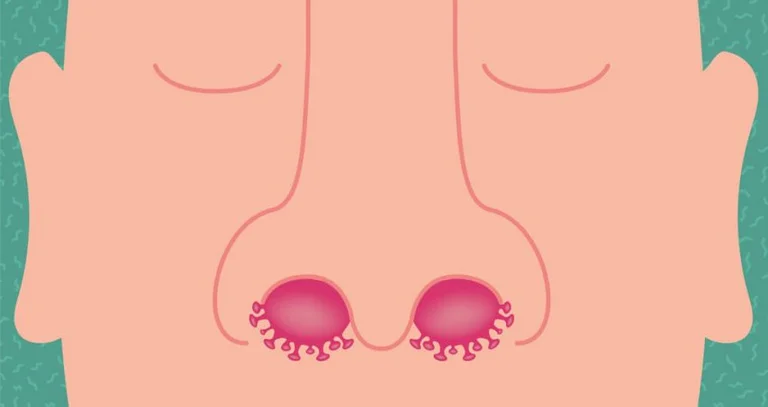
While the receptor ACE2 that Sars- The CoV-2 does not express itself from sniffing neurons, it is present at high levels in cells around the upper nostrils, which exercise their influence on the ability to smell by providing metabol and structural support for these neurons. When Sarce- CoV-2 invades these cells, which causes an inflammatory incentive that damages our sense function.
This helps to explain the spectrum of anesmia associated with Avid. For many, the time of recovery depends simply on how long it takes for these surrounding cells to heal. In some cases, though, inflammation is so severe that it harms sniffing neurons. For these people, recovery time is much slower because neurons need time to regenerate from the supply of stem cells inside their nose. In some rare cases, sniff neurons may be completely destroyed, meaning that recovery is unlikely. As this system tries to heal, it can lead to a strange condition known as pa·rosmia, in which the aroma returns, but in a strange way, the aromas can be confused. Scientists believe that this is because sniffing neurons relate to areas responsible for the wind after they regenerate, but they do not understand why some people experience this symptom more than others do.
Pamosmia is often a sign of recovery. There are some people who are left with low levels of papyrus, but this is difficult to determine. We know this from other post-infectative cases of parosmia, but for post-Condavid pasmica, it's too early to say, “says Jane Parker, a chemist.
Can Anosmia and pa·rosmia be treated?
A treatment that might help some people is their sniffing training. This includes the active smell of four essential oils, rose, lemon, carafil, and eucalyptus for approximately 20 seconds daily and acts as a form of nose therapy. Scientists say this is unlikely to help people with the most severe forms of loss of smell, but it can be beneficial for those with parsomis and partial annosmia, although there is very little evidence.
I would say that the strongest evidence supports certain benefits for those with a partial loss of smell. The mechanism may be to help train the patient to focus on what capacity they have left, essentially maximize their remaining functional capacity,” says Steven Munger, director of Florida University Centre for Nuhaje and Shijim.
The great advantage of the anomaia caused by Ovidius has led to some evidence of completely new therapies. Andrees has received permission to take biopsy of cells damaged by the noses of health care workers who have lost their sense of smell because of Covid-19 and examine them to see if transplanting new cells in the damaged area can help him regenerate and reconnect to the central nerve.
At Mount Sinai Hospital in New York, Alfred Ilolta is conducting a study that treats patients who have lost their sense of smell because of Covid-19 with omga-3 fatty acids in the form of fish oil. He believes this can help speed up the healing process in nose cells damaged by virus and sniff neurons. “Plotting Omega-3 can help in two ways. The first would be through an anti-inflammatory route, overturning the damage done by viral infection in support cells or neurons. The Omega-3 fat acids have also been shown to have regenerative and neuroprotext effects on damaged neurons in patients with peripheral nerve damage,”, he explains.
For many of these proposed treatments, only time will tell whether they are effective. But in short term, some scientists are calling for anosmia to be used more widely as an additional diagnostic tool, David, to help test and track national systems become more effective.
Tim Specor, who started the “app The study of the Symptom Coddy-19” back on Mars says that the symptoms of anosmia are a much more accurate predictor of whether anyone will come up positive for Ovid-19. “The data from the app showed that 65% of people who tested positively for Covid-19 reported a loss of smell, with a significant portion of them never experienced a high fever. A little over 40% of people who were positive had a fever,” explains Spector.
According to him, regeneration is also a slow process and may take little time.
Source: The Guardian/tema/