 5 hours ago
-56 and -70 degrees Celsius: The challenge of saving the anti-Condavid vaccine, but preparations are being made.
Periskopi(6 years ago)
(6 years ago)The Pfizer and BioNtech companies vaccine should be preserved at extremely cold temperatures, raising some concerns about the difficult task of transporting it to vaccine centres in the United States. But a company that produces so-called dry ice in the United States says it is [...]
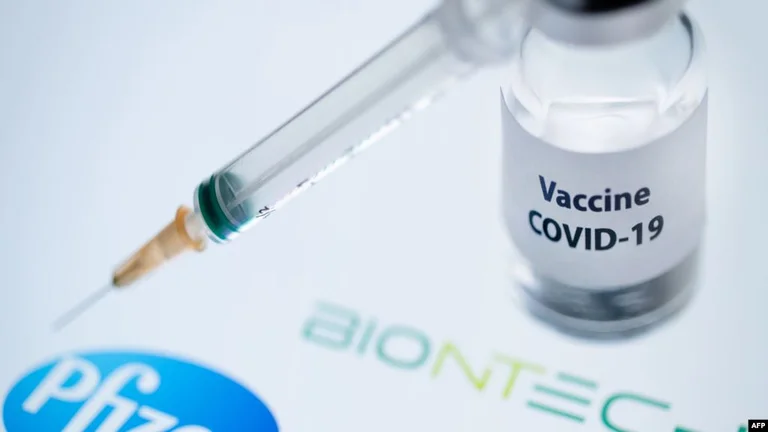
The Pfizer and BioNtech companies vaccine should be preserved at extremely cold temperatures, raising some concerns about the difficult task of transporting it to vaccine centres in the United States. But a company that produces so-called dry ice in the United States says it is ready for this challenge. American Voice correspondent Esha Sarai spoke with Head of the Baltimore Company.
While the United States is working on the adoption of Pfizer and BioNtech companies' vaccines against Coronobrus, a major challenge will be to store the vaccine in cold temperatures.
“(Vaxine) should be kept at temperatures between minus 56 and 70 degrees Fahrenheit [- 70 ° C], which can be achieved using dry ice“, says John Dillinger, director of the Capitol Carbonic Company.
The so-called dry ice is the ice produced from converting carbon dioxide into liquid gas and then freezing it. This type of ice “breaks” into gas rather than water.
But this dry ice producer in Baltimore, with decades of experience, says he will not compete for this business.
“This will be a national agreement. I don't think a single company could do that.”, says Mr. Dillinger.
Most companies like Capitol Carbonic already produce specific sizes and forms of ice. Pfizer, and other vaccine production companies, will need cylinder-shaped ice fragments, less than 1.5cm.
“This type of ice can be inserted into transport boxes more easily than the standard 1,5 cm long pieces. This type of ice is used by many biomedical research companies“, says Paul Welden, operations manager at the Capitol Carbonic Company.
Although this task seems daunting, Welden says that given the work he has done with the National Institutes of Health for years, his company is able to do so.
“We're ready. Our tanks are full. We can work seven days a week.”, says Paul Welden, operations manager at the Capitol Carbonic Company.
The Capitol Carbonic company expects that once the distribution of vaccines begins, the production of dry ice will take place 24 hours a day on seven days of the week.











