 7 hours ago
41st Nobel Share in St. Teresa
Periskopi(6 years ago)
(6 years ago)Today, when the worldwide campaign is campaigned for 365 days of human rights, 41 years have taken place since St. Teresa has received the Nobel Peace Prize. On December 10, 1979, in Oslo, Norway, Gonge Bojaxhiu was proclaimed nobelist, becoming the world's first most prestigious Albanian winner. [...]
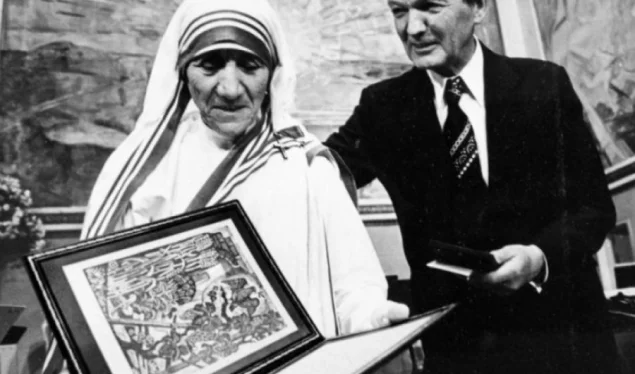
Today, when the worldwide campaign is campaigned for 365 days of human rights, 41 years have taken place since St. Teresa has received the Nobel Peace Prize.
On December 10, 1979, in Oslo, Norway, Gonge Bojaxhiu was proclaimed nobelist, becoming the world's first most prestigious Albanian winner.
When the Nobel Prize was received in 1979, one of the clergy attending the hall asked Mother Teresa where she was from.
She declared: “I was born in Skopje, I was educated in London, I live in Calcutta and I work for all the poor people in the world. My country is a small country called Albania”.
That day the whole world learned that St. Teresa was Albanian. She has faced difficulties of speaking fluent Albanian after a 70-year departure and staying in non-Albanian environments, but she has never denied her Albanian origin.
Its writings in Albanian are the letters of youth and later with the family in Albanian, greetings in Albanian to the Albanian people after winning the Nobel Prize in 1979.
She was the mother of 7,500 children in 60 schools, was a mother who treated 960,000 sick people in 213 dyspanseri, the only child in the world dealing with 47,000 victims of the leper in 54 clinics, cared for 3,400 abandoned and left the streets, in 20 nursing homes, had adopted 160 legal and orphan children. These are the figures from the mid-eight.











