 4 hours ago
What is the role of internationals in finding the missing in Serbia?
Periskopi(6 years ago)
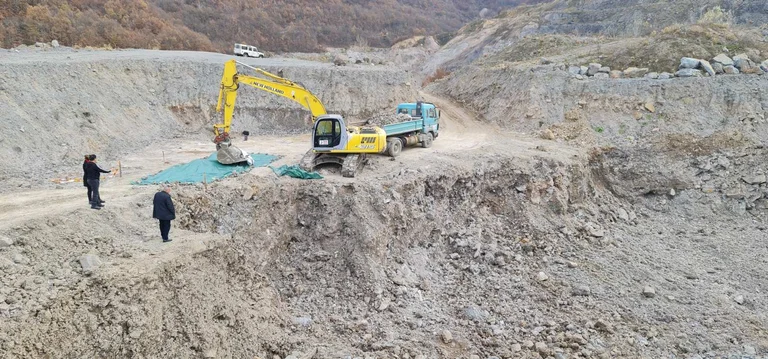
(6 years ago)The International Commission on Missing Persons has shown their role in these excavations. After five years of work, the result came. Mortories and clothes were found in Kizevac near Raska. This following a co-operation between two commissions of missing persons from the state of Kosovo and Serbia. But great help here [...]
After five years of work, the result came.
Mortories and clothes were found in Kizevac near Raska.
This following a co-operation between two commissions of missing persons from the state of Kosovo and Serbia.
But great help here also gave the Eulex mission through satellite images to identify the exact location.
While, as a monitoring of the process since 2015, there was also the International Commission for Undiscovered Persons.
From this commission in an answer to T7, they have shown their contribution to the process.
Pos Raska, KNPZH shows the role they had in excavations at other locations in Serbia.
Meanwhile, in a report prepared in 2017 by KNPZH, some data appears about operations on finding missing persons from the recent war in Kosovo.
Between the middle of June 997 and the end of 2016, 1513 field excavations operations have been conducted, with more than 6,097 groups of full and incomplete human remains on Kosovo's territory.
And since 2002 more than 2,500 cases of missing persons have been resolved using effective forensic methods, including DNA testing. Approximately about 2,000 cases have been identified with traditional visual identification methods before 2002.
And since the end of the war there are over 1600 missing persons whose fate is still unknown.











