 7 hours ago
Phillips: Serbia's commitment to Kosovo sovereignty cannot be tolerated
Periskopi(6 years ago)
(6 years ago)Numerous reactions in Kosovo have sparked Serbia President Aleksandar Vuciq's statement, which warned in a statement yesterday that unless a compromise is reached with Kosovo through EU-mediated talks, then the frozen “ ” conflict could be “created” in the future, taking as an example the last armed conflict [...]
Numerous reactions in Kosovo have sparked Serbian President Aleksandar Vuciq's statement, which warned in a statement yesterday that unless a compromise is reached with Kosovo through EU-mediated talks, then the frozen “ ” conflict could “be created” in the future, taking as an example the last armed conflict between Armenia and Azerbaijan.
These statements by the Kosovo Ministry of Foreign Affairs have been described as warning of a new war, while later Kosovo Prime Minister Avdullah Hoti has responded, saying Vuciqi's statements are of no benefit in normalising relations between the two countries, reaching final agreement and mutual recognition, while also calling for the EU and NATO responses, from which there has been no reaction until Thursday evening.
Security issues Knowers, but even connoisseurs of political circumstances in the Balkans, have spoken of “Zin” behind these statements, naming them as threatening, but also as Serbia's “nothing new”.
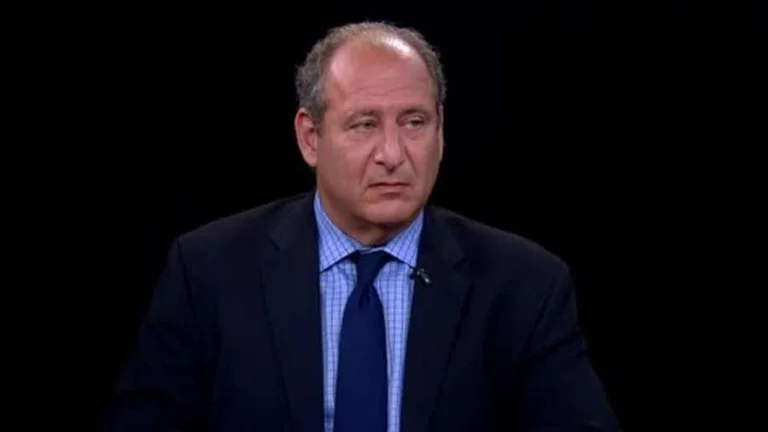
Former High Council of The UN and the connoisseur of circumstances in the Balkans, David L. Phillips, has said of “Zrin”, that Pristina should intensify efforts to establish control over Kosovo's territory and that Serbia's aggression should not be tolerated.
Kosovo must control the border points with Serbia and integrate territories north of the Iber River in line with Ahtisaari principles and constitutional regulations for minority rights. Serbia's aggression and challenge to Kosovo's sovereignty cannot be tolerated. Territorial disputes must be resolved peacefully through negotiations”, Phillips said in a pronoption for “Zerin”.
On the other hand, connoisseurs of security issues in the country share the same position that Kosovo should strengthen the extent of sovereignty throughout the country, in particular in the north.
Nuredin Ibishi has also mentioned the time when Kosovo Police took action against organised crime in the north, while Serbia gathered the Security Council, warning the military's departure towards Kosovo.
“This is not the first time Aleksandar Vuciq makes such statements, because he was also former Security Council Information Minister at the time of Milosevich and he is continuing with that old avaz, even as when Kosovo police took action in the north against organised crime and corruption, he threatened with gathering the Security Council and launching troops towards Kosovo”, Ibishi said.
Regarding Serbian President Vuciq's recent statement, Ibishi says it is a rare threat he has sent to Kosovo.
This is one of the rare threats, regardless of what context it is given, saying that the conflict should be resolved and that it should not be left to new generations. A statement of many contradictions and confusion, but I think it sends a threatening message to Kosovo”, says the expert on security issues in the country.
“Serbia's main goal has northern”
An offensive to destabilising the Balkans from Serbia that would begin in Kosovo does not exclude military and security issues expert Ramadan Qehaja, who says that buying Russian weapons on Serbia's part exceeds its need for self-defence.
I remember that the long-standing official Serbia is preparing to raise combat readiness much higher than it has, mainly armed by Russia. All of this exceeds Serbia's need for self-defense as a state. All this weapons Serbia is buying cannot be understood differently than a kind of preparation for an offensive fight for destabilisation in the Balkans, before it can begin from Kosovo”, says Qehaja.
He says Serbia's goal is northern Kosovo, which the official Pristina does not fully control, while Vuciqi's recent threats also call a special struggle to achieve its goals.
“I have said several times that Serbia's main goal is to keep Kosovo's northern part involved, and so we don't fully control it, and this has led to what we as though we've neglected that part of our territory and they are seeing that we're giving resistance not to form the Association of Serbian municipalities”.
Besides, there's also a kind of special war Vuciqi uses now just to achieve his goals, but it doesn't have to belittle Serbian claims because, they won't give up on Kosovo, for now, much more when in their Constitution they still have Kosovo as an integral part of Serbia, and this for me as a military profession is at great risk of <x2Zerten<3>, reminding that he does not agree with those who say the war issue is over and that Kosovo should invest more of the KSF itself.
EU's NATO silences
While from European Union officials until Thursday evening, there has been no reaction to Vuciqi's statements, from NATO, they have refused to comment on threats, saying about Rel, that the KFOR “commission [in Kosovo], led by NATO, remains fully focused on the implementation of the mandate by the United Nations, to provide security and freedom of movement for all communities in Kosovo<1>.
And concerning the international silence for Vuciqi's threatening statements, Qehaja voiced sceptical about the protection of Kosovo's long-standing sovereignty by NATO, saying that without personal preparation, Kosovo cannot be certain.
“All those who think we don't have anything to think we have KFOR, I think NATO has a special role in regional security, but if we don't make personal preparations, we can't be sure that we will successfully oppose official Serbia with claims like I said a little bit earlier”, says Qehaja, adding that NATO in Kosovo acts according to UN Resolution 1244 “we should have in mind what Rezou and what the forces in our country have to say.
For Nuredin Ibishin, the international silence over Serbia's frequent threats to Kosovo is not a good message.
The European Union continues not to react to these threats, but also the international presence here continues to react and this does not lead to a good message, generally not the first time they remain silent. Vuciki always has a threatening note for Kosovo, but they are spent, even in statements, even when they have nothing to do with Kosovo”, Ibishi has said about “Zrin”.
Compared to Qehaja, who said Serbia is targeting the north, Ibishi rules out a military intervention of Serbia to Kosovo, which, according to him, due to KFOR presence.
“Vuciqi is aware that he cannot intervene thanks to the international presence, this case of KFOR, if we know what ally Russia looks like, but aims to keep the situation at tension”, Ibisaj said.
All the decision-makers' reactions to the country, from the president's U.S., Vjosa Osmani, Prime Minister Avdullah Hoti, MPJD and many other state officials, Serbia, on Thursday evening, has named them <x0-hysterical”.
Serbia's so-called Office for Kosovo in Government, Petar Petkovovic, said Vuciki's main message today has been that, for Serbia and the Serbian people, “the peace is the most important”.
“If Albanian representatives in Pristina are equally interested in peace, they should welcome and support such commitment from Belgrade”, Petkov has said.
While it is worth stressing that the only international response so far has come from former Holland ambassador to our country, Robert Bosch.
Bosch has said Serbian leaders have no borders, while Vucicin has compared him to Azerbaijan's authoritarian president, Ilham Aliyev, broadcast Zeri.info.
Furthermore, the Dutch diplomat has said Serbia has suffered a lot from Milosevqi's tragedy, which he Vuciqi and Daciqi have said are co-aware.
Serbian leaders have no borders! The stern begins to resemble the dictator of Azerbaijan, not in action. Serbia has suffered a lot from Milosevich's tragedy, for which Vuciqi (and Daciqi) is co-aware”, Bosch wrote on his Facebook profile.
“Voice” has also requested comment from the Office of the EU High Representative, Josep Borrell, but they have not responded.











