 8 hours ago
Is this the beginning of the end of pandemic? 90% effective vaccine detected against Coddy-19
Periskopi(6 years ago)
(6 years ago)A vaccine developed jointly by the German company BioNTech and the American firm Pfizer has resulted 90% effective for preventing infections with COVID-19, according to third phase evidence. The declaration of both companies is the first publication of successful data from a large-scale test about coronary vaccines. According to [...]
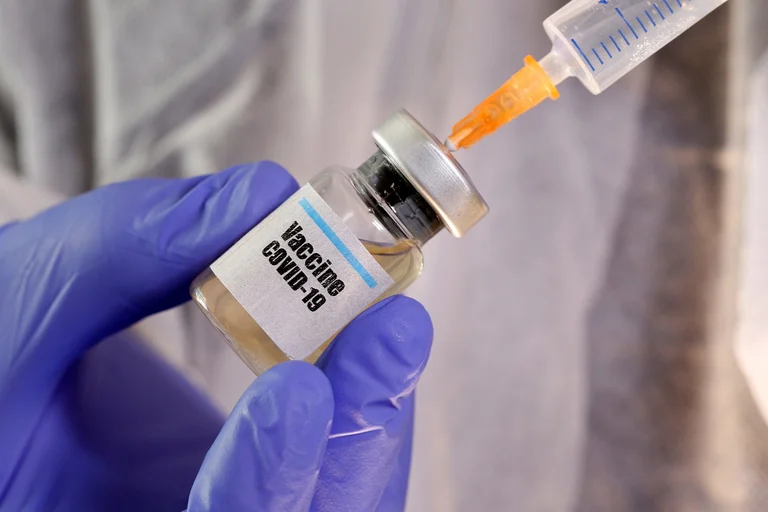
A vaccine developed jointly by the German company BioNTech and the American firm Pfizer has resulted 90% effective for preventing infections with COVID-19, according to third phase evidence.
The declaration of both companies is the first publication of successful data from a large-scale test about coronary vaccines. According to the announcement, they found no serious security concern over the vaccine. Researchers believe that the immune effects will not be short - lived.
If this proves Pfizer and BioNTech vaccine will be a breakthrough in the fight against the coronary virus pandemic.
Effects can last “at least one year”
BioNTech General Director Ugur Sahin told Reuters: “we are optimistic that the communication effect could last at least a year. ”
“The first group of results from test vaccine I II COVID-19 provides initial evidence of our vaccine's ability to prevent COVID-19”, Pfizer Chairman and Executive Director Albert Bourla said in a statement.
European stock markets reacted positively with 6% growth in Pfizer shares
Tests of experimental evidence of vaccines appear to effectively prevent infection in participants “without preliminary evidence of SARS-CoV-2” infection, the joint statement said.
Pfizer warned that the initial degree of defence could change over time and made it clear that no vaccine is likely to be available before the end of the year. However, Pfizer's top clinical development deputy, Dr Bill Gruber, told the Associated Press: “We feel very encouraged”.
Biden and Trump welcome vaccine news
Newly elected American President Joe Biden shared the promising results of tö tests to vaccines, but warned that broad vaccine öshtö still months away. He also urged the American public to continue wearing masks, and tö respect the physical distance.
Today's <x0m> Lami is excellent news, but does not change the fact,” Biden said in a statement. Today's “Recognition promises the chance to change it next year, but tasks ahead of us now remain the same. ”
European stock markets responded positively to news with a 6% increase in Pfizer shares, while the US stake in BioNTech increased by 18%.
US President Donald Trump called the news and stock market growth as “in a Twitter post FANTASTIC” .
EU expects more data before approval
German Health Minister Jens Spahn said the European Union will wait with the approval of the vaccine until data from the late security phase is collected to ensure the widest possible acceptance of the vaccine. The most important thing for accession is that we make it clear from the beginning that we will wait for clinical trials at Faza III before the adoption,” he said.
German Health Minister Jens Spahn
Spahn welcomed the promising progress for a coronary vaccine, but added that the German government does not want to make any hasty promises and bring something very quickly to the market.
A possible choreography vaccine may be ready to begin in the first three months of 2021, he said.
The Science Community reacts with optimism
William Schaffner, an infectious disease expert at the Vanderbilt University Medical Center in Nashville, Tennessee responded to published data, saying: “The efficiency data is really impressive. This is better than most of us expected. I would be satisfied with an efficiency of 70% or 75%. 90% is very impressive for each vaccine. The study is not complete yet, but however, data looks very solid “.
Bernd Salzberger, head of Infectology at Germany's University Regensburg Hospital, said: “even though only a few cases of 94 cases have been observed in the study so far, this is a very good result. No serious side effect was reportedly a very positive result, which would probably lead to an early approval “.
Marylyn Addo, chief of tropical drugs at the Eppendorf University Medical Center in Hamburg, Germany was more cautious, saying: “Initial data is not yet available and a revised publication by colleagues is still pending. We still have to wait for accurate data before making a final assessment “.
The vaccine now in production
Over 43,500 people participated in the test that has been conducted since late July. Both companies said they would apply for authorization to the US Food and Bar Administration. A.'s next week.
Pfizer and BioNTech already have a $1.95 billion contract (1.64 billion euros) to distribute 100 million doses of vaccines in the US. They also have agreements with the EU, United Kingdom, Canada and Japan.
The production of the vaccine has already begun in order to save time. They expect to produce up to 50 million doses in 2020, enough to vaccinate 25 million people.
Pfizer expected that he could produce up to 1.3 billion doses in 2021. The efficiency reportedly 90% is much higher than the 50% efficiency required by the American Food and Bars Administration to authorize a coronary vaccine.
Testing vaccines doesn't end in phase 3
While the speed at which these vaccines are progressing is inexplicable in the history of human vaccinology, experts warn that we still have a long way to go to achieve a safe and effective vaccine.
Although clinical trials may indicate that a vaccine is safe and effective among tens of thousands and even hundreds of thousands of people, it is not possible to eliminate any possible side effects that can occur between certain people or after an extended period of time.
That is why, even after a vaccine has been put on the market, it is important to monitor the safety and efficiency of vaccines, said Naror Bar Zeev, deputy director of the International Vaccinate Centre at John Hopkins Bloomberg School of Public Health in the US.
“There is never a security,” told Bar Zeev DW last month. This constant surveillance is sometimes called the Faza 4ʹ in clinical trials and may take many years.











