5 hours ago
Pandemia highlights the difficulties and poverty of Roma communities, Ashkali and Egypt
Periskopi(6 years ago)
(6 years ago)Of the 27 decisions of the Government to manage pandemic, only one is directly linked to the Roma, the Ashkali and Egyptists. A research conducted by “Admovere” reveals that 51 percent of the students of these communities in the Ferizaj municipality have not followed distance instruction due to lack of technological equipment. Challenges with [...]
The challenges facing the Roma, Ashkali and Egyptian communities have increased even more during Coronavirus' pandemic.
Members of these communities, to whom the Online Economics talked, complain that the social and economic situation has been heavy over the past few months. Meanwhile, the pandemic has highlighted their poverty even more, including the lack of technology tools for remote learning.
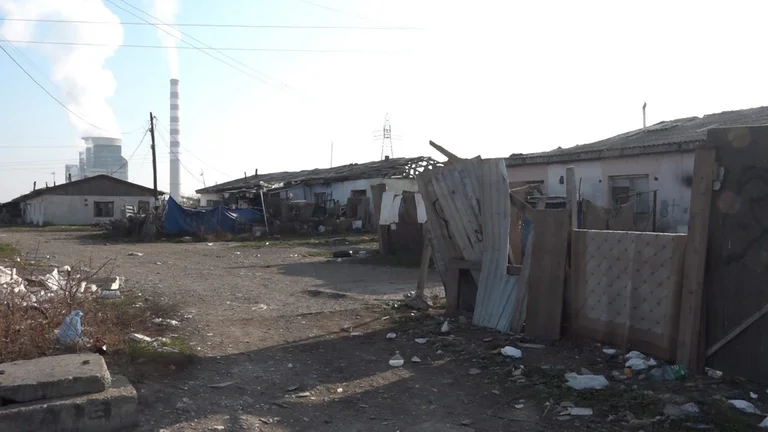
The Online economy has visited the village of Plemet in the municipality of Obilici to see closely the plight of the inhabitants of these communities in the pandemic.
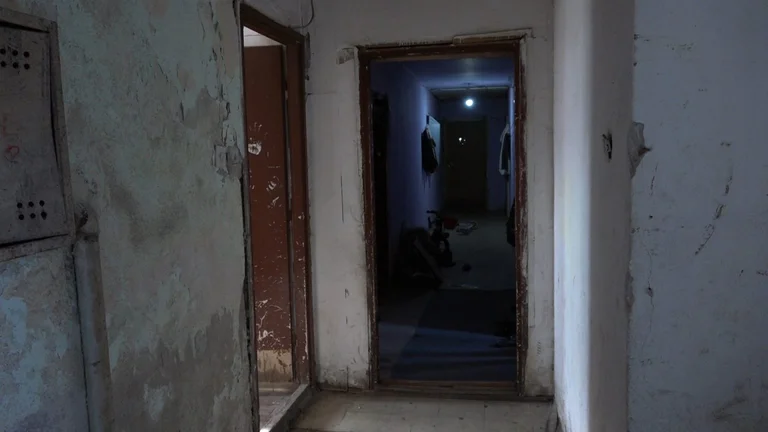
Although the number of infections across Kosovo is at its peak, very few people had masks set here. And hygienic conditions are very serious.
Vasfije Bunnjaku, a member of the Roma community, says she is disappointed with all the institutions, as she and her family did not accept any help from the municipality or the Government for easier overcoming this situation.
Bulnjak says that she was visited only once by the Communists, with whom she was disinfected by her home, but no other contribution has been accepted.
“Nobody's coming. When the virus started, they've come once before no <x1.
Sadija, also with ashkalic affiliation, complains about the difficult conditions she and her community face. She stresses that she feels neglected by institutions during the pandemic.
You can see where we're going. No one can shave here except us... They have come with a disinfectant for a week or two”, Sadija said.
Even, Habib Gashi, of Roma affiliation, says the pandemic period has been difficult for him, as his social assistance has stopped at first.
I've had my first turn in the beginning of Covid-19 which was in our Republic, stopped my socialization because of my child's age and didn't get for four months. I also have a sick friend, so I'm on a program for the sick for my friend. We have it in order, but we have to wait a little bit, said Gashi.
Government decisions during pandemic, do not “prekin” communities
In a report by the non-governmental organisation “Admovere”, it is said that of the 27 decisions of the Government of Kosovo to manage the Devi-19 pandemic, only one decision is directly linked to Roma communities, Ashkali and Egypt.
Aulone Memeti, author of this study, says the Ministry of Health and National Institute of Public Health ( There is no data on the spread and management of pandemic in these communities.
“Ademovere has conducted a research that has been intended to analyse government decisions, measures taken with particular emphasis on the Roma community, Ashkali and Egypt in three Kosovo municipalities: Ferizaj, Fushe-Kosovo and Lipjan. This, given that marginalised groups are in a more favourable situation, both socioeconomics and lack of access to good health services, physical schooling, and so forth. We have seen the need to examine what is being done and whether the Government is taking measures to facilitate the situation for these communities”, Memeti told Online Economy.
Out of a total of 27 decisions by the Government of Kosovo for management of the Covid-19 pandemic, only one decision relates directly to the Roma community, Ashkali and Egypt. Another interesting finding has been the fact that the Ministry of Health and the National Public Health Institute have no data on the spread and management of pandemic in Roma communities, Ashkali and Egypt”.
When we asked for access to public documents, statistics for these communities, then the answer was that we don't discriminate in this form and we don't have that data... We estimate that the Ministry and the Institute should have as much information as possible, based on gender, age groups and, of course, marginalised groups, so that they took measures and helped these communities”, she added.
Memeti says that in the three municipalities for which the report has been made, there have been ongoing disinfections, and families have also accepted hygienic packages. However, it does not suffice. There must be more to these communities considering that many of them live in poor conditions”.
Admovere: At Ferizaj, 51 percent of community students did not attend long - range instruction
In addition to economic difficulties, Roma communities Ashkali and Egypt also faced the lack of technological means to convey online learning.
Val Berisha, representative of the Roma communities, Ashkali and Egyptian in the village of Plemetin, said they have asked the municipality to provide you with some laptops or tablets so that children can convey instruction online.
The Roma community, Ashkali and Egypt alike are components of the state-building of Kosovo, and our children also have a future. It's actually hard because considering that their socioeconomic situation is quite weak, I've proposed as in Komuna, as in the Director of Education, that however-ever I might distribute a laptop or iPad to students who have specific conditions”.
There have been difficulties. Like. There were times when a family had an Internet, they had two families together with one phone, and they followed it online. The municipality has promised to donate our laptops, but so far we have received. So have teachers had numerous problems”, Berisha said.
And from research done by “Admovere”, it turns out that 51 percent of the students of these communities in the Ferizaj municipality have not followed the instruction at a distance.
“in the Ferizaj municipality, out of 828 Roma community students, Ashkali and Egypt 425 or 51% have not followed the instruction at a distance. And this is another clue that shows the difficulties for access, whether for lack of laptops, pills or smartphones. In such a situation when the whole country has faced a major crisis, one should imagine what the situation has been like for Roma communities, Ashkali and Egypt”, Memeti says about Online Economy.
Egyptian Liberal Party MP Veton Berisha has indicated that they have established several headquarters to care for and stay close to these communities during the pandemic.
We're actually assessing the situation, that's after the period we've been through. The first quarter has been extremely difficult. After the release of the masses, it has certainly been easier for us too because people have managed to provide income through their own forms. We're being taken, eventually identifying the cases if there are any affected. We created some of the community headquarters. In each municipality we have people who care and are close to the community. The situation in general is stable. We have cases identified by Ovidius and we're standing by identifying all the problems they're facing”, said MP Berisha, for Online Economy.
Berisha stressed that the Government's pledge to allocate two million euros to Roma communities, Ashkali and Egypt is welcome, but is not enough to solve the many problems of these communities.
The “is promised for communities a sum of twom euros; it has pledged. It is a fund that is scheduled to be distributed through the Office of the Prime Minister for Communities. Those in legal form have managed to open contests, even people have run, organizations and individuals”.
“Yet it is not a fund that will solve community problems, because the Egyptian community has other needs from what is planned and we are making efforts with each ministry to solve their numerous problems”, he said.
In Kosovo it is estimated that some 400,000 Roma -- the Ashkali and Egypt -- live.
The Kosovo government has distributed a total of 1.7m euros, as support for non-US communities, while, by the end of December of this year, plans to allocate another 2m euros to these communities to help cope with the situation created by the Pandena Codavi-19.
This article is prepared under the “Education Development Medial project and the strengthening of Independent Journalism in the Western Balkans”, which is implemented by the funds of the United Kingdom Foreign Affairs Ministry through British Embassy Pristina. The content of this publication is the sole responsibility of authors/authors and does not necessarily reflect the views of the United Kingdom Foreign Affairs Ministry, Albany Associates, Media Center Sarajevo, or KosovaLive.