5 hours ago
EULEX experts show how they identified the location with mortary waste in Kzhevak
Periskopi(6 years ago)
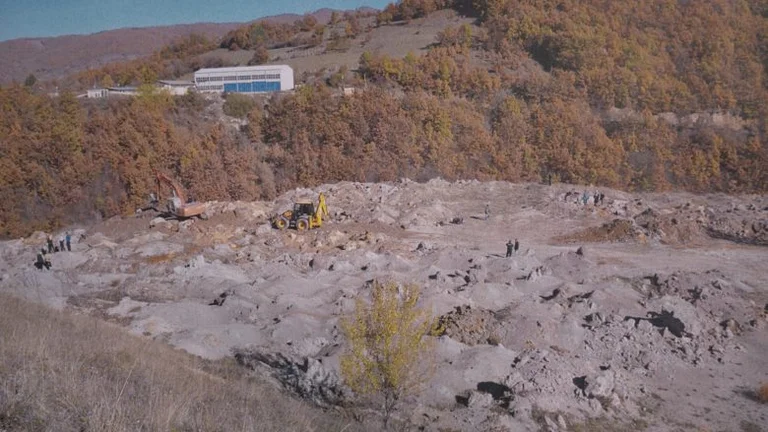
(6 years ago)On Monday, November 16, 2020, experts from the European Union's Mission for Law Rule in Kosovo (EULEX), the Kosovo Legal Medicine Institute and Serbia's Government Commission for Missing Persons discovered morto remains in Kizevac, where a large stone lies in Serbia. EULEX experts have conducted excavations at Kizevac [...]
EULEX experts have conducted excavations in Kizevac since 2015. After several unsuccessful times of excavations in Kizevac, progress took place in 2020 because of the use of air photo images.
The problem was that these are large stone locations and that the landscape has undergone constant changes over time because this stone was still in use for a number of years, said Javier Santana, EULEX's forensic archaeologist, said the media report.
The process of identifying the exact location of the morto remains was complicated even more because of the fact that there are four to five galleries in this mine, each with an altitude of approximately 13 metres.
Following EULEX's request to take images from the air of 1999, the International Committee of the Red Cross provided air photography to the Kosovo Government Commission for Missing Persons and Serbia's Government Commission for Missing Persons in late 2019.
“We accepted photo images from the air at the end of 2019. Between late 2019 and early 2020, EULEX co-ordinator for exhumation Krasimir Nikolov and I have analyzed the photos. According to our analysis, we returned to that location in February 2020 and located the exact location of this location. This is when work began this year”, Santana said.
Following the location's identification, experts from EULEX, the Kosovo Institute of Legal Medicine and Serbia's Government Commission for Missing Persons have carried out field work in Kizevac, which led to the discovery of mortar waste.
“Work in Kizevac is away from finished. The process is very complicated and takes a lot of time. To be able to continue, there must be a court order. After that, the next step is to continue with exhumations and finding mortories. Once the mortore remains are found, autopsies must be made and bone samples taken for DNA profile tests. In cases where relatives of an missing person have given blood samples and there will be reports of positive DNA compliance, the identification process ends. Then, families are informed of identification and they are handed over to the missing person's mortor remains”, EULEX co-ordinator for exhumation Krassimir Nikolov said.
The discovery of mortore waste in Kizevac is an extremely positive development and the reward for our continued efforts at lighting the fate of more than 1640 people who are still undiscovered in Kosovo. The issue of missing persons is a matter of human rights. It concerns the human rights of relatives to understand what has happened to their most loved ones”, said Deputy Director of the Kosovo Institute of Legal Medicine Tarja Formisto.
Formisto once again urged relatives of all missing persons to give blood samples to facilitate the identification process.