 6 hours ago
What if the American presidential election doesn't clearly reveal the winner?
Periskopi(6 years ago)
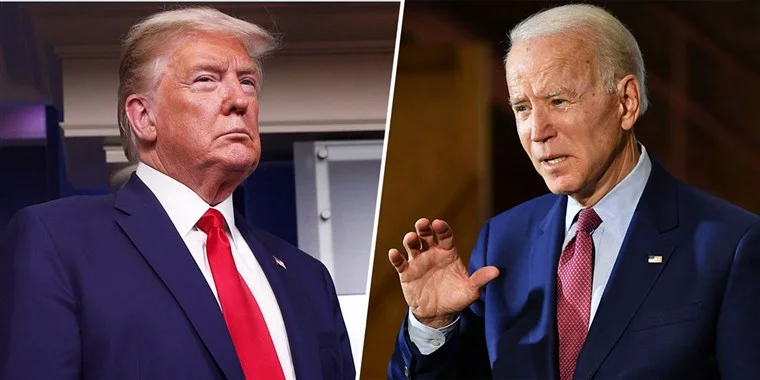
(6 years ago)Ahead of the American presidential elections, political scientists and election law experts presented a variety of scenarios the country could face on Election Day and in the coming weeks. The possibilities range from a clear victory by President Donald Trump, or former Vice President Joe Biden, to an unfinished legal battle, which [...]
Experts say determining the winner of these elections is especially difficult due to an unprecedented level of voting via mail due to the coronary pandemic. The length of U.S. laws on how and when votes should be counted by mail means that a final count may take days or weeks to complete.
In what he called the nightmare “x1>, political researcher William Galston of the Brookings Institute, a nonprofit body, writes that a very close result, which would question the winner “would throw the country into chaos, under very harmful circumstances”.
President Trump has repeatedly raised the possibility that the massive exercise of voting through mail will result in a manipulated election result and has repeatedly refused to engage in advance for a peaceful transfer of power in the event of defeat. Mr. Biden has said he will accept the election outcome, provided there is an honest vote count.
Due to the possible destabilisation that would create contested elections, the best scenario would have been a safe or almost safe result on election night. But the nature of the American system of choosing a president opens up opportunities for many and different conclusions.
A Complex Process
The American presidency is not won based on popular vote. The American presidential elections are decided through a two-stage complex system, in which votes given at the state level are followed by a second vote in a body known as the Elexoral College. Individual states are assigned a number of <x0 selector”, based on the population number. A list of electorates supporting the winner of the popular vote in each state is certified once votes are counted. (In two American states, Maine and Nebraska, electoral votes are divided according to the outcome of each candidate. )
The electoral college meets on 14 December for voting formally determining who the next president will be. The winning candidate must receive 270, out of a total of 538 Elexoral College votes. Votes are officially counted during a joint session of the House of Representatives and Senate on January 6th.
While many states may take days or weeks to count all their votes, a number of important states whose outcome may be very close can cause tension.
Possible Legal Battles
If the result is unclear, let's say on tomorrow, as a significant number of states cannot complete the count due to the large volume of votes by mail, then I would expect major disagreements in those states, for the validity of every vote sent to post”, says Richard H. Pildes, election law expert and constitutional law professor at New York University.
There are several key stages from Election Day and until January 6th, the day Congress counts the votes of the electorate. The first is December 8th, the so-called <x0port”, the deadline when states must have submitted certified list of electorates to the U.S. Archives (director of National Archives).
In the event that a state has not completed the vote count to that date, whether because of continuing counting or legal processes, there is a prediction in federal law that allows the legislature of that state to meet and set up a list of electorates, not yet knowing the final result of the vote counting.
This creates the possibility that a party legislature could name a list of electorates supporting the candidate who subsequently loses the popular vote.
In countries where the governor and legislature are divided among parties, there is another complicating factor. Because it is the governor who certified the list of selected electorates, it is possible for a state to present two different lists of electorates who claim to be legitimate.
Under federal law, if two different electorate lists from the same state are presented to the new Congress, the House of Representatives and Senate vote to decide which list will be accepted. If they agree, the votes of their accepted list are counted. If they don't agree, the certified list by the state governor prevails.
Baring at Elexoral College
It is also possible, although there are very few chances of not having a winner for the presidency after the electoral votes are counted. If the two candidates get 269 votes each, the responsibility of determining the winner rests with the House of Representatives. However, instead of a vote in which each of the 438 members individually vote, delegations from each state vote in the group. This means that the party that controls the largest number of individual states would control the vote.
Such a scenario would produce some 600 thousand residents of the state of Wyoming, the same influence on the president's election as that of California's 40 million inhabitants.
Another problem in the system could be the possibility that some of the electorates sent to vote for the president on December 14th would result in non-faithful “ ”. In rare cases over the years, electorates who had pledged to vote for a certain candidate have cast their vote at the Elexoral College for the other candidate.
Some states have passed laws forcing the electorate to vote for the candidate they have pledged, and the Supreme Court has decided such a practice is legal. There is, however, the possibility of unfaithful electorates trying to change the election outcome, but experts point out that to achieve this, a very close election outcome and a level of co-ordination among the unlikely electorates is needed.
It is important to note that although possible, none of these scenarios are likely to happen.
Professor Pildes says that even without a full count that on election night, a sufficient clarity on who will be the winner at the conclusion of the process may appear.
“Even in states that cannot complete the count, individual municipalities in these states may have finished counting them”, he said. The “Medias will compare the results of President Trump in those municipalities in 2020 with the results of 2016. If he systematically appears less, this will be very valuable information that can strongly signal the direction of the elections, although one cannot officially be declared a winner... This could be a similar” scenario. / VoA











