 8 hours ago
American experts: Noble KLA war must be praised, Kosovo's invisibility
Periskopi(6 years ago)
(6 years ago)Following President Hashim Thaci's resignation and his visit to The Hague to face charges of war crimes and crimes against humanity, two American experts say possible individual responsibility should not be confused with Kosovo's position and with the history of the sides in the conflict. Journalist Keida Kostreci spoke with professors David Phillips [...]
Both Professor of International Law at American University in Washington Paul Williams and Human Rights Professor David Phillips at Columbia University in New York say President Thaci did the right thing to resign and go face charges in The Hague, having a chance to defend himself against these charges.
It is important that Kosovo overcome this moment. And the best way to do that is for President Thaci and others to go and face their accusers and point to their side of history”, says Professor Phillips.
But he adds that it is not to be forgotten that it was a fight against Serb oppression.
These individuals are being tried, but Kosovo's independence is irreversible and the KLA's noble war should be assessed. We just need to know what happened during those years and move forward”.
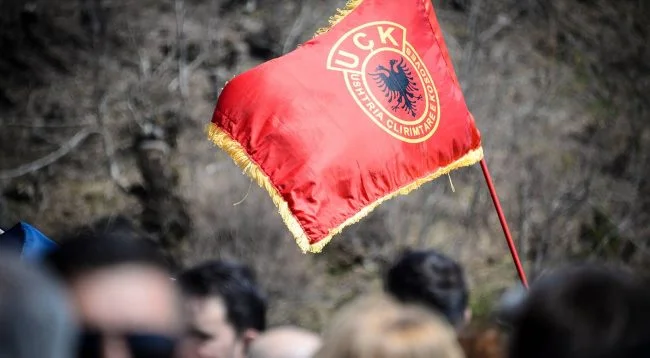
Kosovo President Hashim Thaci, leader of the Democratic Party, Kadri Veseli, National Council of Social Democrat Initiative head Jakup Krasniqi and parliamentary group of Vetevendosje group Rexhep Selimi are accused of war crimes “of unlawful or arbitrary arrest, cruel treatment, torture and unlawful murder, and crimes against humanity's imprisonment, other inhumane acts, torture, illegal murder, forced extinction of persons and persecution<1>, during the 1998-1999 period.
All of these, former senior Kosovo Liberation Army leaders are now in the detention centre of the Special Court in The Hague.
Prof. Williams says there is no doubt that those responsible for cruel crimes should be held accountable, but you should not have a court that looks at only one side.
The moment you start creating courts that focus only on one side or only on several crimes and do so because there was a court of the same purpose that had worked for decades, which had been focused on all sides, then you start to distort justice, distort the influence of justice, approach to history, the casthesis of victims”, he says.
That, according to him, causes another danger -- that of moral equality between causes and victims in conflict -- and says it belongs to the international community, while insisting on establishing this court -- to say these trials do not change the history of what happened in Kosovo.
“If the international community accepts this very clearly, we will be able to see some progress in normalising relations between Kosovo and Serbia and with the international community”.
Prof. Phillips feels that the good will of internationals can be shown with concrete steps.
The best way to do this is to make visa liberalisation, review the 33 agreements that have already been reached, and to have compensation for missing persons and to seek responsibility for the thousand and three hundred Kosovo Albanians who have disappeared”.
Until that happens, he says these talks in Brussels seem meaningless.
“The mediators must demonstrate that they are willing to move forward, that there will be visible progress. Until this happens especially in the current circumstances with these charges, it's really not worth showing up, sitting at the table and not talking about anything”.
As far as Kosovo's political position is concerned, prof. Williams does not think the developments regarding the court will change much.
I am quite convinced that the consequences within Kosovo will be minimal. Kosovo is an independent country. It has developed democratic traditions in the past 20 years. And I think that the people of Kosovo, while they may feel offended or demoralized by this, recognize that there are international courts in today's world and that they are trying to hold those who committed cruel crimes” responsible.
But prof. Phillips thinks no doubt that this development will have political consequences, including the fact that a continued government plan must be made. Given the implications of leading figures in these judicial processes, he thinks change is needed.
For recovery in society and for Kosovo to become a more normal country, with greater international recognition, new leaders must appear.
One thing is certain, according to two experts. Sending Mr Thaci and other figures to The Hague to face charges has changed the dynamics both within Kosovo and in terms of the dialogue process.











