 4 hours ago
They voted it out, but MPs are not respecting the Law on Gender Equality
Periskopi(6 years ago)
(6 years ago)The Law on Gender Equality has been voted in the Kosovo Assembly for five years, but the people's elected were ignoring it themselves. This is because the representation of women on public enterprises, institutions and independent agencies that are voted on by them is continuing to be very low. Except for their vote [...]
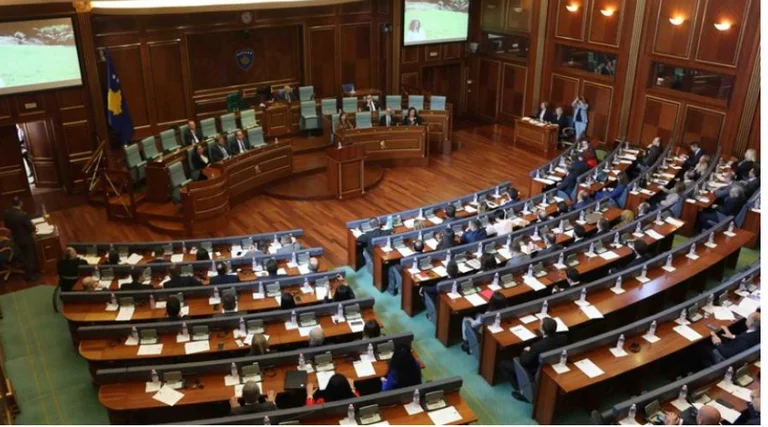
The Law on Gender Equality has been voted in the Kosovo Assembly for five years, but the people's elected were ignoring it themselves. This is because the representation of women on public enterprises, institutions and independent agencies that are voted on by them is continuing to be very low.
In addition to their disturbing vote, it is seen as itself the troops who recruit candidates targeting any of the public posts.
The MP of the Vetevendosje Movement parliamentary group, Mimoza Kusari-Lila, says of KosovoPress, that after the last cases in the Assembly, where for two indecipherable positions on the BQ board, seven men have come for voting, they will insist that troops making the election of candidates recruit women and that the Law on Gender Equality be respected.
“Taking into account that we are talking about a law that was passed on Kosovo's Parliament I see totally unacceptable accepting lists for troops who are voted in Where there is no gender equality. That's why I've raised this case several times before in this legislation, and it seems to me that it has come to the point where, in co-ordination even with the Speaker of the Parliament and with the chairmanship, I'm hoping that there will be support for troops who make the first selection of candidates who should then come to vote in the Parliament, enable them to have full gender equality and insist on recruiting women... In the last case we had in the CEC, we had seven male candidates for two non-executive positions on board, and I'm glad that the process turned to 0”, Kusari says.
The disturbing situation is being seen by the executive director of the FOL Movement, Meddition Demolli-Niman.
Unfortunately, in many statements we've seen recently, the number of women candidates who have applied is very small, towards male candidates. Here I think it's also about women's courage to face men with one race, given that all boards in the past have dominated men. No matter how many women fit the profiles of these companies... To find out this complete implementation law requires competition and recruiting procedures to be very transparent and to initiate the apocalypse of all these companies. The last was the ombudsman, we have a former deputy minister... You just saw this situation maybe many of these boards are politicised that might be one of the reasons many women are reluctant to apply”, she says.
And from those who try to push women's rights forward, they say the latter are being left out.
Gresa Sermanjaj from the Women's Group Network says sceptical that the status situation could change for the better.
The impasses of this law are two most fundamental things. The first is that this law has not abolished other laws that conflict with this law, as is the law for general elections, and the second is the lack of reporting about implementing this law, as well as the lack of sanctions or penalties for those institutions that failed to enforce this law as required... During the 2017/18 years, the Kosovo Women's Network has carried out an analysis of the legal framework of certain sectors from gender perspectives, in that document it is clear that women remain represented in public enterprises by what they are, the participating provision of 31 public companies has been a total of 159 members of boards 85% men, while 15% women”, she says.
Meanwhile, MP Kusari-Lila says she will make sure that even the MTI compiles secondary legislation, with which sanctions are provided for those companies that do not apply gender equality to non-executive boards.
“From my post as deputy will make sure that even the Ministry of Trade and Industry as the law enforcement of commercial society compile secondary legislation with which sanctions are provided for those companies that do not apply gender equality, for non-ex1> boards, she says.
Otherwise, Article 7 of the Kosovo Constitution provides equality as a fundamental value to the democratic development of society, equal opportunities for female and male participation in political, economic, social, cultural and other areas of social life. /Q. Rexhaj.











