23 minutes ago
The story of the woman who was raped by Arkan and his #
Periskopi(6 years ago)
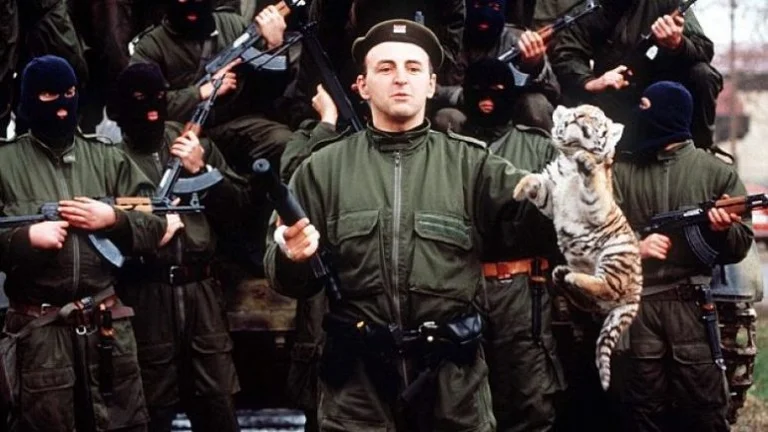
(6 years ago)The paramilitaries led by the notorious Serbian commander Zeljko Raznatovic, Alyas Arkan, fought in Bosnia, Croatia and Kosovo, but why was none of them imprisoned for his entity's crimes? Jusuf Trbic recalls the first time he saw the Arkin, sitting in an army truck loaded with weapons in Bijeljina, eastern Bosnia. [...]
Jusuf Trbic recalls the first time he saw the Arkin, sitting in an army truck loaded with weapons in Bijeljina, eastern Bosnia. It was about 4pm in the afternoon on April 2, 1992, shortly after the Serb forces took over the city. Trbic recognised Zeljko Raznatovic's face from television reports; he was already known as a man to fear, writes Balkaninsight, the Express newspaper reports.
Trbic had just been captured by the Arkan Volunteer Serbian Guard, the Tigers. During the next hours, at night until dawn, he was beaten and tortured, sometimes in front of Arkan himself. They knew what they were doing,” told Trbic BIRN. I didn't have a millimeter white skin; all was black and blue. ”
After all, he was released because Arkan had captured him for a reason, he was a local journalist, and the paramilitary chief wanted him to broadcast a call for Bosniaks to Radio Bijeljina to give up their weapons, he said. The others weren't so lucky.
A woman from Bijeljina, who asked to remain anonymous, said she was 19 when Arkan's men knocked on her family's door one night in April 1992. “They were camouflaged, so we could just look at”, she remembers, Express reports.
Paramedics robbed the family's property, took money and gold. A warrior struck her in the back and fainted. When she woke up, she and her sister-in-law were naked and bloody. The next day, Arkan arrived and raped him, she claimed.
The Arkan came for the first time after that night. He came and he grabbed my hair and he took me away. He took me to an apartment, and he abused me there. He sent me back half dead and then [did] it again the next day,” she said in an interview for BIRN.
Then other soldiers came and abused me in front of my children, my mother-in-law and all the others, it continued. I begged them to kill me so I wouldn't hurt again. They just laughed again cynically and told me that they would gain nothing if they killed me because I would kill myself. “
Although her testimony has never been tested in court, she has since been officially recognised as a victim of war rape by the Bosnian state and has been compensated for what she suffered.
Decisions at the International Criminal Tribunal for the former Yugoslavia have confirmed that at least 48 people were killed in Bijeljina by Serbian paramilitaries in the first two days of April 1992. But none of Arkan's men have ever been imprisoned for murder, rape or robbery or for any of the other crimes they are accused of committing during the wars in the former Yugoslavia in the 1990s, Express reports.
Arkan was charged with war crimes by the UN-backed tribunal in The Hague at the time he was shot dead at Belgrade's Interctinent Hotel in January 2000, but assured his murder that he would never go to trial.
Since then, only one of his fighters has ever been convicted of committing a war crime while serving with Tigers Boban Arsic, convicted by a Croatian court of killing a married couple in a small village in 1992 and even convicted in absentia because his whereabouts were unknown.
Some Tigers have been imprisoned since other crimes during and after the Balkan wars, such as the assassination of Serbian Prime Minister Zoran Djindjic in 2003.
Balkan expert Christian Axboe Nielsen, associate professor at the University of Aarhus, stresses that The Hague Tribunal was created to prosecute high-level suspects, not ordinary fighters: “The assumption and expectation was that war crimes courts in the individual countries of the former Yugoslavia will eventually begin to prosecute the ranks of the Arkan unit. ”
But that did not happen. In Serbia, Nielsen explained, investigations also “mangu with a study following the chain of command”, never targeting top officials who enabled the existence of paramilitary units to exist.
“has just little or no political will and little public appetite for it in Serbia today,” he said.
This writing was published by Balkalinsight. com 6 years ago.