5 hours ago
Raka: Increasing the number of tests and hospital beds can lower the mortality rate from coronary
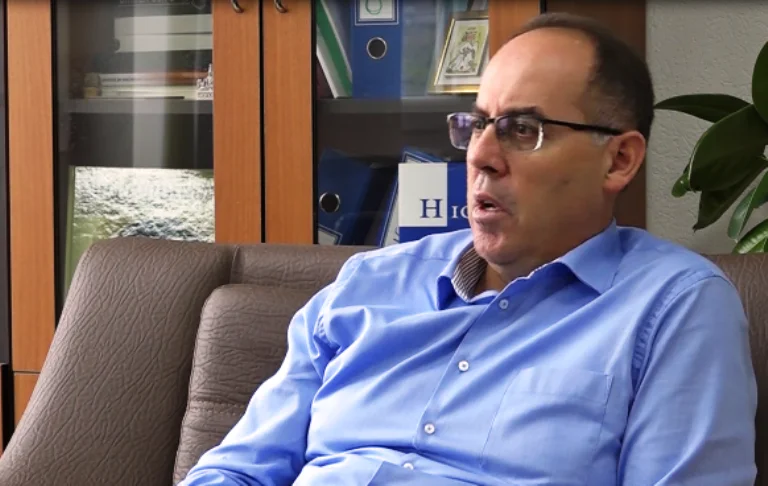
Periskopi(6 years ago)
(6 years ago)Increase in number of tests The PCR, improving the effectiveness of the Government, as well as increasing hospital beds can affect the decline in mortality by Ovid-19. This is one of the Council of Adviser recommendations based on scientific studies for the Ministry of Health. At the third meeting held on July 30th of the Council of Counsel. [...]
At the third meeting, held on 30 July by the Counseling Board, which is led by Prof. Asoc. Lul Raka, has been addressing one of the most important issues for pandemics in Kosovo -- high mortality rates, writes Schneta newspaper.
For this problem the Board has cited two scientific studies published in popular journals, where it has been found that the high mortality rate by Ovid-19 has negative conglomeration with the number of tests conducted in 100 persons, with Government performance and the small number of hospital beds.
Raka says Kosovo has not been part of this study, which has been done in 169 countries around the world, which have the newest population and the smallest number of hospital beds.
These factors affect mortality, but there are also many other specific factors for each country, such as. Health capacities. Such research has been done in 169 countries to understand why there is variation in the mortality rate in different countries. Kosovo has not been part of this research, according to which the mortality from COVID-19 has a negative conglomerate with the number of tests in 100 persons, with government performance and the percentage of persons over 65 in the general population. This conglomerate is more expressed in countries with limited resources, which have the newest population and smaller numbers of hospital beds”, microbiologist says.
Raka adds that the research quoted showed that the average testing rate in 169 countries was 3.75 tests in 100 inhabitants. The increase of only one test to the average of 100 inhabitants has reduced mortality rates by 8%. “Testing, increased government efficiency and increased hospital beds can affect the lower mortality rate of Covid-19”.
He has announced that the test capacity in IKSHPK has gradually increased by about 1,000 tests a day, as well as by World Bank assistance, 7 PCR devices that are expected to be used at regional centres.
Kosovo has been facing problems in securing PCR tests for a long time. Testing has been a problem not only in Kosovo, but also in countries with advanced health capacities like this. in the United States, which has had the world's best readiness plan, maximum financial capacity in science and best public health experts in the world”.
The report on this issue is addressed, and thanks to institutional commitment and donations, we expect the new wave much more supplied than in the previous months. Over 100,000 tests were accepted by KFOS, and along with other donors for the first time we had nearly 200,000 PCR tests available”, Raka said.
He has stated that the MSH, out of the Board's 78 recommendations, has either been implemented or are in the process of implementing more than 90% of the recommendations.
Board does not recommend total closure
Counseling Board Chairman Lul Raka says in the autumn-day season, with the return to schools and stay in closed spaces, the results of the pandemic will depend on citizens themselves, and strict inspection of government institutions.
“Reopening schools and turning into closed spaces due to weather cooling will inevitably increase people's circulation. The autumn season also restores the seasonal flu virus. All these factors are elements that contribute to increased cases of illness. That, therefore, strengthens the role of implementing precautions from the population and monitoring them from the state bodies. The final result will depend on the implementation of measures by Kosovo's own citizens and on strict inspection of government institutions”, Raka has said.
According to him, Kosovo is better prepared to cope with this situation with pandemic than it has been during the summer. We have much more than during the summer. The number of new employees and specialists will be significant cadrovik infusions, inspectors' capacities, hospital capacities have increased; the oxygen problem in intensive care is sitting”.
Also, we have more leadership experience, we health workers, but also people in implementing the necessary measures for prevention. Of course it will be challenging for all of us, but if we apply the preventive and inspection measures, then the number of cases will be manageable for Kosovo health institutions”.
Raka has further stated that the new restrictions depend on pandemic figures, but total closure will recommend it as the last option.
The basic criteria that define restrictions are primarily epidemiological situations from certain parameters: the number of cases and deaths in 100,000 inhabitants, the testing policies, the number of tests carried out, the positiveity of the test, the number of hospital hospitals and intensive care units. If there is widespread deterioration and increase in cases there may also be proportional restrictions of the movement of citizens”.
The total default “is not a choice for the current situation. The first board has recommended the opening, controlled with the implementation of measures by the people and rigorous inspection by the state. If we go in alphabetical order plans, from A-ZH, then total closure would be the last option of”, Raka has declared.