 4 hours ago
Poor government supervision framework
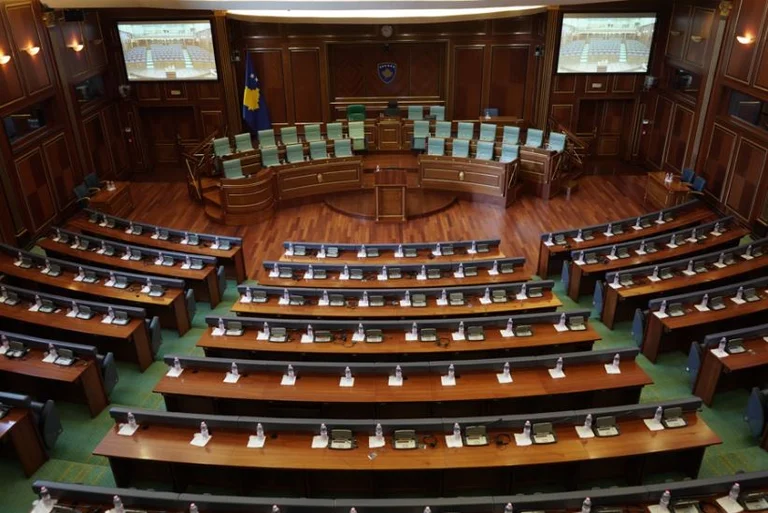
Periskopi(6 years ago)
(6 years ago)Parliamentary oversight of the executive, especially towards law enforcement, remains weak, the Kosovo Democratic Institute emphasises. According to this organisation, many laws that have been adopted by past legislatures are failing to be monitored and, as noted, are not being implemented. Agnes Haxhiu, policy researcher at the Democratic Institute [...]
According to this organisation, many laws that have been adopted by past legislatures are failing to be monitored and, as noted, are not being implemented.
Agnes Haxhiu, policy researcher at the Kosovo Democratic Institute, which monitors the work of the assembly, tells Radio Free Europe that there are some factors that have influenced and are impacting the failure to observe law enforcement.
There are many factors that have played a role in the lower supervision of law enforcement, beginning with the legal gaps that exist within the work regulation itself, which does not specify the number of laws that parliamentary commissions must oversee within a calendar year, and this then gives provisions to commissions not to prioritize the task. Then there are the lack of necessary commission expertise, but also the unwillingness of MPs to engage in these” activities, Haxhiu said.
Any law passed by the Assembly would also have to be supervised for its implementation.
Haxhiu underlines that there are many laws that have been adopted by the Parliament that are of the complex nature under way, which the Parliament would have to take priority for implementation oversight.
“One of those laws is the Law for Signal Protection, which was adopted by the Parliament in November 2018, which is one of the most important laws under the package of anti-corruption laws stemming from the ERA [The Agency for European Reform]. However, even after two years since its implementation has been adopted remains a challenge both in public institutions and especially in private”, Haxhiu said.
Haxhiu added that from monitoring, it is seen that there is no proper seriousness on the part of MPs to monitor the government's implementation of laws.
This low performance of the Parliament in monitoring law enforcement has been far more pronounced in the VllR. But that trend seems to be continuing even this legislature since commissions have not yet begun the monitoring activities of law enforcement”, Haxhiu said.
Artan Abashi, MP from the Vetevendosje Movement, member of the Commission for Legislation Mandate, Imunite, Parliamenting Order and Supervision of the Anti-Corruption Agency, told Radio Free Europe, that the proper functioning of work in the Assembly has also led to the monitoring of law enforcement being not done properly. He says that even the pandemic has influenced this direction.
The start of the 7th Parliament's work on the Parliament has been accompanied by a time in which there were actually obstacles to the objective type, the pandemic, then we had a no-confidence motion against the Kurti government and then we had the election of an illegal government and largely associated with a political crisis that has plagued this part of the assembly's regular working that is monitoring of the adopted laws”, Abra said.
Teuta Haxhiu, MP from the Alliance for the Future of Kosovo, which is part of the ruling coalition, said one of the MPs' main tasks is monitoring the implementation of laws, which it says has failed.
The “I'm saying has failed because it has largely failed to monitor it. In fact, if some of the laws that have been monitored have happened very often that the report has not passed into the assembly or arrived at the last moment because of the amendment of the” legislatures, Haxhiu said.
MP Haxhiu also considers that this situation has been created because there is no political will needed to change the situation. It also shows that the Law for Inspectorate [in the education system], even though some monitoring has been seen not being implemented, the assembly has failed to make any changes.
“Even though that law has been adopted for nearly three years, I have begun monitoring it because it is the obligation of MPs and ultimately the interest for this law to be implemented. In fact, because of the interests of individuals, conditionally stated, it is causing the law to not apply properly”, Haxhi said.
At the Kosovo Democratic Institute, they say that in all assessment reports of the Parliament's performance, whether by local or international organisations, the fact is suggested that parliamentary supervision of the executive, especially on law enforcement, remains weak.
Parliamentary control and supervision of the executive is conducted through parliamentary questions, inter-relations, through review of government reports on their work, establishing special commissions to organise field visits with the aim of implementing the government's specific measures, investigative commissions, vote of confidence motions.











