 6 hours ago
Kosovo still in unfavourable, without hope for UN membership
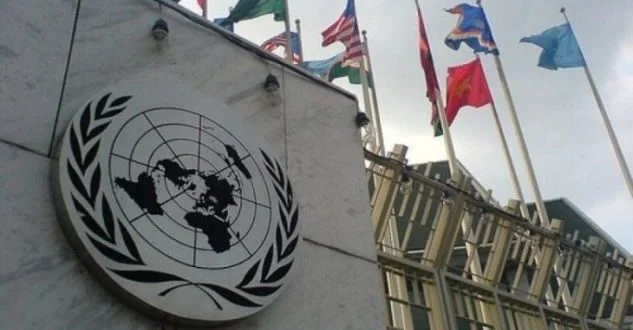
Periskopi(6 years ago)
(6 years ago)Today, the world's International Day of the United Nations Organization is marked by this part of which Kosovo aspires to be. But what is the position of Kosovo in relation to the United Nations Organization? Currently, Kosovo 12 years after declaring independence has failed to enjoy free movement in the area [...]
But what is the position of Kosovo in relation to the United Nations Organization?
Currently, Kosovo, even 12 years after declaring independence, has failed to enjoy free movement in the Schengen area, while, even higher aspirations as membership in the European Union, NATO and the United Nations look far away.
European integration acquaintance and Professor Avni Mazrek in a conversation on news.net has indicated that Kosovo's current report with the United Nations organisation is unfavourable because of Resolution 1244.
According to him, the failure to adopt a new resolution proposed by Ahtisaari, which would bring down Resolution 1244, has caused Kosovo to have such position. According to Resolution 1244, Serbia still has sovereignty over the independent state of Kosovo.
Kosovo's report with the UN is highly unfavourable until Resolution 1244 exists, which recognises Serbia's sovereignty over Kosovo. Unfortunately, although there have been special envoys from the United Nations for resolving Kosovo's status since 2007, Ahtisaari, his proposal was to become a new Security Council resolution, the resolution that would abolish Resolution 1244, as a result of the failure to abide consensus of the Security Council members, this has not been reached”, Mazreku told the news.net.
Furthermore, he adds that all of Kosovo's problems at the UN are the result of Resolution 1244 for what reason, Kosovo is obliged to report every three months before the UN Security Council.
Kosovo is still treated from the UN's perspective under Resolution 1244, and that puts Kosovo in a unfavourable position and Kosovo is therefore forced to report to the Security Council every 3 months and Kosovo has no favourable judicial situation as long as Resolution 1244 exists.”, he said further.
What are Kosovo's hopes for UN membership?
Regarding Kosovo's hopes for membership in the United Nations Organisation, Mazrek says that at the current location it is almost impossible to think.
According to him, with the five permanent UN member states, Kosovo is likely to be part of the UN.
“At the current location of the Security Council, which is the most important decision-making body that has 5 permanent member states and 10 which are changed in rotation, Kosovo's chances for UN membership are very small because, as we said before, the failure of Ahtisaari's proposal that would replace Resolution 1244 and recommend recognition of Kosovo's independence has made it quite problematic. And the Security Council has not compromised the handling of Resolution 1244. If Resolution 1244 is not abolished and the resolution is made, that is, to abolish Serbia's sovereignty over Kosovo, then Kosovo's likelihood of membership in the UN is quite, very small.”, Mazreku said.
He has also added that following the failure of the new resolution and the abolition of 1244, another way for the realisation of Kosovo's sovereignty has been membership in the European Union, but the obstacle on this path has been to the five member states that do not yet recognise Kosovo.
“Seeing that the international community has failed in the new resolution, so the path that is designed for the realisation of Kosovo's sovereignty has been Kosovo's membership in the European Union and after EU membership could be imposed on members so, China and Russia the issue of Kosovo as a fact done and that at least these two countries do not use vetoing the change of Resolution 1224. As you know, Kosovo has faced obstacles even here because there are five member states that have not recognised Kosovo and therefore Kosovo can be an EU member without being recognised by all member states, and in this line it is impossible to happen.”, Mazrek said.
Mazreku points out that the third scenario of Kosovo's integration is recognition by Serbia through the dialogue process '%s' which would put out the legal and political arguments of EU countries that have not recognised Kosovo, but that according to Professor Mazreku, it is not known when Serbia will be ready and what compromise Kosovo will be required.
“The third scenario is to achieve recognition of Kosovo's independence through the process of dialogue with Serbia, and thus political and legal arguments establishing states that have not recognised Kosovo fade. So these states lose the political arguments that they currently have for not recognising Kosovo. So when Serbia will be ready for such a step and what compromise Kosovo should make are open and unclear questions”, Mazreku said at the end.
Linked to Kosovo's membership in the UN today has Kosovo President Hashim Thaci written. He has expressed through Twitter that today when mankind is facing new challenges it is essential to remain united.
The UN role in building peace and stability in the world remains important. Today, when mankind faces new challenges, it is essential that we remain united in preserving a secure future of our countries. Now is the time for Kosovo to become a member of the United Nations”, he has written on Twitter.
When and how was the United Nations organization established, and what is its purpose?
The United Nations is the largest and most important International Organization in the world today, whose activity dates back to 1945.
The primary objective of the United Nations organization is to strengthen cooperation among nations, economic development, and to preserve security and peace in the world. It is consistent with the League of Nations but with far broader and completeer structure, organization, and membership. Initiators of its creation became the major powers of the anti-fascist coalition, the US and Great Britain, which at the 11th point of the Atlantic Charter signed on 14 August 1941 and contained the basic principles on the future new world order, agreed that “would be created after the war. ...an ongoing general security system”.
In the January 1st 1942 Declaration, signed by representatives of 26 anti-fascist and anti-Nazi coalition states, the need for establishing a lasting peace that would provide nations with the opportunity to live safely within their borders was reiterated. The idea of creating a new universal organisation and appointing the United States “combes” was re-evaluated at the Conference of US Foreign Affairs Ministers, former Soviet Union and Great Britain, which took place in Moscow on 19 October to 30 October 1943. The Declaration on General Security, later signed by China, for the first time the decision on the creation of the International United Nations Organization was formed.
As the principles, structures and functions of the organisation were formed at the Dumbarton Oaks Conference near Washington, which took place from 21 August to 29 September 1944, in which US representatives, former Soviet Unions, Great Britain and China participated. The conference processed the document called “...propossions to establish the international security organisation General”. In February 1945, the Yalta Conference was held in Crime, with the participation of Franklin Roosevelt, Stalin, and Chucryll. It laid the political foundations of all peace talks after the end of the war. At this conference, it was re-discussed and eventually agreed on the creation of the UN as an organisation that could be part of large and small nations.
The United States called the Conference of San Francisco, where all states that had declared war on Nazi Germany would participate until March 1944. The San Francisco conference held its works from April 25, 1945 to June 26, 1945. She acknowledged the failure of the League of Nations to prevent World War II. On June 26, 1945, the United Nations Charter was adopted, which went into effect on October 24, 1945. This date was proclaimed the International UN Day.











