11 minutes ago
Kosovo conditions final agreement with issue of unknowns
Periskopi(6 years ago)
(6 years ago)Without the chapter for the dawning of the fate of missing persons during the war in Kosovo, there will be no final agreements with Serbia, government Commission officials for the Undiscovered Persons in Kosovo have declared. Such statements were made during Monday's meeting of this Commission. But Fund representatives for [...]
Without the chapter for the dawning of the fate of missing persons during the war in Kosovo, there will be no final agreements with Serbia, government Commission officials for the Undiscovered Persons in Kosovo have declared. Such statements were made during Monday's meeting of this Commission.
But, representatives of the Fund for Humanitarian Law as well as of the Association “Parents' office”, the centre of the family of the missing persons in Kosovo, have raised doubts whether the fate of the missing persons will be resolved if the final agreement is not reached between Kosovo and Serbia.
According to statements from the parties in the dialogue in Brussels, the question of the found is one of the points for which harmonisation of positions has been achieved.
But without a final agreement, no point can be implemented, except for which the parties agree, it has declared for Radio Free Europe the Gara, the unit's leader under the Government Commission for Undiscovered Persons.
“against reconciliations, however, it is said there will be no agreement on specific topics without the agreement being reached as a whole”, Gara has said.
The same has been said earlier by Kosovo Prime Minister Avdullah Hoti, on October 12th in the Kosovo Assembly, in the intervention regarding the resulting course of the dialogue process with Serbia, mediated by the European Union. Hoti stressed that “any agreement, for any elements of the agreement, is only principled, because there is no reconciliation for anything unless there is agreement on everything, respectively, unless there is reconciliation for mutual recognition”.
Principles on the Issue of the Undiscovered
So far, before the issue of the unsurgents became a topic in the Brussels dialogue, for the dawning of the fate of the missing persons has worked the working Group, which consists of the two delegations -- Kosovo and Serbia.
At the Government Commission's meeting for Undiscovered Persons in Kosovo on November 19th, Ibrahim Makolli, head of the Kosovo delegation for talks on the issue of the missing in the working group, has stressed that reconciliation for the pillars, which are principles, has been reached in the Brussels dialogue.
The “is the creation of a joint commission, led by a special appointment of the European Union, the mechanism which will be responsible for monitoring and supporting the process of whiteening missing persons' fate. While other mechanisms in the field will be the same as they have acted so far. The second is unlimited access to all local and international archives, including those of Serbia's military, police and other forces, which have participated in committing crimes in Kosovo and hiding the bodies of those killed and massacred”, Makolli has said.
He has also added that the implementation of all this process is envisioned within the 18-month deadline, since the entry into force of the final vetoal agreement. But reconciliation for these principles, as he has said, will come into force only if the final agreement between Kosovo and Serbia is reached.
Conditions and Dilems
Bekim Blakaj from the Fund for Humanitarian Law tells Radio Europe free of charge that the dialogue process in Brussels, including the issue of missing persons within this process, has not had transparency. However, according to him, conditioning the realisation of the two sides' harmonised positions on the issue of those found with the final agreement raises dilemmas.
I believe that the opinion should be conservative and I don't know if the expectations will be realized, in the first place, the missing family. It would be a big damage if no final agreement was reached. That means even the points in that small deal (for the dead) will not be implemented. It's a little bit of a strange situation, because this suggests that the parties can contribute more to the dawning of fate, but if the final agreement is not reached, they won't perform those pledges”, Blakaj stressed.
Bajram Qerkeyni, head of the Association “Parents' voice”, the centre of the family of missing persons in Kosovo, tells Radio Free Europe that information on what the parties in Brussels have agreed to on about the issue of the found persons has been missing. However, he does not believe the issue of the missing will be resolved if it remains hostage to a final comprehensive agreement between Kosovo and Serbia.
I don't even think they're gonna sign an agreement or they're gonna make it happen. As yet, they find another problem, which they record for another year and then another year and so forth. We have an optimism and a belief that America deliberately intervened, I think, extremely good.”, Qericin said.
Blake: You know something and you don't want to work?
The identity issue is also part of signed documents -- 4 September -- by Kosovo Prime Minister Avdullah Hoti and Serbia's President Aleksandar Vuciq in Washington, in the presence of US President Donald Trump. Both sides have pledged they will speed up efforts to locate and identify the remains of missing persons.
But why should a final and comprehensive agreement be expected in Brussels, so that it can be brought to the dawn of the still undiscovered persons' fate, if the parties have information?
Blakaj is also asked by the Fund for Humanitarian Law.
That means, you know something and you don't want to work until the deal is reached. That's a simple question. If this was a humanitarian issue, it would have absolutely been necessary for the weather to provide this”, Blakaj said.
He added that so far there has been no political will from the Serbian side for the dawning of the fate of found persons. According to him, Serbia has provided information on mass cemeteries and has only found them where political loans have been needed. As he says, Serbian institutions have known about the existence of the mass cemetery in Rudnica and have taken at least 13 years to provide information on its location. Blakaj has expressed the opinion that this is a kind of indicator that may have information about other possible cemeteries in Serbia, but also information from the Kosovo side about such eventual cemeteries in Kosovo. That information, according to him, is not provided and closed in various archives.
But, the Gara Framework estimates that unmet cases of missing persons are the most difficult possible to handle and more information required by the Serbian side.
In this case, I am alluding to the archives of the former Yugoslav Army and the archives of the former Ministry of Internal Affairs. This is the possibility now, but even before these cases are addressed, we need greater support from the international community, because experience has shown that with only one support of the international community, we can certainly have more results in this process”, Gara stressed.
On October 14th, the chairman of the Commission for the Homeless in Serbia's Government, Velko Ollarovic, has praised the fact that the issue of the missing is involved in the agreement signed in Washington. He has stressed that the Serb side will continue to do research in its archives, but that Pristina has been asked to provide answers to the archives of the former Kosovo Liberation Army, which, according to him, may now be owned by an institution in Kosovo.
From the Fund for Humanitarian Law and the Associations of Familys of Undiscovered Persons in Kosovo, they estimate that the agreement reached in Washington, but also the reconciliation of the parties in Brussels for handling the issue of the found out has not contributed to the outcome of work on the ground. But, from the Government Commission for Undiscovered Persons, they say over the past few months, the dynamics of field affairs have increased, as well as for addressing possible information on the whereabouts of people found. Over the past few months, according to them, five locations have been addressed, which have resulted in the findings of mortar remains of at least four people. On Serbia's territory, as they have emphasised, two locations suspected of mass cemetery, Kozareva and Sejenica have been addressed, for which the possibility of a return to continue excavations has been envisioned.
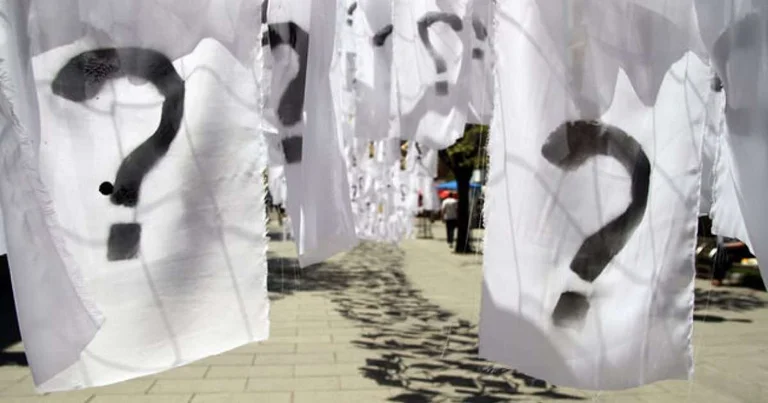
During the war in Kosovo, about 13,500 people lost their lives, while about 1,600 are still considered undiscovered.