 7 hours ago
Experts who advised Kosovo on the road to independence: Republika Srpska Won't Be Model for Association
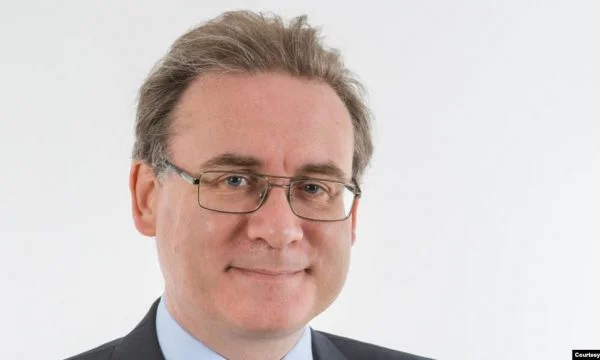
Periskopi(6 years ago)
(6 years ago)Serbia has no alternative but to accept Kosovo's independence, but the latter should also offer additional guarantees to the Serb minority, says Nicholas Whyte, international relations expert who has cautioned Kosovo on the road to independence. In an interview for Radio Free Europe,hyte says Kosovo has no reason to [...]
In an interview for Radio Free Europe, Whyte says Kosovo has no reason to fear broad autonomy for Serbs, as there cannot be a model similar to Republika Srpska in Bosnia and Herzegovina. He does not expect the final agreement to be reached soon, but believes the EU and the US will work side-by-side towards the long-term resolution of disputes between Serbia and Kosovo.
Read:
Records all over Europe, and Chekhia records the highest level of cases with Coddy-19
Nicholas Whyte currently heads the organization The APCO, headquartered in Brussels, which is the advisory and accessive group for communication and consultation.
Mr. Wyatt, Kosovo has declared independence for 12 years, but Kosovo-Serbia disputes continue. What are your expectations from the dialogue that is being eased by the European Union? Can the EU alone achieve success in this process?
Nicholas Whyte: The only EU, of course, cannot achieve success in this process, as this is a process that at least includes only Kosovo and Serbia, as even the interest of the United States continues to remain very powerful and very important. In fact, we have seen problems in recent years, after we saw that the EU and the US had different approaches. The EU knows it cannot do it alone. On the other hand, the EU, from the geographical and strategic perspective, will be the organisation that holds the key to responsibility for the outcome. So, the EU cannot do it alone, but this institution should lead.
Kosovo is currently being asked to keep up with the promise to establish the Association of Serb majority municipalities. How do you see this association?
Nicholas Whyte: See, the fact is that when we get to the end of this process, when Serbia has accepted Kosovo's independence, it will need non-US communities, as in each state, to have guarantees. This need exists even now, but it will be even more powerful when we reach the final stage. It seems very reasonable to me that there will be comprehensive agreements for Serb municipalities in Kosovo. If Kosovo wants to accept and have part of the Serb community, then we should wake up and see reality, that some kind of agreement should be remade. This does not mean that the appropriate solution has been discussed so far, but means that a solution that will work will include a separate agreement for Serb majority municipalities.
“Greater concession, Kosovo's recognition of independence from Serbia”
As an expert who has advised Kosovo on its path to independence, do you think Kosovo has yet to make concessions? And if so, what concessions?
Nicholas Whyte: Viewed strategically, I think we should all remember that the biggest concession is from Serbia, which has to do with accepting Kosovo's independence. I don't express recognition, but I say admission. When that happens, I think Kosovo has enough to offer, without jeopardising its strategic position. But, I think it is crazy to talk about Kosovo concessions, when we bear in mind that the biggest concession required is to accept Kosovo's independence from Serbia.
: Kosovo Prime Minister Avdullah Hoti is insisting that the Association of Serb majority municipalities will be established only after Serbia recognises Kosovo's independence. How do you read this attitude, or is it more or less consistent with what you said earlier?
Nicholas Whyte: I don't think we should see this case in sequence form. Both of these are important for long-term and lasting solutions, and I don't think we should be dogmatic about when and what happens before.
In Kosovo, there are concerns that if broad autonomy occurs for Serb majority municipalities, then a Republika Srpska will be created and that the state will be dysfunctional. Do you think there is room for such concerns?
Nicholas Whyte: I have not seen a proposal approaching Republika Srpska. I've lived in Banja Luka for a year and a half since 1997-98, and I've seen firsthand the differences that exist between these two cases, so we shouldn't take this for example. If I were in Kosovo, the thing I would insist on is actually quite different. I would insist that Belgrade keep its promises and fulfil its commitment to the return of Kosovo's cadastral registry. For me, this is one thing that makes Kosovo's independence irreversible, as when it acknowledges that the property is managed by people who own it, then there is no turning back from it. I think people should pay a little more attention to this issue.
The EU dialogue platform aims at reaching a legally binding agreement for normal reporting, but does not mention mutual recognition. Can this formula bring about lasting peace solutions?
Nicholas Whyte: I think there is certainly little room for maneuvering for mutual recognition, but we need to be clear that Serbia must accept Kosovo's independence, Serbia must admit that Kosovo is no longer part of its jurisdiction. There are ways to do this, without full diplomatic recognition, but I would ask, what does it matter how we label that?
Before I go into detail, I would like to ask you for your assessment of Washington's economic normalisation agreement. Is it as historical as it is promoted?
Nicholas Whyte: It is an interesting new beginning to see leaders of both countries stand together at such a ceremony. So I think it was important. It's historic, but I think it's easy to say when you're not there. In general, I think it was important.
The opposition in Kosovo has sharply criticised Prime Minister Hoti for signing this agreement, as, in addition, a feasibility study for a strategic point in Kosovo, Lake Weman, for the way Kosovo and Serbia use water. Is this concession, or maybe the beginning of new concessions?
Nicholas Whyte: This is concession for general good, it is not Kosovo's concession for Serbia. Kosovo has an increasing population, will need more electricity supply. Yes, there are political elements there, but in these cases there are always political elements. Those who are opposing it should offer alternatives to where electricity will be provided, not history.
The International Crisis Group (GNK) has urged the EU not to limit options on the dialogue table, suggesting that even territorial exchange could occur if the sides agree. Do you think international actors, involved in the process, still consider the exchange of territories an option?
Nicholas Whyte: International stewards in dialogue will not impose territorial exchange on either side. But, if (request) comes directly from the region, if the governments of Kosovo and Serbia clearly say they can agree with it, it is very difficult for internationals to express themselves differently. That's really what GNK said 13 years ago when I worked on this organization and they're saying it even after I read their latest report. To me, that's a statement of what's clear.
Given that Kosovo has a government at the limit of the parliamentary majority, and is also facing the wave of charges by the Special Court, how do you see Kosovo's power in this dialogue?
Nicholas Whyte: It is a fact that Kosovo has actually achieved enough so far, it has declared independence. You said 12 years, but I would say it has remained as a full country for 21 years, since the UNMIK bombing and installation. Therefore, Kosovo has many important successes, which it can look back on, but what needs to be addressed is where this will end. And that will end with Serbia accepting Kosovo's independence and the full normalisation of economic reports and other issues. I think we need to be clear about how to get there and it's not wise to deal with details of how we get there, because we need to focus on where we're going to get to the end of this process.
And finally, do you see the final agreement written in Washington again, or will it be European exclusive?
Nicholas Whyte: Let's not forget that it's very possible that we may soon have a new administration in Washington if I'm reading the news from the United States correctly. The difference is that a (democratic candidate for president, Joe) administration would allow Europe to take over leadership, as they are less obsessed and have no access to (current American President Donald) Trump in international relations. So I expect the deal to be signed somewhere in Europe, they'll find a place, but I also think we're still away from that day.











